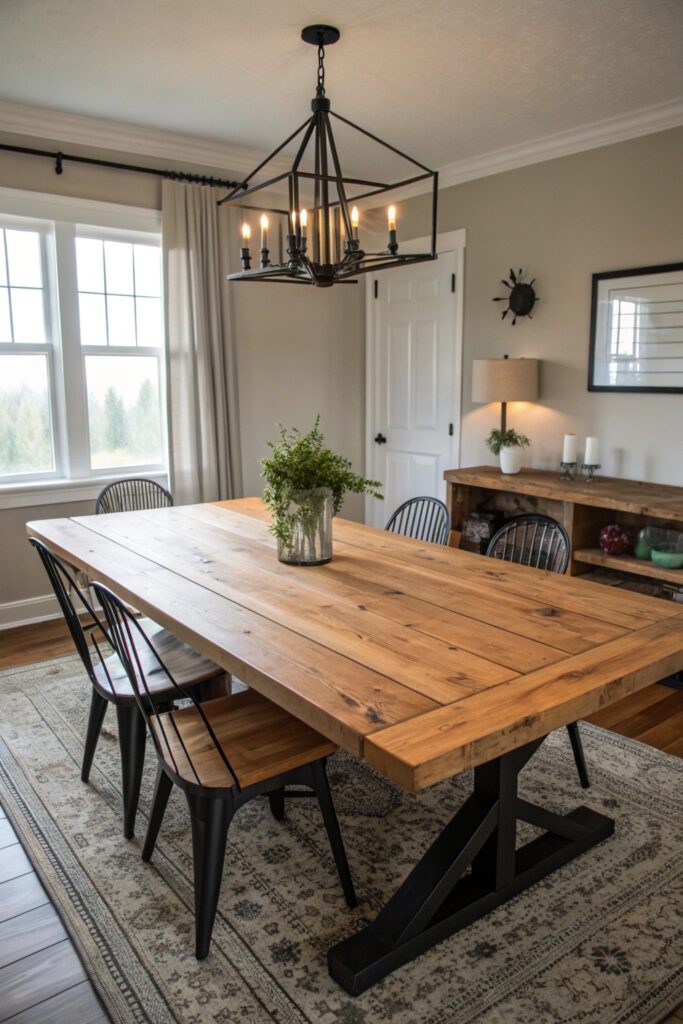
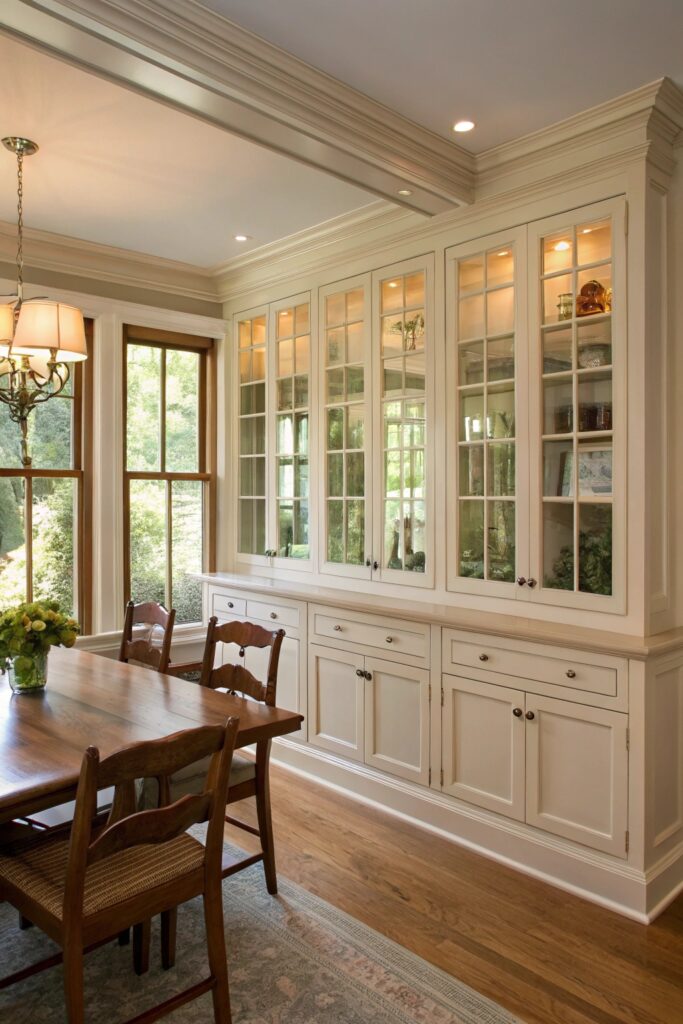
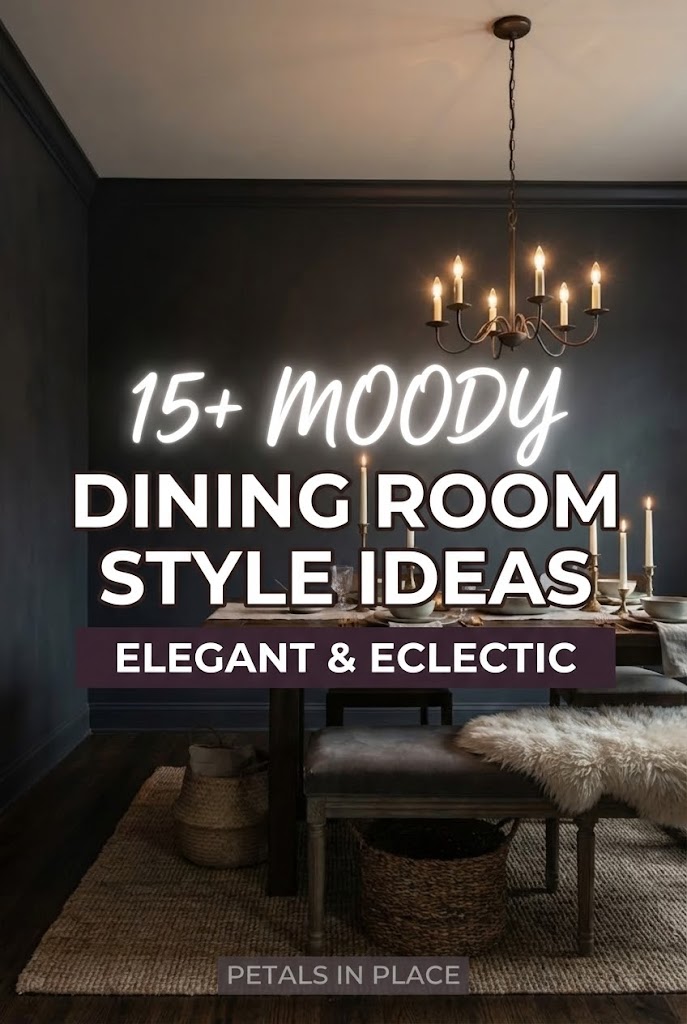
Picture this. The lights are low. Candles glow on the table. The walls feel rich and cozy, not dark in a gloomy way, but warm and inviting. That is the charm of a moody dining room. It turns everyday meals into moments that feel a little special.
If your dining space feels plain, too bright, or just forgettable, adding mood can change how the whole room feels. Dark colors, layered lighting, and thoughtful details bring comfort and character at the same time. You do not need a full makeover to get there, either. Small choices can make a big visual difference.
In this guide, you will find moody dining room ideas that feel elegant, slightly eclectic, and realistic for real homes. These ideas work for small rooms, open layouts, and everyday living. Save the ones you love and build a dining space that feels warm, personal, and memorable.
Moody Dining Room Foundations (Set the Mood First)
Before furniture, art, or table styling comes into play, the overall mood needs a strong base. This is where many dining rooms fall flat. The room may have nice pieces, but without a solid foundation, it never feels complete. Moody spaces work best when the background does most of the heavy lifting.
Think of walls, ceilings, and surfaces as the backdrop for everything else. Darker tones help the room feel grounded and intimate. Soft finishes keep it from feeling harsh. When these elements are right, even simple decor starts to look intentional.
This foundation is what allows bold choices to feel elegant instead of overwhelming. Once the base is set, layering furniture, lighting, and accents becomes much easier—and far more satisfying.
1. Dark Walls That Instantly Change the Room
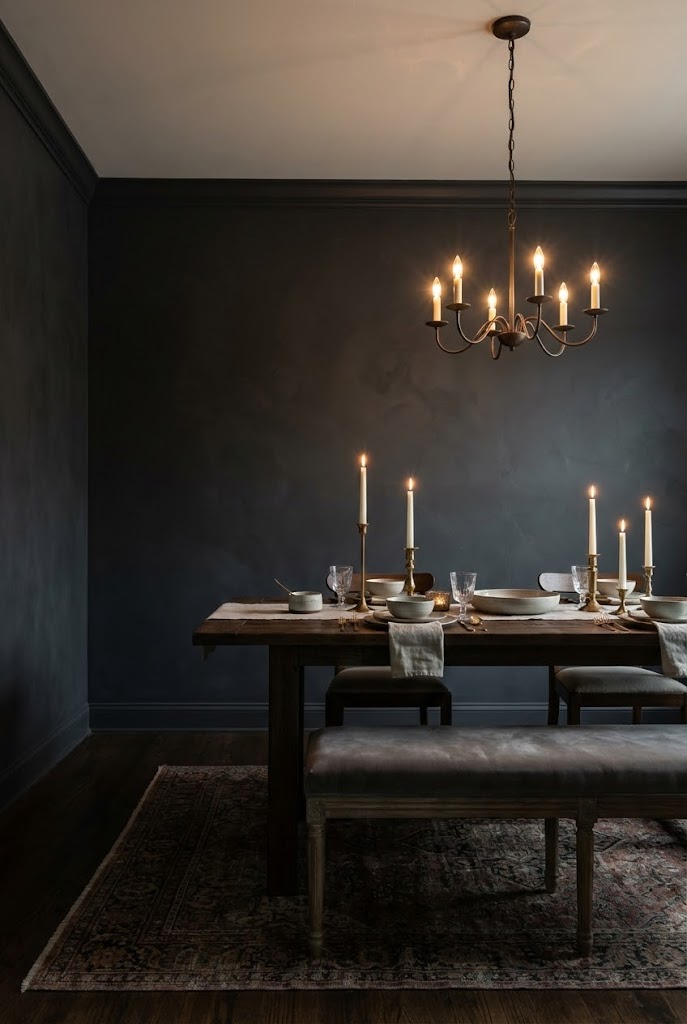
Dark walls are the fastest way to give a dining room that moody feel everyone loves. They wrap the space in warmth and make the room feel more intimate, especially in the evenings. Colors like charcoal, deep olive, ink blue, or rich brown work beautifully without feeling heavy when done right.
A matte or soft eggshell finish helps absorb light instead of bouncing it around, which keeps the mood calm and cozy. If painting the whole room feels like too much, start with one wall behind the dining table. Even that single change can shift the entire feel of the space.
Dark walls also make furniture, art, and table settings stand out more. Candles glow warmer, wood tones look richer, and even simple decor feels thoughtful rather than plain.
2. Wallpaper That Adds Drama Without Feeling Too Much
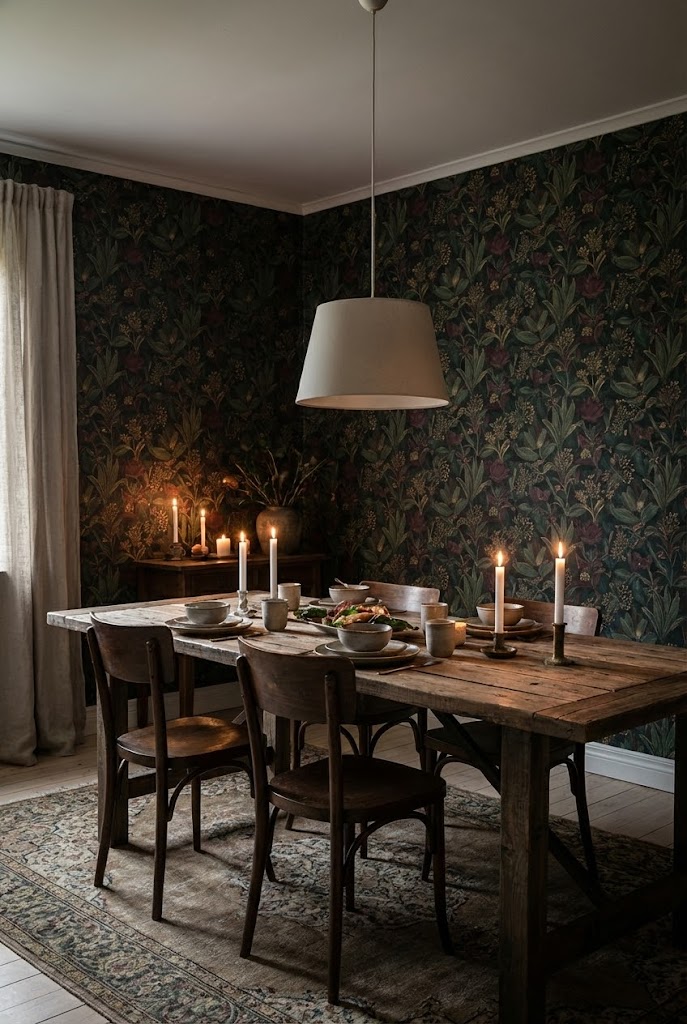
Wallpaper is an easy way to bring pattern and personality into a moody dining room. Dark florals, soft botanicals, abstract designs, or vintage-inspired prints add visual interest while keeping the room elegant. The key is choosing patterns that feel rich rather than busy.
Using wallpaper on one main wall works well if you want impact without closing in the space. In larger dining rooms, wrapping all walls can feel cozy and intentional when paired with simple furniture. Let the wallpaper set the tone, then keep the rest of the decor calm so the room feels balanced, not overwhelming.
3. Painted Ceilings for a Cozy, Enclosed Feel
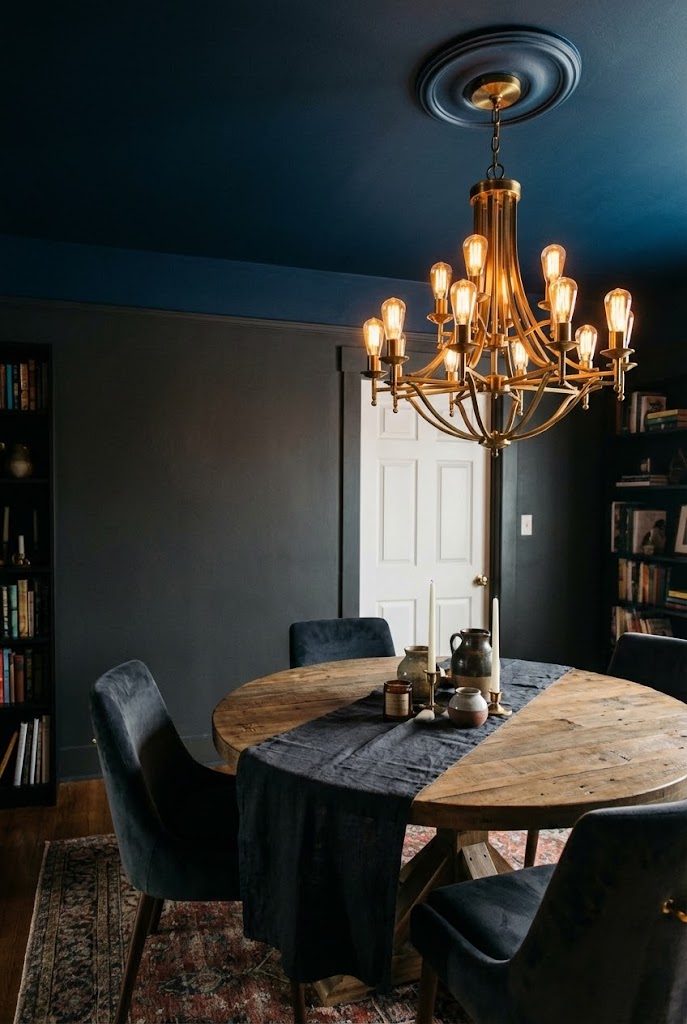
A painted ceiling is one of the most overlooked ways to add mood. Darker ceilings visually lower the room, which creates a tucked-in, intimate feeling that works beautifully in dining spaces. Shades like soft black, charcoal, or deep blue help the room feel warm rather than stark.
This works especially well when walls are also darker or when trim stays lighter for contrast. Even in rooms with standard ceiling height, a darker ceiling can make dinners feel more relaxed and intentional, almost like a private nook instead of an open pass-through space.
4. Moody Artwork That Sets the Tone
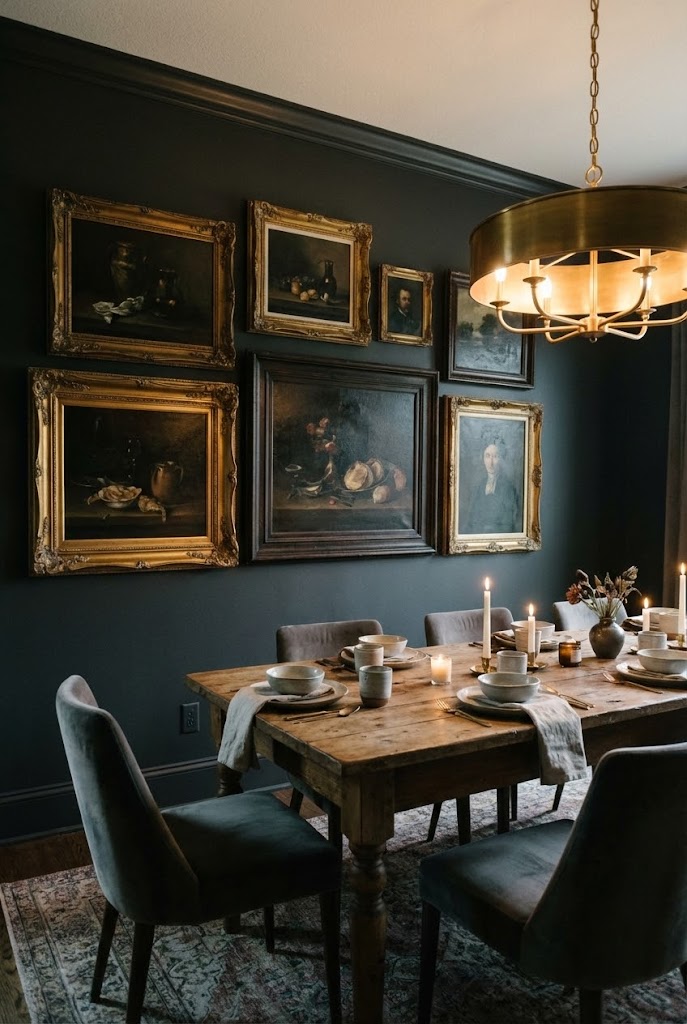
Artwork plays a big role in shaping the atmosphere of a dining room. Moody spaces pair well with pieces that have depth, shadow, or strong contrast. Think dark landscapes, classic portraits, abstract art with layered tones, or black-and-white photography.
A single large piece creates a strong focal point, while a small gallery wall adds character and collected charm. Frames in black, dark wood, or antique gold blend naturally with darker walls and help the art feel grounded. The goal is not perfection, but emotion. The right artwork makes the room feel personal and lived in.
5. Dark Green as the Main Color Anchor
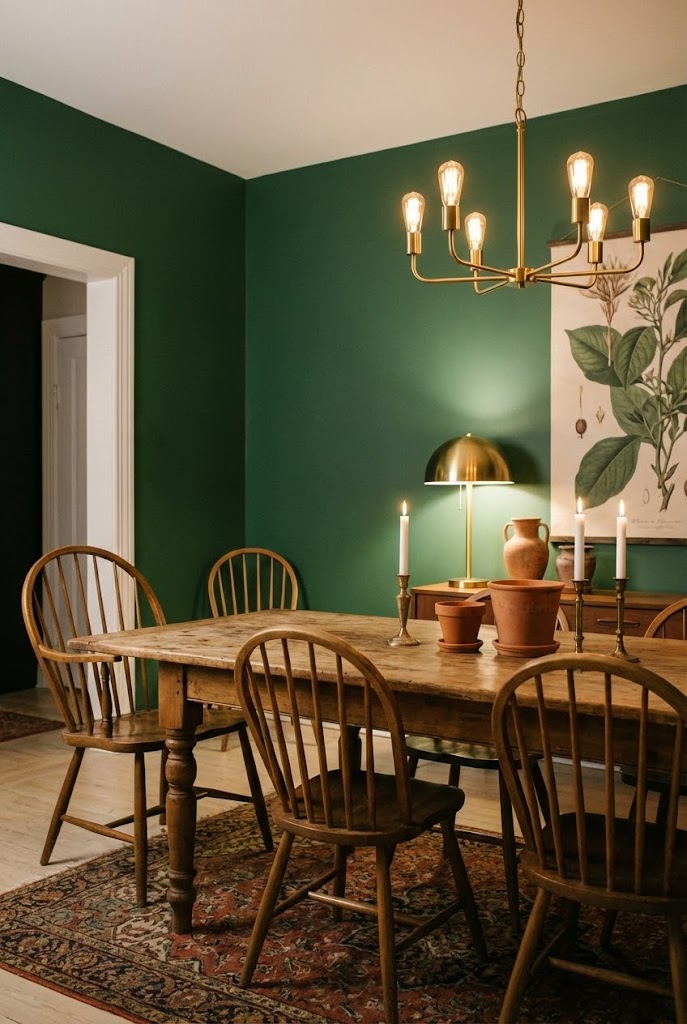
Dark green has a calm, grounded feel that works beautifully in dining rooms. It feels rich without being loud and pairs well with both modern and vintage pieces. Shades like forest green, olive, or moss bring warmth while still keeping the space elegant.
This color works especially well with wood tables, soft linen textiles, and warm metal accents. In rooms that get some natural light, dark green feels cozy during the day and even better at night. It also hides marks better than very dark gray or black, which makes it practical for everyday use.
6. Organic Modern Furniture for Balance
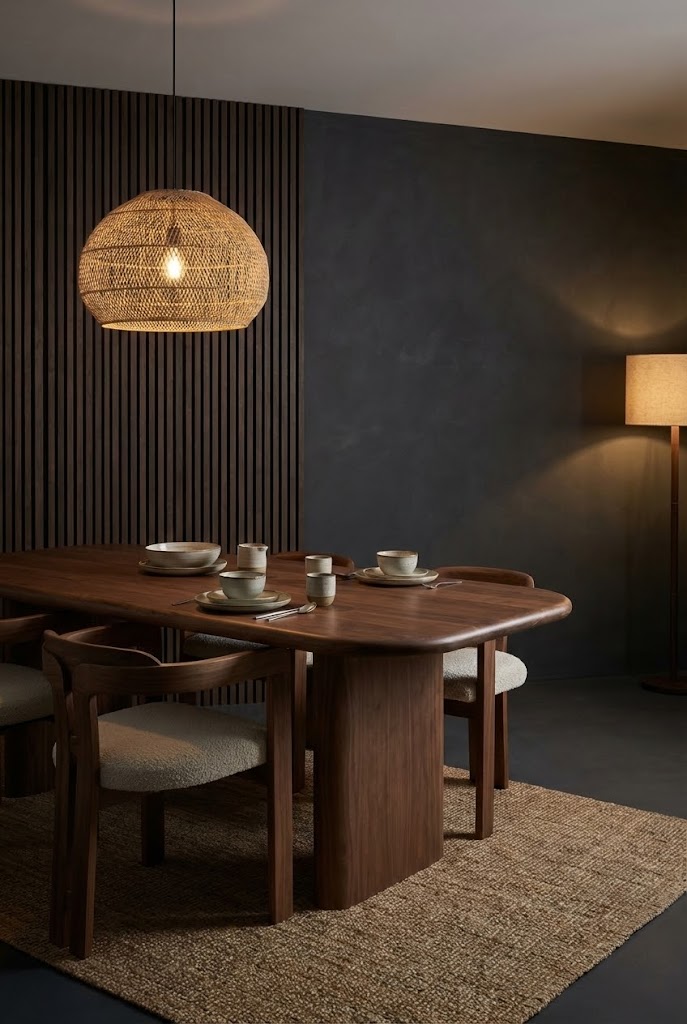
Moody dining rooms need balance, and furniture helps achieve that. Clean-lined tables, curved chairs, and natural wood finishes soften darker walls and keep the room from feeling heavy. The mix of smooth shapes and natural textures adds comfort without clutter.
Look for walnut or oak tables, simple upholstered chairs, and pieces that feel solid but not bulky. Keeping furniture shapes simple allows the darker colors around them to shine. This approach works well if you like a calm, collected look with just enough character to feel interesting.
7. Layered Lighting That Sets the Right Atmosphere
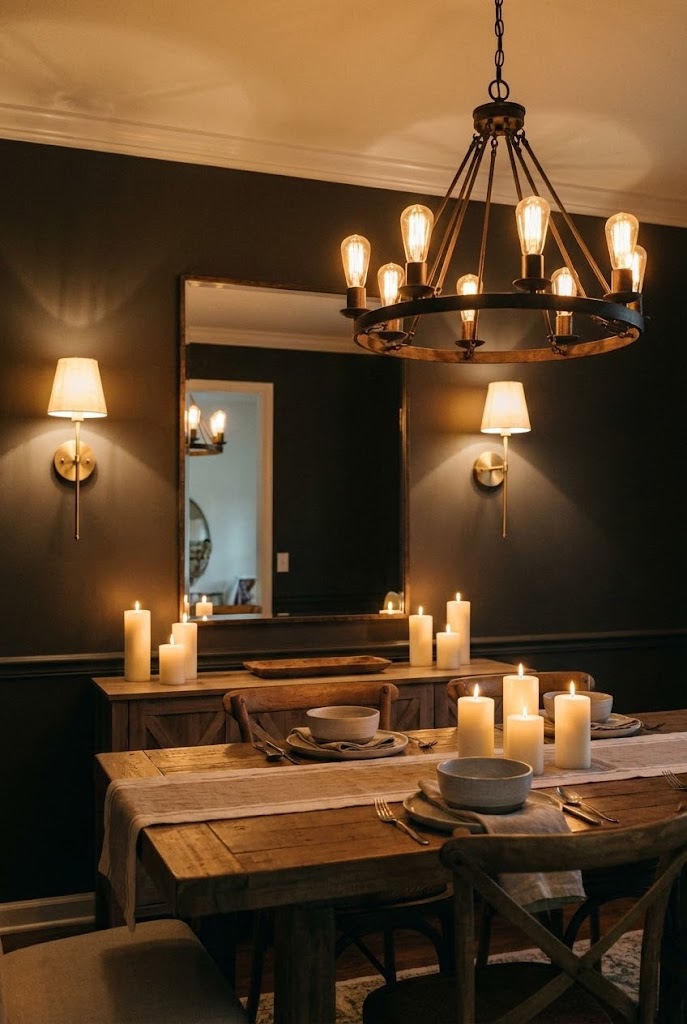
Lighting can make or break a moody dining room. One overhead light is never enough. The goal is soft layers that create warmth and gentle shadows. A central chandelier or pendant gives structure, while wall lights or table lamps add depth.
Warm bulbs are essential. Cool lighting can ruin the mood instantly. Adding a dimmer helps adjust the room for everyday meals or longer dinners. When lighting is done right, even simple furniture and decor start to feel intentional and inviting.
8. Banquette Seating That Feels Intimate and Inviting
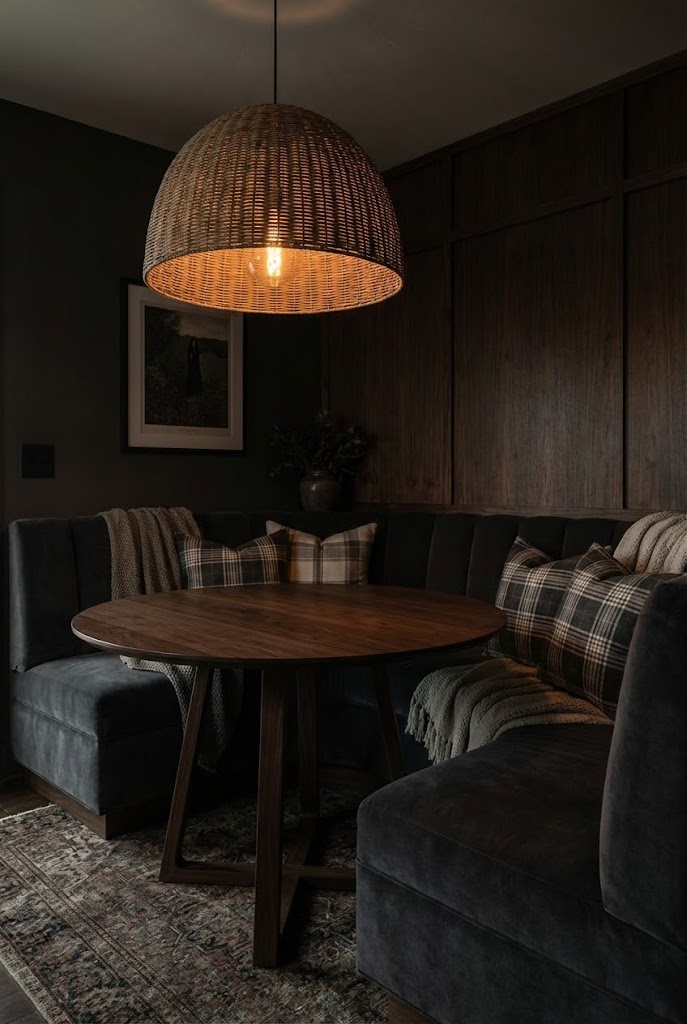
Banquette seating brings a tucked-in, cozy feeling that works perfectly in a moody dining room. It creates a sense of enclosure, even in open layouts, and makes the space feel designed rather than placed. Upholstered benches along a wall or corner instantly add comfort and character.
Fabrics like velvet, linen, or textured blends in darker tones work especially well here. Pair a banquette with a round or oval table to soften the look and keep the layout relaxed. This setup encourages lingering conversations and makes everyday meals feel more special.
9. Vintage and Eclectic Pieces That Add Soul
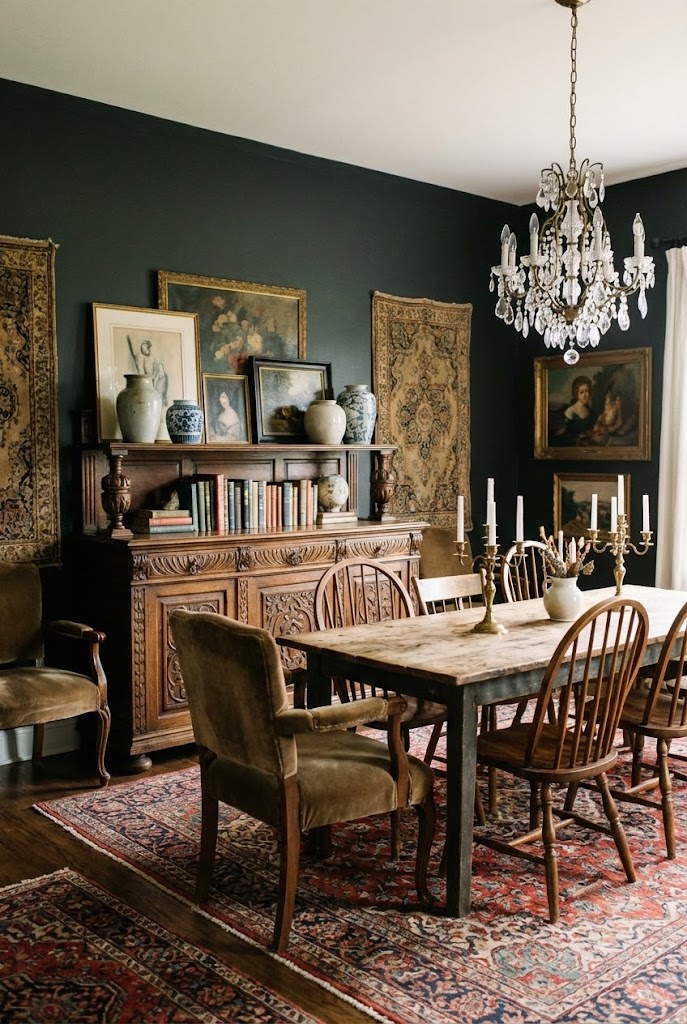
Moody dining rooms shine when they feel collected over time. Mixing old and new pieces adds personality and warmth that purely modern spaces often lack. A vintage sideboard, antique chairs, or an aged mirror can bring depth and story into the room.
The key is keeping the color palette tight. Dark tones help different styles sit comfortably together without clashing. When done right, the room feels layered and intentional, not random. Each piece adds charm without stealing attention from the overall mood.
10. Jewel-Tone Accessories for Subtle Richness
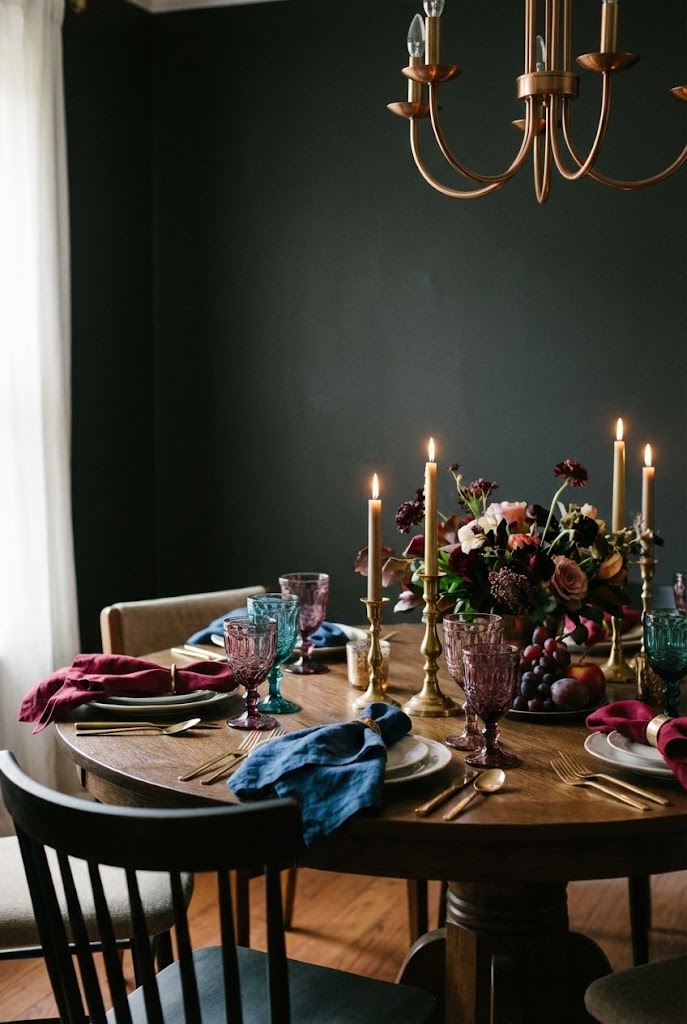
Small touches of jewel tones can lift a dark dining room without making it feel busy. Deep shades like emerald, sapphire, ruby, or plum add color in a controlled, elegant way. These tones work beautifully in napkins, glassware, candles, or small decor pieces.
Layering these accents over darker walls and wood finishes creates contrast that feels rich rather than loud. Because the color comes in through accessories, it is easy to switch things up with the seasons while keeping the moody base intact.
11. Textured Rugs That Ground the Space
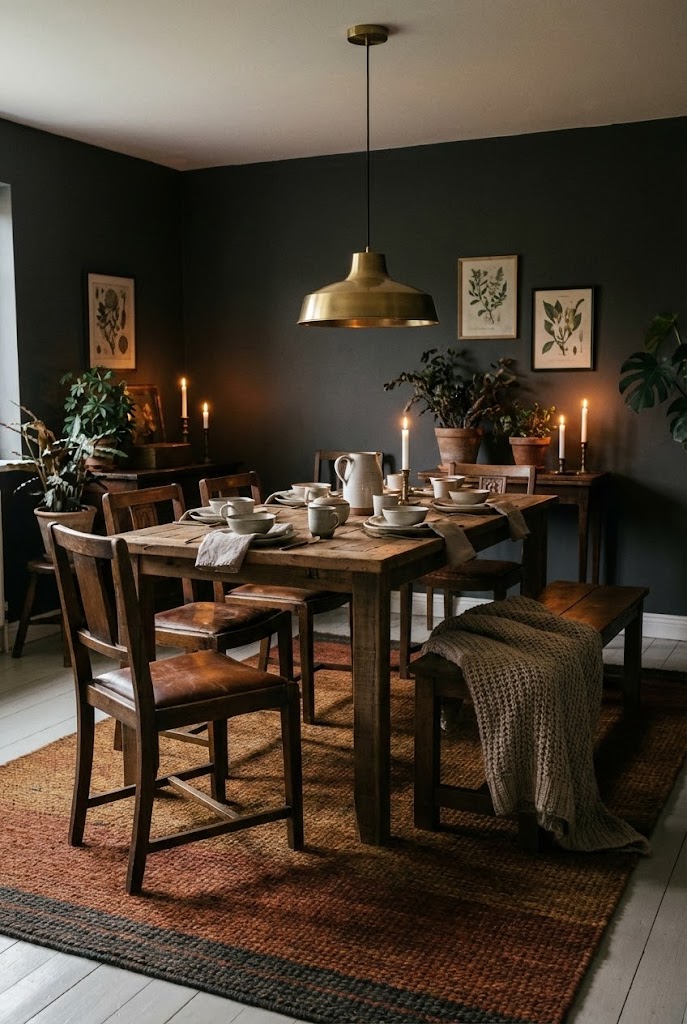
A rug can completely change how a dining room feels. In a moody space, it helps anchor the table and adds warmth underfoot. Low-pile rugs work best since they are easier to maintain and allow chairs to move smoothly.
Look for rugs with subtle patterns, faded designs, or rich tones that echo the room’s color palette. Vintage-style rugs are especially great here because they add texture without overpowering the space. A well-chosen rug makes the dining area feel complete and thoughtfully put together.
12. Statement Mirrors That Add Light and Depth
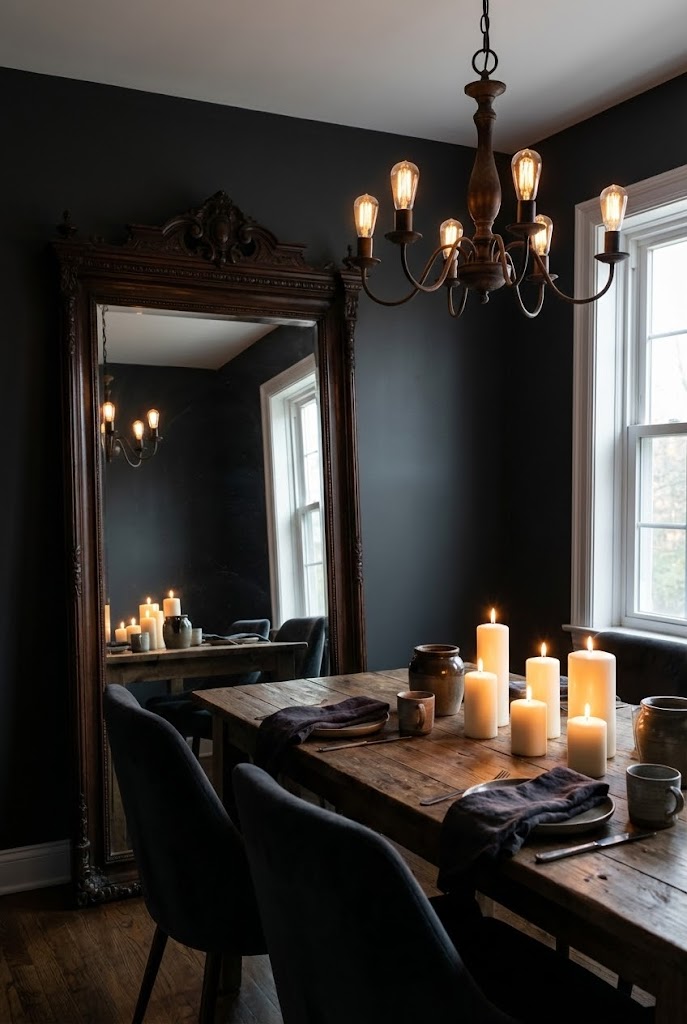
Mirrors are a smart addition to darker dining rooms. They reflect candlelight and soft lighting, which helps the room feel brighter without losing its moody charm. A large mirror can also make smaller dining spaces feel more open.
Antique mirrors, dark-framed designs, or softly aged glass work best in these settings. Place mirrors across from a light source or artwork to double the visual impact. The right mirror adds depth and quiet elegance without pulling attention away from the rest of the room.
13. Moody Dining Nooks That Feel Private
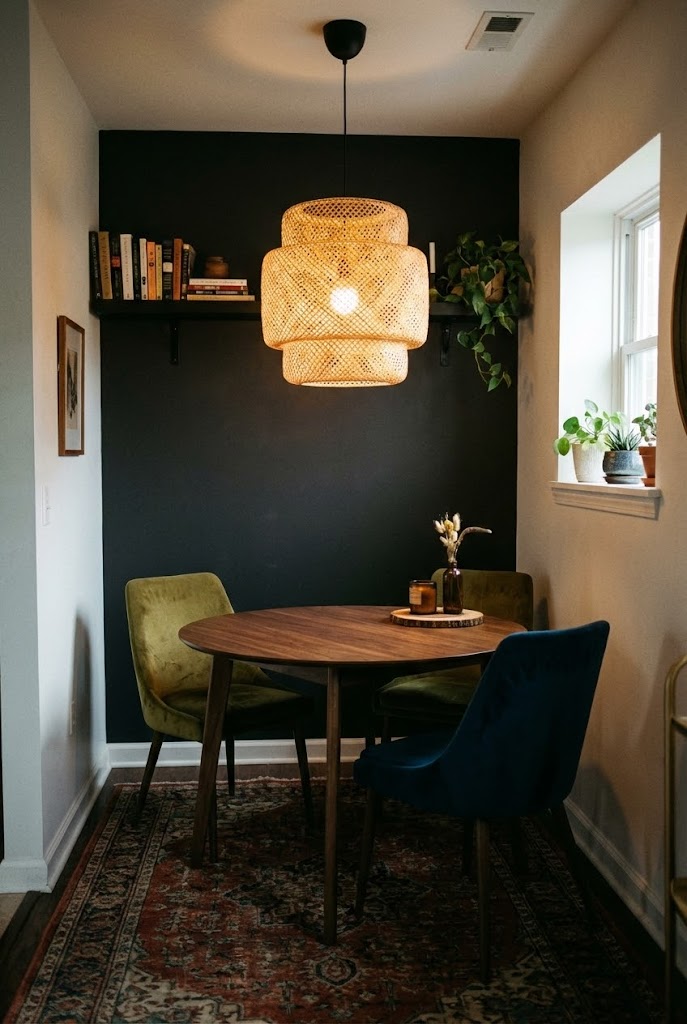
Dining nooks are perfect for creating a mood in open or shared spaces. Even without walls, a nook can feel like its own little retreat. Dark paint, a pendant light, or a rug can visually separate the dining area from the rest of the room.
This approach works well in apartments or open floor plans where you still want a sense of intimacy. A moody nook encourages slower meals and relaxed evenings, turning a simple corner into a space that feels intentional and welcoming.
14. Metallic Accents That Add Warmth and Soft Shine
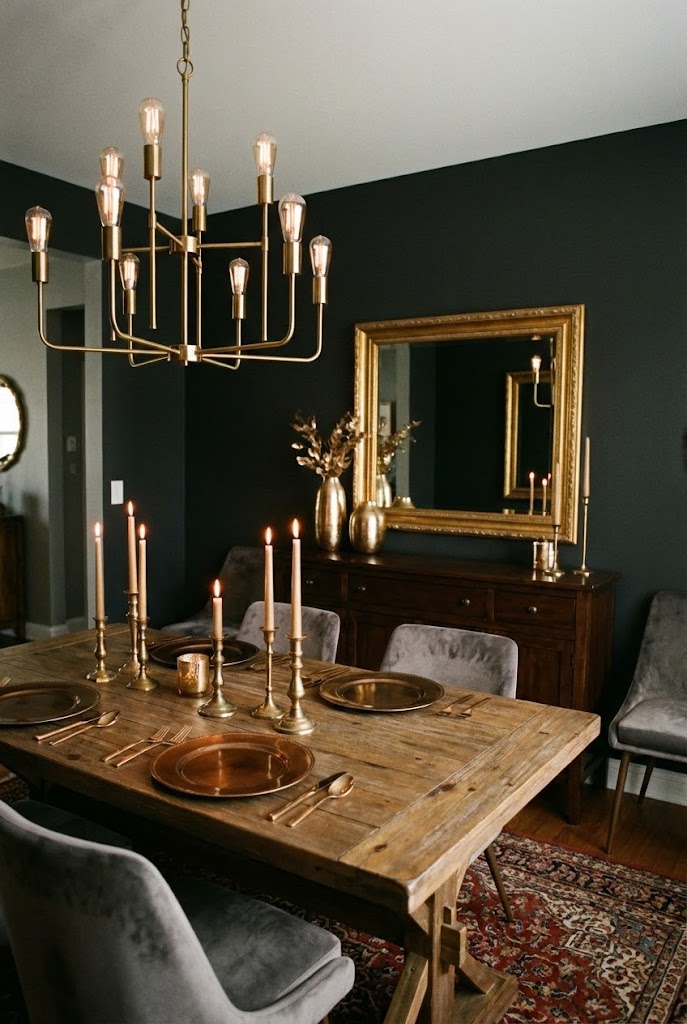
Metallic details bring life to a moody dining room without making it feel flashy. Warm metals like brass, bronze, or aged gold work especially well against dark walls and rich wood tones. They catch the light just enough to add depth and interest.
Use metallics in small doses through light fixtures, candlesticks, trays, or hardware. The goal is a gentle glow, not sparkle overload. When layered thoughtfully, these touches make the room feel elegant and balanced rather than heavy.
15. Layered Table Decor for an Elevated Everyday Look
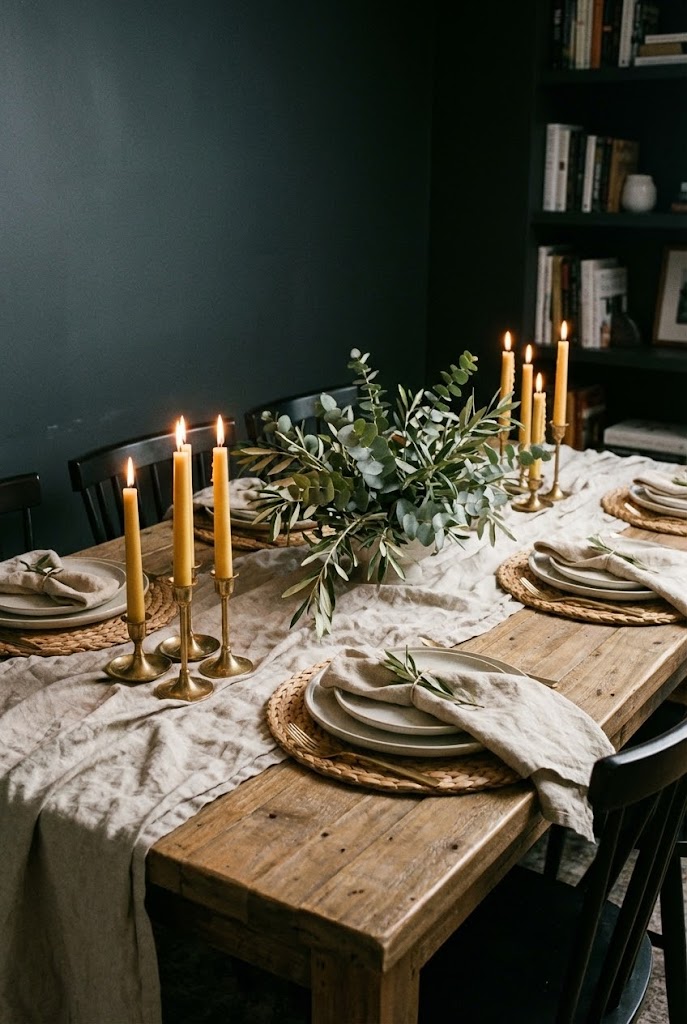
A well-styled table pulls the whole room together. Layering different textures creates a look that feels relaxed yet intentional. Start with a simple runner or placemats, then add linen napkins, ceramic plates, and glassware with subtle character.
Candles, greenery, or a low centerpiece add height and softness without blocking conversation. Even for casual meals, a layered table makes the space feel welcoming and complete. It is these small, thoughtful details that turn a dining room into a place people want to gather.
More Tips for Creating a Moody Dining Room That Feels Right at Home
Once the main elements are in place, it is the small decisions that make the space truly work for everyday living. A moody dining room should feel inviting, not heavy or impractical. With a few thoughtful adjustments, the room can stay elegant while still being comfortable and easy to use.
This final section focuses on simple ideas that help the space feel balanced and personal. These tips work whether you are styling a small dining area, an open layout, or a room that serves more than one purpose. They help tie everything together so the mood feels natural, not forced.
Simple Guidelines That Make Moody Dining Rooms Feel Comfortable
Moody spaces work best when there is a sense of balance. Too much darkness without contrast can feel flat, while too many accents can feel busy. Keeping a few simple guidelines in mind helps the room feel welcoming and easy to live with.
Start by mixing dark elements with warmer textures like wood, fabric, or woven pieces. This softens the look and adds comfort. Pay attention to lighting throughout the day, especially if the room does not get much natural light. Soft, warm bulbs make a big difference.
Most importantly, let the room reflect your habits. A dining space should support real meals, conversations, and everyday moments. When the room feels personal and relaxed, the moody style feels effortless rather than staged.
Final Thoughts on Styling a Moody Dining Room
A moody dining room is not about making the space dark just for the sake of it. It is about creating an atmosphere that feels calm, inviting, and full of character. When colors, lighting, and textures work together, the room becomes a place people want to spend time in, not just pass through.
You do not need to change everything at once. A darker wall, better lighting, or a few thoughtful details can shift the entire mood. Trust what feels right for your home and your routine. When the space feels comfortable and personal, it naturally feels elegant too.
Which idea stood out to you the most? Would you start with dark walls, softer lighting, or a more layered table setup?