I’ll be honest—Japandi living rooms ruined cluttered spaces for me forever. Once you experience that calm, balanced, everything-just-makes-sense vibe, there’s no going back. Japandi design blends Japanese minimalism with Scandinavian warmth, and IMO, it feels like your living room finally learned how to breathe.
If you crave a space that feels cozy without screaming for attention, you’re in the right place. Ever walked into a room and instantly felt calmer? Yeah, that’s the Japandi effect working its quiet magic.
I’ve experimented with Japandi elements in my own space, made a few mistakes (goodbye glossy furniture), and learned what actually works. Let’s walk through 13 Japandi living room designs that nail minimalist zen style—without turning your home into a boring beige box.
1. Neutral-Toned Japandi Living Room
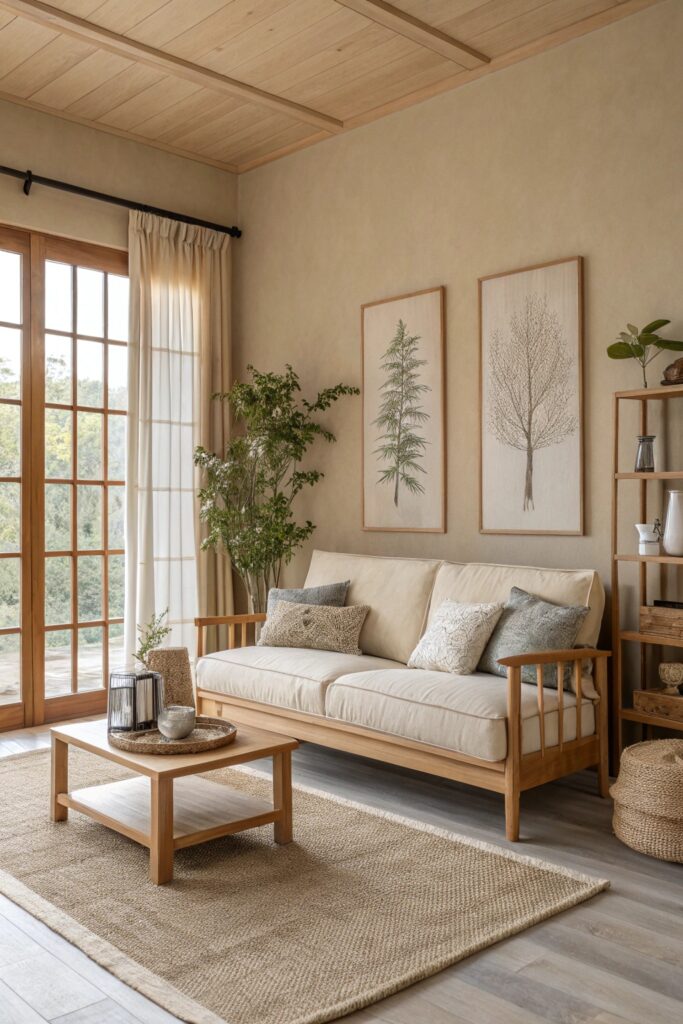
Neutral tones anchor Japandi living room designs like nothing else. I always start with warm whites, soft beiges, and muted greys because they calm the space instantly. These colors don’t shout—they whisper, and that’s the whole point.
I pair neutral walls with light wood furniture to avoid that cold, empty feeling. Ever notice how neutrals make sunlight look better? That’s not an accident. They reflect light gently and keep the room feeling open.
To keep things interesting, I mix textures:
- Linen sofas
- Wool rugs
- Raw wood accents
Minimal color, maximum zen. Funny how less effort somehow looks more intentional, right?
2. Low-Profile Furniture Layout
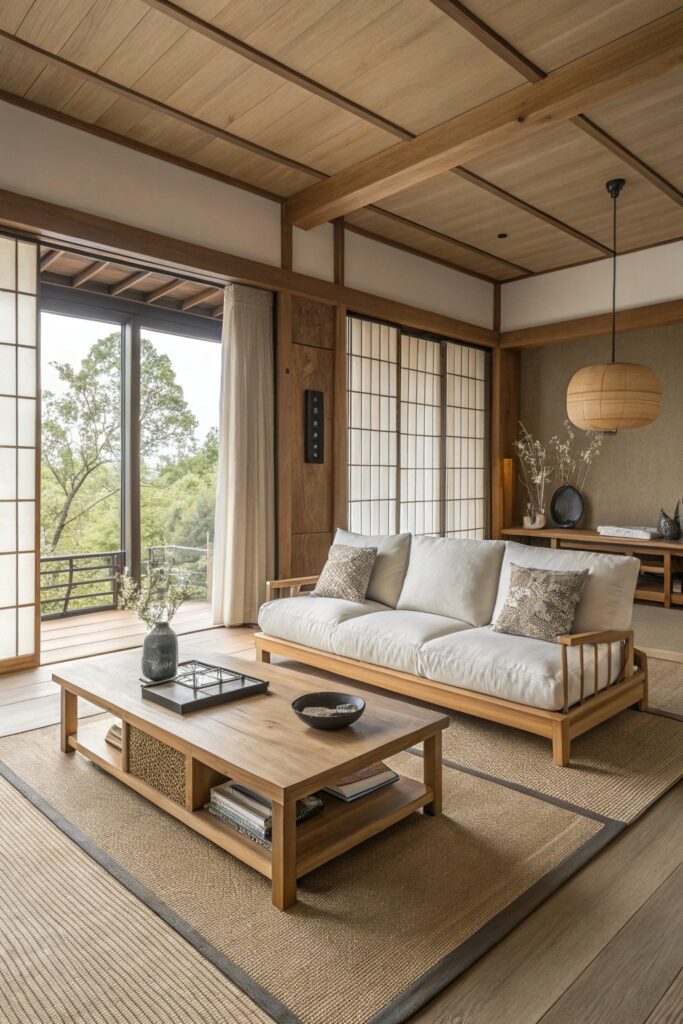
Japandi living rooms love staying close to the ground. Low-profile sofas, benches, and coffee tables create that grounded, peaceful vibe I swear by. When I switched to a lower sofa, my space felt calmer overnight.
Low furniture opens visual space and makes ceilings feel taller. That trick never fails. Plus, it encourages relaxed seating—no stiff “formal living room” energy here.
I usually stick with:
- Low wooden sofa frames
- Slim coffee tables
- Floor cushions for flexibility
Ever wonder why Japanese interiors feel so serene? They literally keep you grounded. FYI, your posture might even thank you.
3. Natural Wood-Centered Living Room
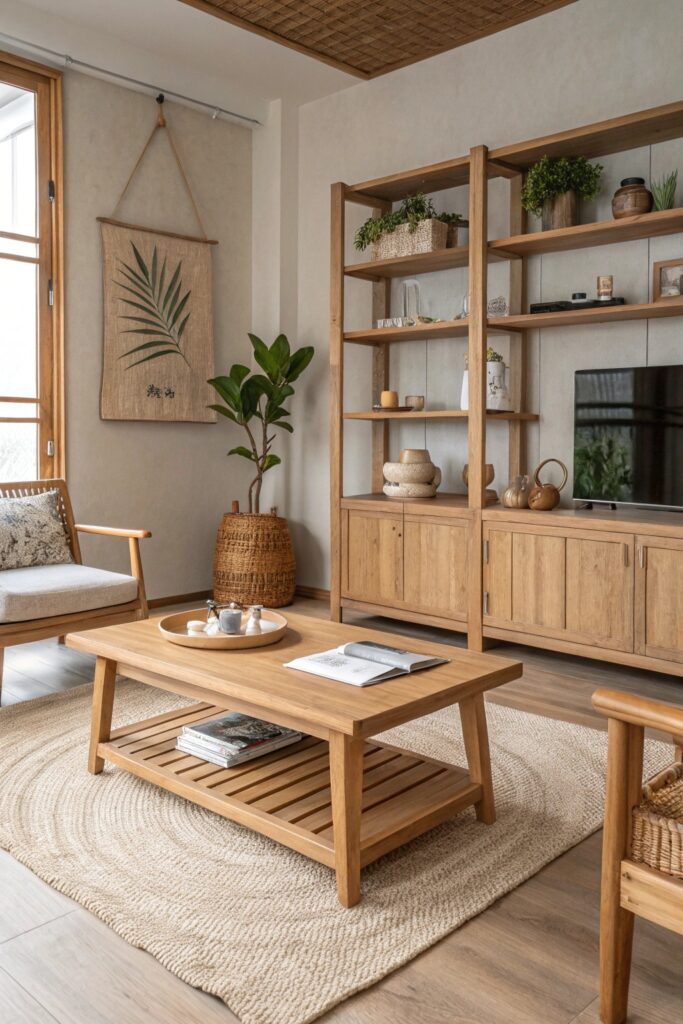
Japandi living room designs practically worship wood—and I fully support that obsession. Light oak, ash, or birch instantly warm up minimalist spaces. Dark woods work too, but only when used sparingly.
I avoid glossy finishes like the plague. Matte or raw wood textures feel more honest and tactile. Touch matters more than people admit, right?
I usually layer wood through:
- Coffee tables
- Open shelving
- Slatted wall accents
Wood connects the room to nature without trying too hard. Honestly, it feels like bringing the forest indoors—minus the bugs.
4. Minimalist Japandi Seating Arrangement
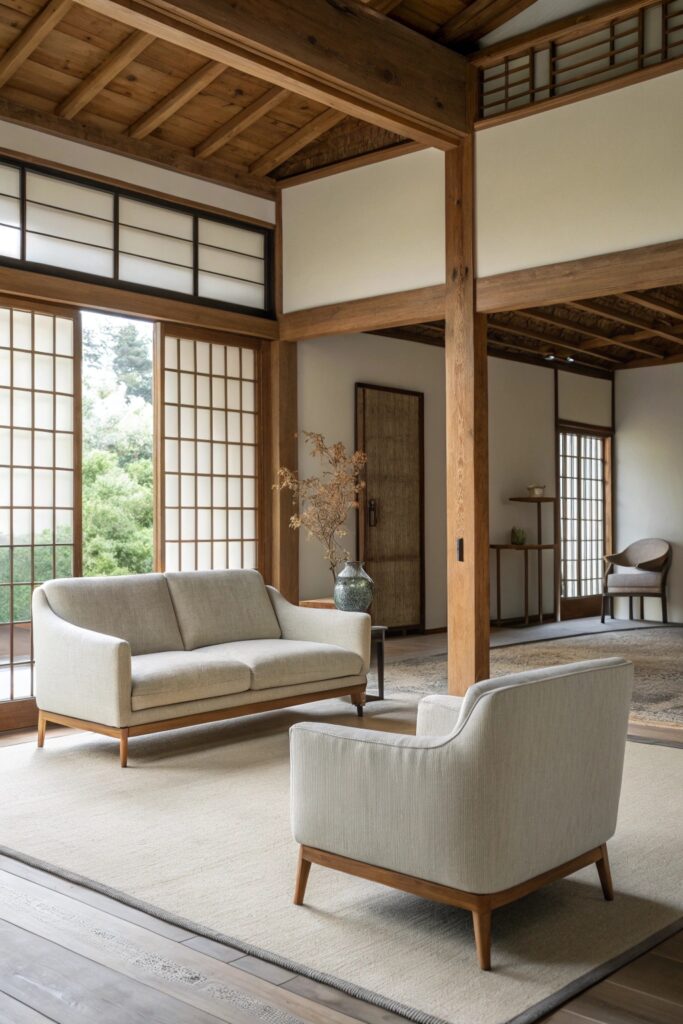
Seating sets the tone, and Japandi living rooms keep it simple. I always choose function over fancy curves or chunky silhouettes. Clean lines win every time.
Instead of oversized sectionals, I prefer compact sofas paired with a single accent chair. This layout promotes flow and breathing room. Ever felt trapped by furniture? Yeah, Japandi avoids that mess.
Key seating rules I follow:
- Neutral upholstery
- Slim armrests
- Visible legs for airiness
Minimal seating doesn’t mean uncomfortable. It means intentional—and that feels way better.
5. Soft Textures for Cozy Balance
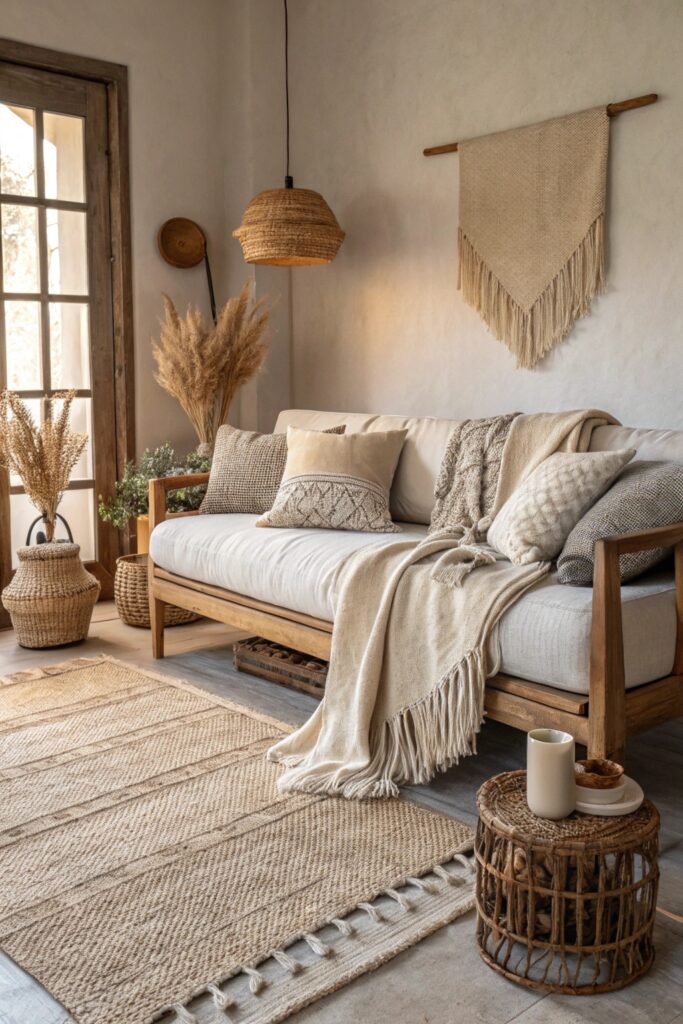
Japandi living room designs walk a fine line between minimal and cozy. Soft textures keep the space from feeling sterile. Trust me, I learned that the hard way.
I layer tactile materials that invite you to sit down and stay awhile. The trick lies in subtle contrast, not clutter.
My go-to texture combo:
- Linen cushions
- Wool throws
- Jute or cotton rugs
Ever notice how texture replaces color in Japandi spaces? It keeps things interesting without visual noise. Subtle, but powerful.
6. Japandi Living Room With Statement Lighting
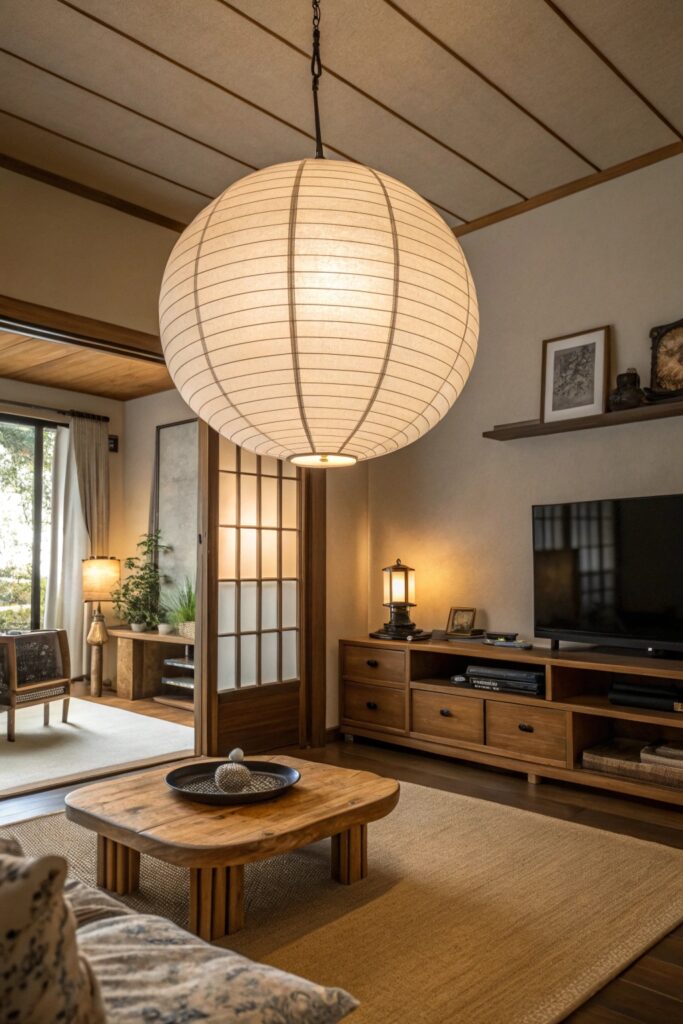
Lighting makes or breaks Japandi living rooms. I skip flashy chandeliers and choose sculptural but simple fixtures instead. Think paper lanterns or soft-glow pendants.
Warm lighting sets the mood and highlights textures beautifully. Harsh white light ruins the zen vibe instantly—learned that lesson fast.
Lighting tips I swear by:
- Warm bulbs only
- One statement pendant
- Soft floor lamps for evenings
Good lighting doesn’t demand attention. It supports the room quietly, like a good friend.
7. Earthy Japandi Color Accents
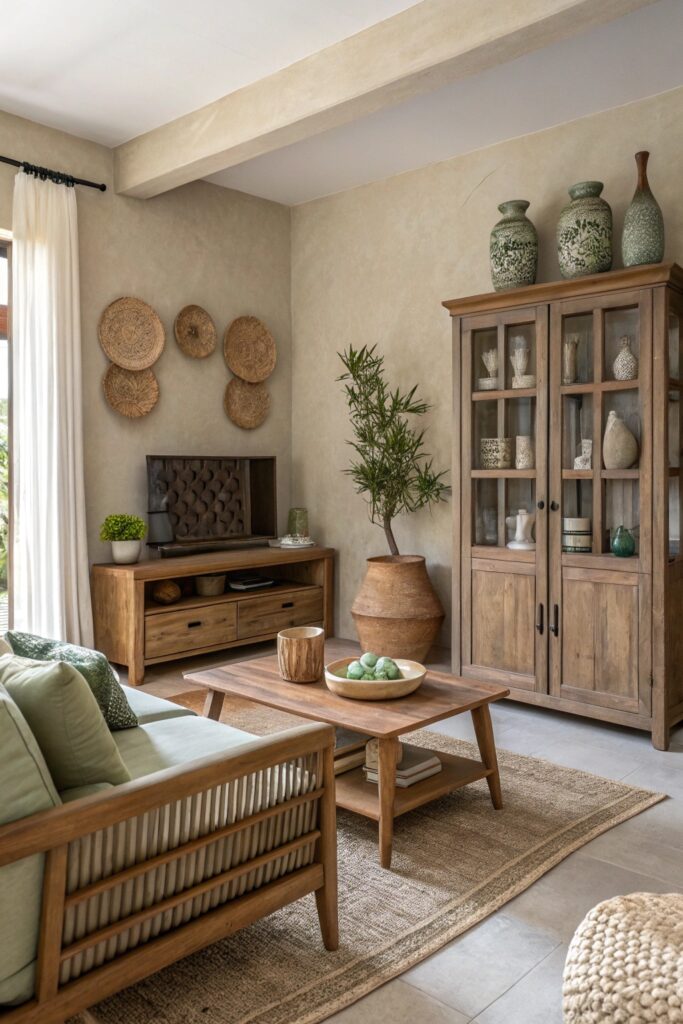
Japandi living room designs don’t fear color—they just use it wisely. Earthy tones like clay, olive, or muted terracotta add depth without chaos.
I usually add color through accessories instead of furniture. That keeps things flexible and calm. Ever regret buying a bold couch? Exactly.
Smart accent ideas:
- Ceramic vases
- Cushion covers
- Art prints
These shades ground the room while keeping the minimalist zen style intact. Subtle color > loud statements. Always.
8. Open and Airy Japandi Layout
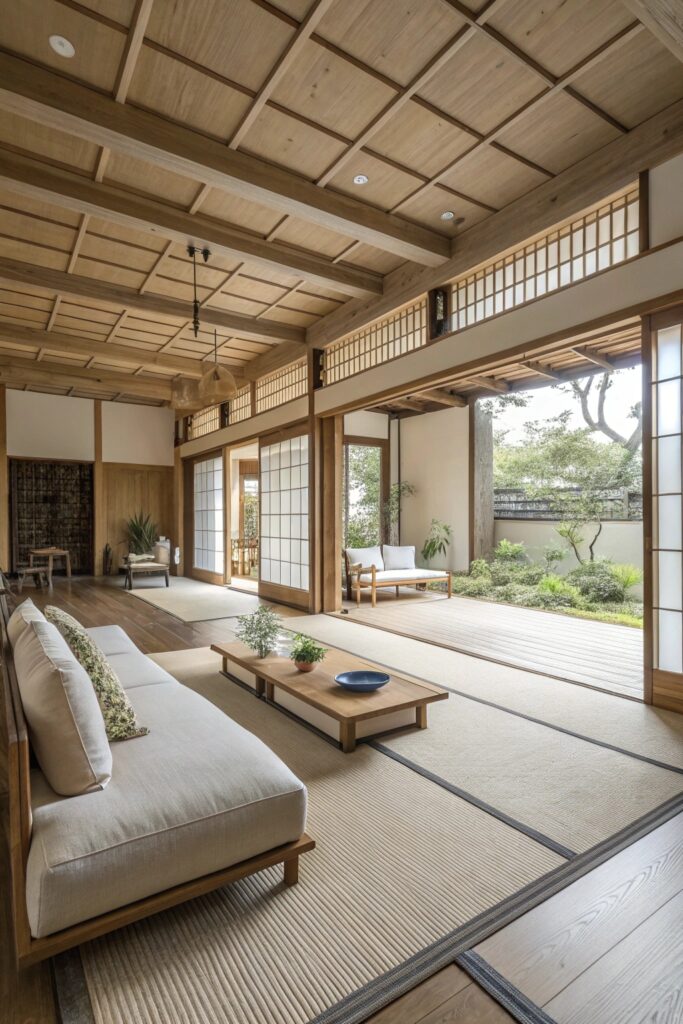
Japandi living rooms thrive on openness. I remove unnecessary furniture and let negative space do its thing. Empty space isn’t wasted space—it’s breathing room.
Open layouts improve flow and create a calming rhythm. I align furniture along walls when possible and leave the center uncluttered.
Layout principles I follow:
- Clear walkways
- Balanced symmetry
- No overfilling corners
Ever notice how uncluttered rooms feel bigger and calmer? That’s Japandi working quietly in the background.
9. Japandi Living Room With Indoor Plants
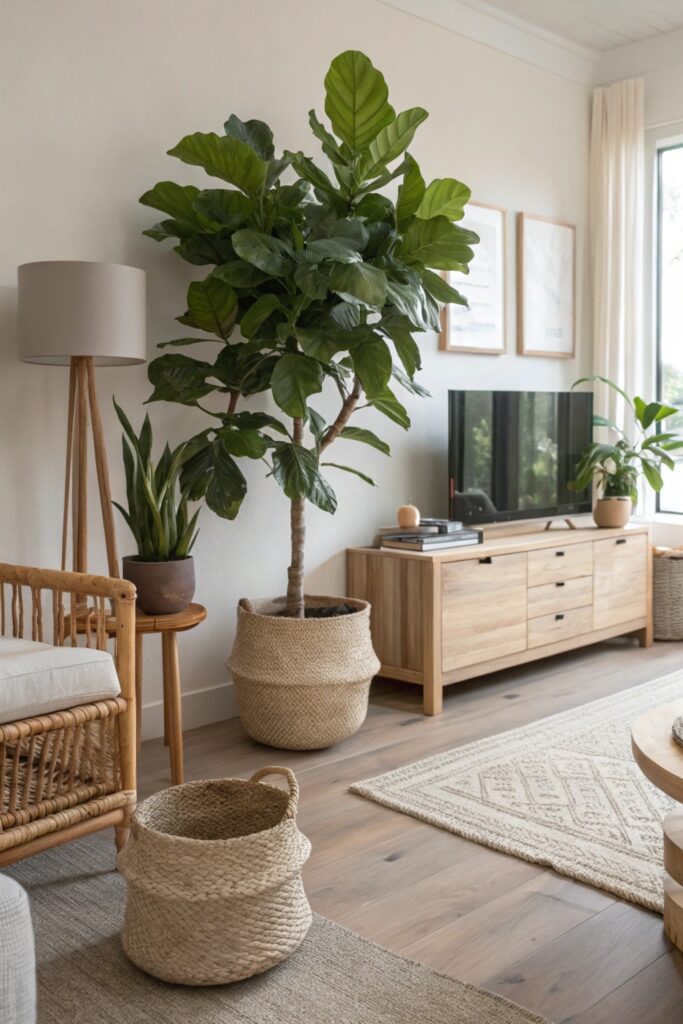
Plants bring life into Japandi living room designs—literally. I stick to simple greenery like fiddle leaf figs or snake plants.
One or two plants work better than a jungle situation. The goal feels calm, not chaotic. Been there, trimmed that.
Best plant tips:
- Neutral planters
- Natural textures
- Strategic placement
Plants soften clean lines and connect the space to nature. Plus, they make minimalism feel warmer and more human.
10. Japanese-Inspired Wall Decor
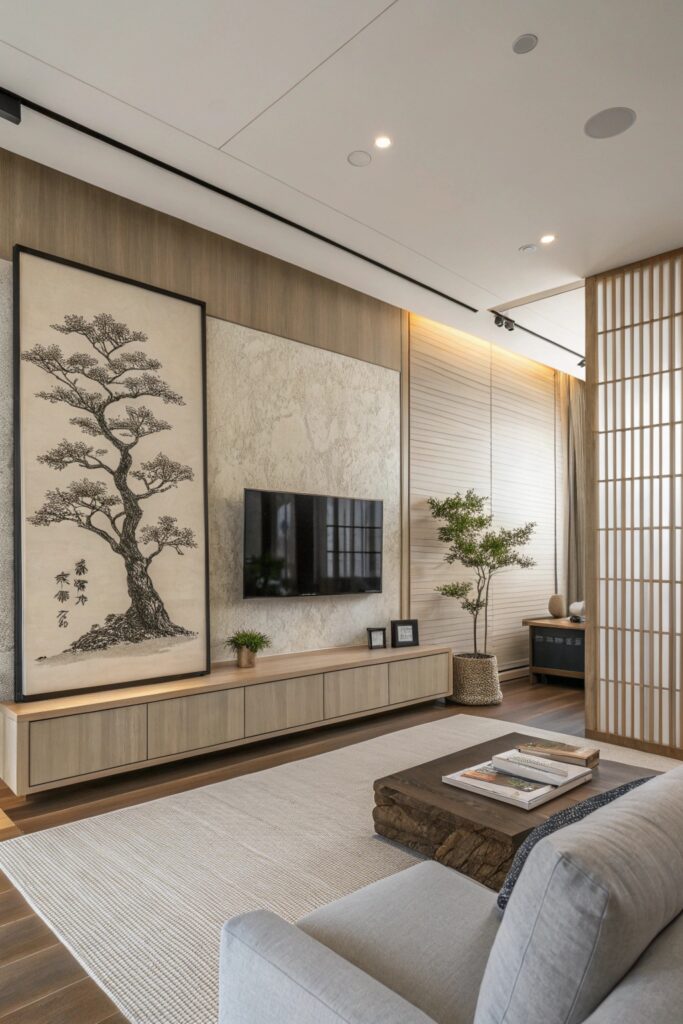
Wall decor stays minimal in Japandi living rooms, but it still makes an impact. I prefer one meaningful piece over a gallery wall explosion.
Japanese-inspired art, abstract prints, or textured panels fit perfectly. Negative space around art matters just as much as the art itself.
Wall styling ideas:
- Single framed print
- Fabric wall hangings
- Wood slat panels
Ever stare at a blank wall and feel calmer? That’s intentional restraint doing its job.
11. Scandinavian Cozy Meets Japandi Calm
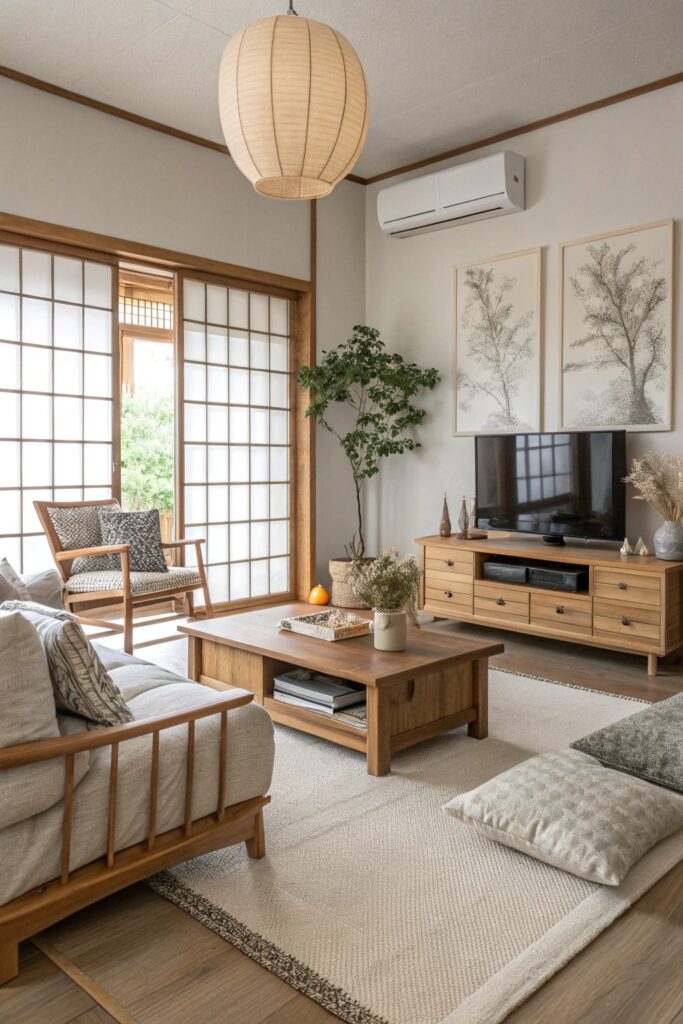
This combo feels like the heart of Japandi living room design. Scandinavian warmth balances Japanese simplicity beautifully.
I mix cozy textiles with clean silhouettes to keep the space welcoming. Too minimal feels cold. Too cozy feels cluttered.
Perfect balance includes:
- Soft throws
- Simple furniture
- Neutral palettes
The result feels livable, not showroom-perfect. That’s the sweet spot.
12. Minimal Storage Solutions
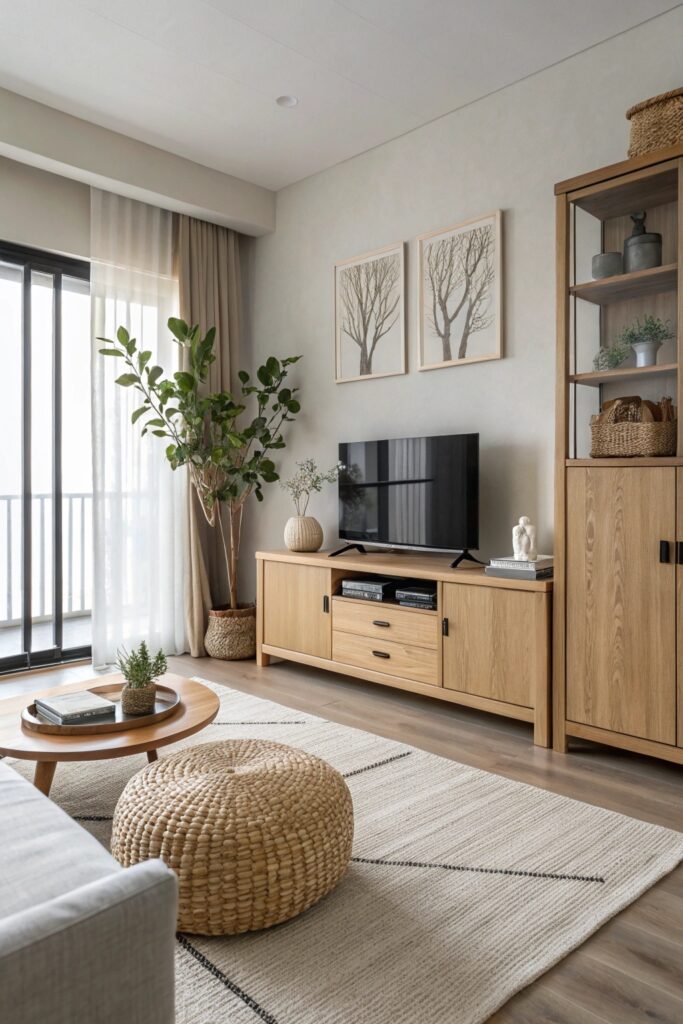
Japandi living rooms hide clutter like pros. I rely on closed storage with clean lines to maintain visual calm.
Built-in cabinets or low credenzas work best. Open shelving looks nice but demands discipline—trust me.
Storage strategies:
- Handle-less cabinets
- Natural wood finishes
- Multi-functional furniture
Less visible stuff equals more mental peace. Funny how storage choices affect your mood, right?
13. Zen-Focused Japandi Living Room Styling
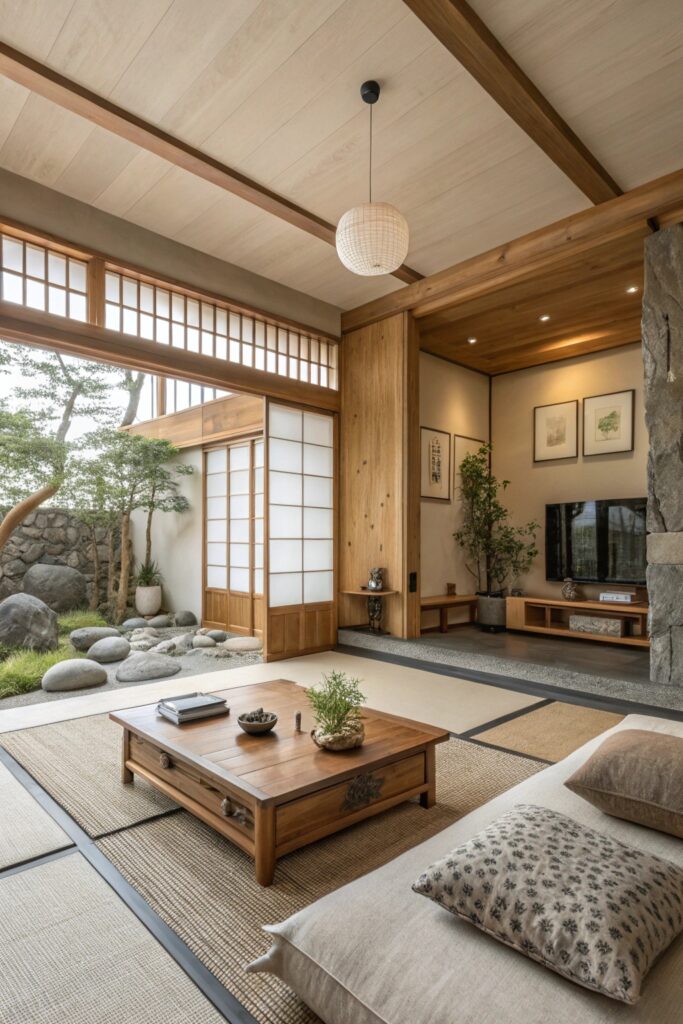
This design leans fully into mindfulness. I remove anything that doesn’t serve a purpose or spark calm. Ruthless editing helps here.
Zen styling favors intention over decoration. Every piece earns its place.
Zen essentials:
- Minimal accessories
- Balanced symmetry
- Calm color palette
Ever sit in a room and feel instantly centered? That’s zen-focused Japandi done right. Simple, thoughtful, and quietly powerful.
Conclusion
Japandi living room designs prove that calm doesn’t equal boring. They blend minimalist zen style with warmth, balance, and real-life comfort. I love how these spaces feel intentional without feeling stiff or precious.
If you take one thing away, let it be this: less clutter, better materials, and thoughtful choices change everything. You don’t need perfection—you need purpose.
So, which Japandi living room idea fits your vibe? Start small, trust your instincts, and edit ruthlessly. Your living room might just become your favorite place to slow down—and honestly, we all need more of that.