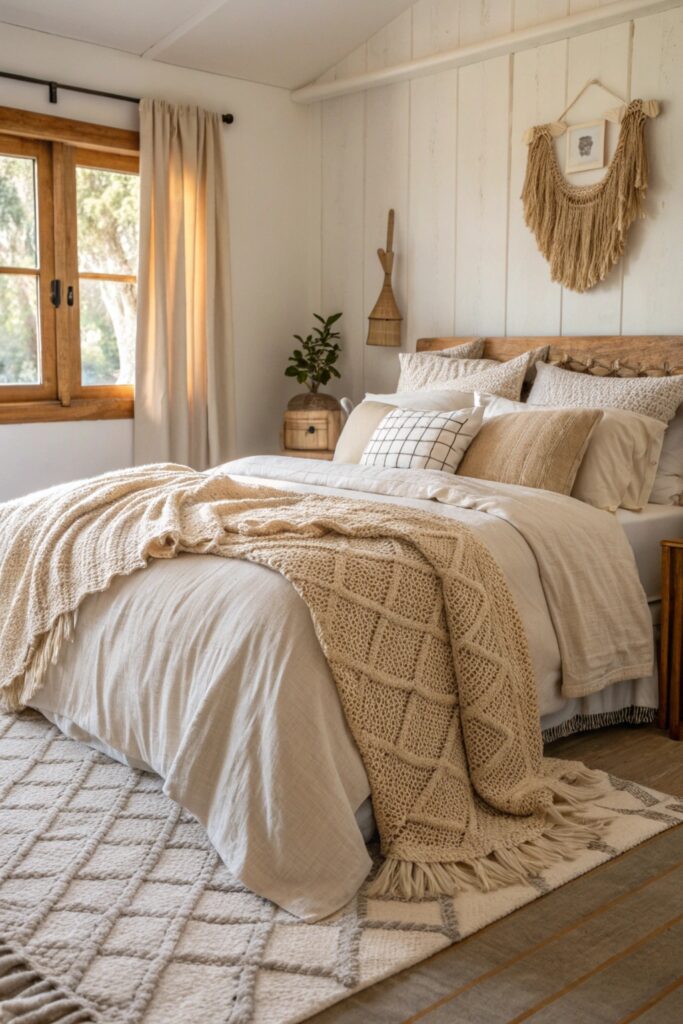
I fell in love with Japandi interiors bedroom design the first time I tried to make a tiny bedroom feel calm instead of cramped. I wanted peace, not piles of stuff staring back at me. If your small bedroom feels like it shrank overnight, you’re in the right place. Japandi blends Japanese simplicity with Scandinavian comfort, and honestly, it feels like deep breathing for your home. Who doesn’t want their bedroom to feel a little less chaotic?
Let’s talk real-life ideas you can actually use, not picture-perfect rooms that ignore budgets and square footage. I’ll share what works, what I’ve tried, and what I’d happily do again.
1. Low-Profile Beds That Keep Things Grounded
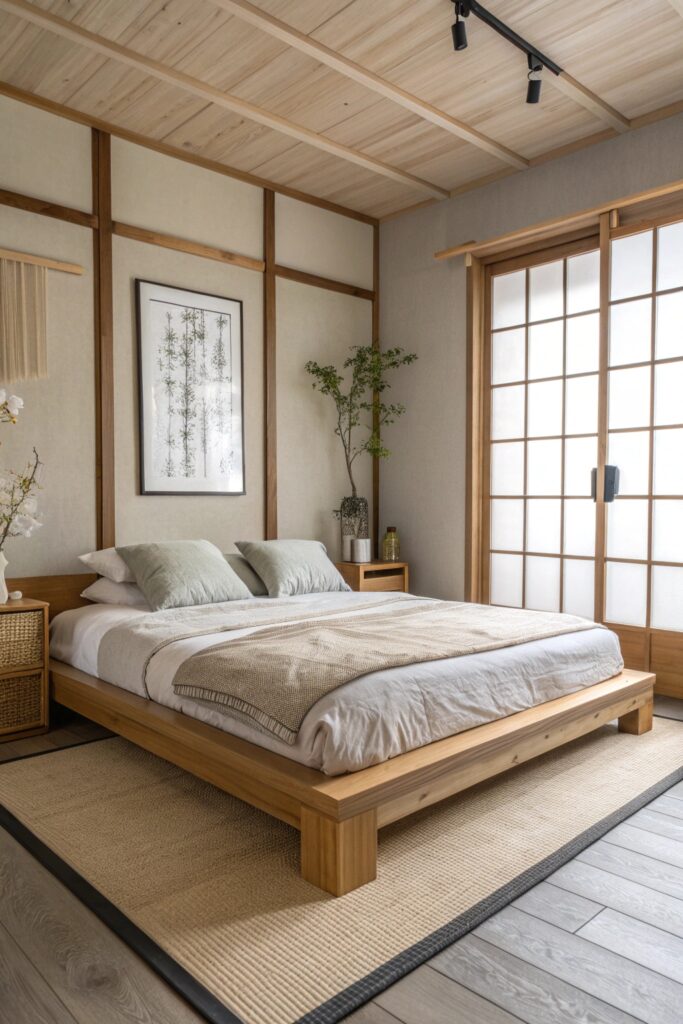
A low bed instantly makes a small room feel taller. I learned this the hard way after swapping a chunky frame for a sleek platform bed. The ceiling suddenly felt higher, and the room stopped shouting for attention.
Low beds fit perfectly into a Japandi interior bedroom design because they keep things grounded and calm. They also make the space feel more intentional. Ever notice how a lower bed makes everything feel slower and softer?
2. Neutral Color Palettes That Actually Feel Warm
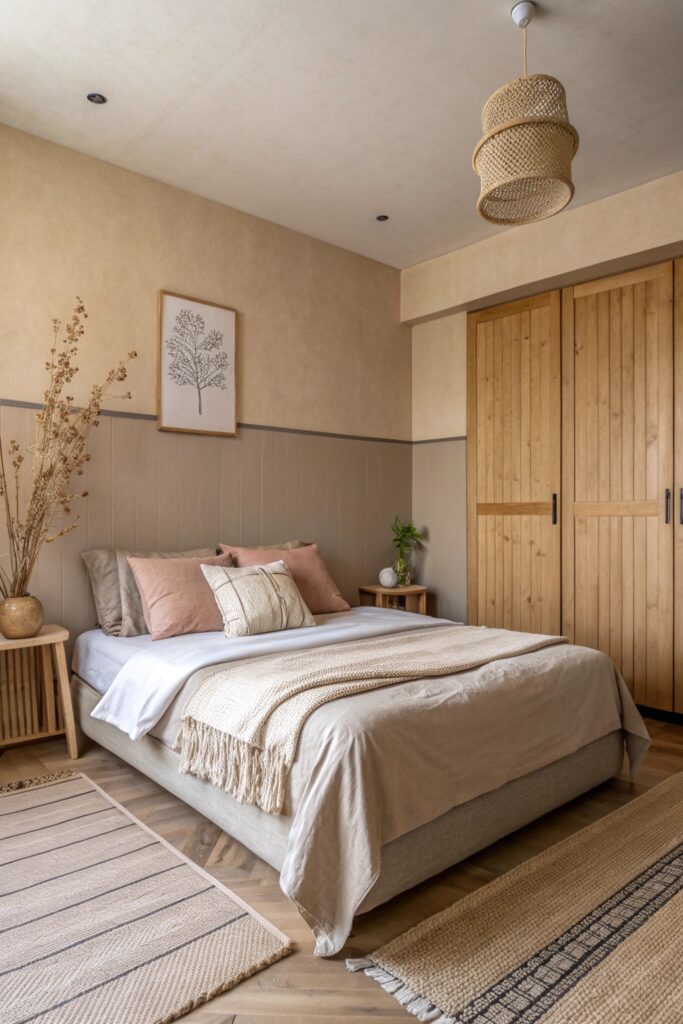
Japandi doesn’t mean boring beige everywhere. It means warm neutrals that relax your eyes. I stick to soft whites, sand tones, and light greys with a hint of warmth.
Here’s what works beautifully:
- Warm white walls instead of stark white
- Soft taupe or greige bedding
- Natural wood tones for contrast
These shades reflect light without feeling cold. Why fight your small space when you can make it glow instead?
3. Built-In Storage That Disappears
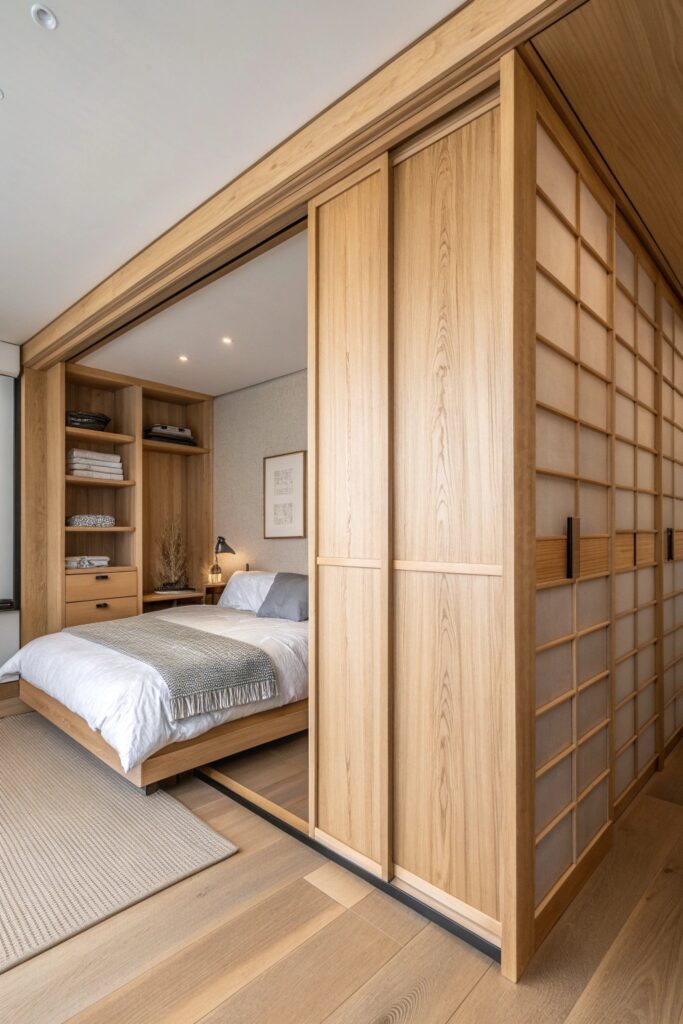
Small homes demand smart storage. I swear by built-in wardrobes that blend into the wall. They store everything while pretending they don’t exist.
Japandi bedroom ideas focus on visual calm. Hidden storage keeps the eye moving smoothly instead of stopping at clutter. Isn’t it funny how a room feels bigger when it stops reminding you of your mess?
4. Natural Wood That Adds Soul
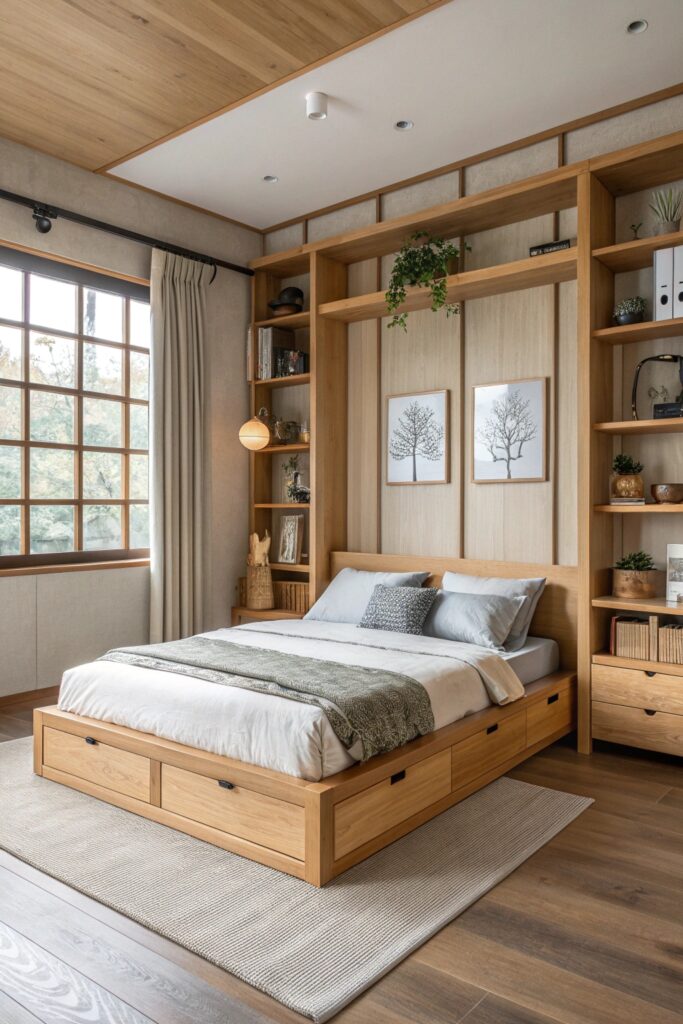
Japandi interiors bedroom style lives and breathes natural wood. I prefer light oak or ash because they keep things airy. Dark wood can work, but it needs balance.
Use wood thoughtfully:
- Bed frames or headboards
- Floating shelves
- Bedside tables
Wood adds warmth without noise. It quietly does its job, and honestly, that’s kind of the point.
5. Minimal Decor With Meaning
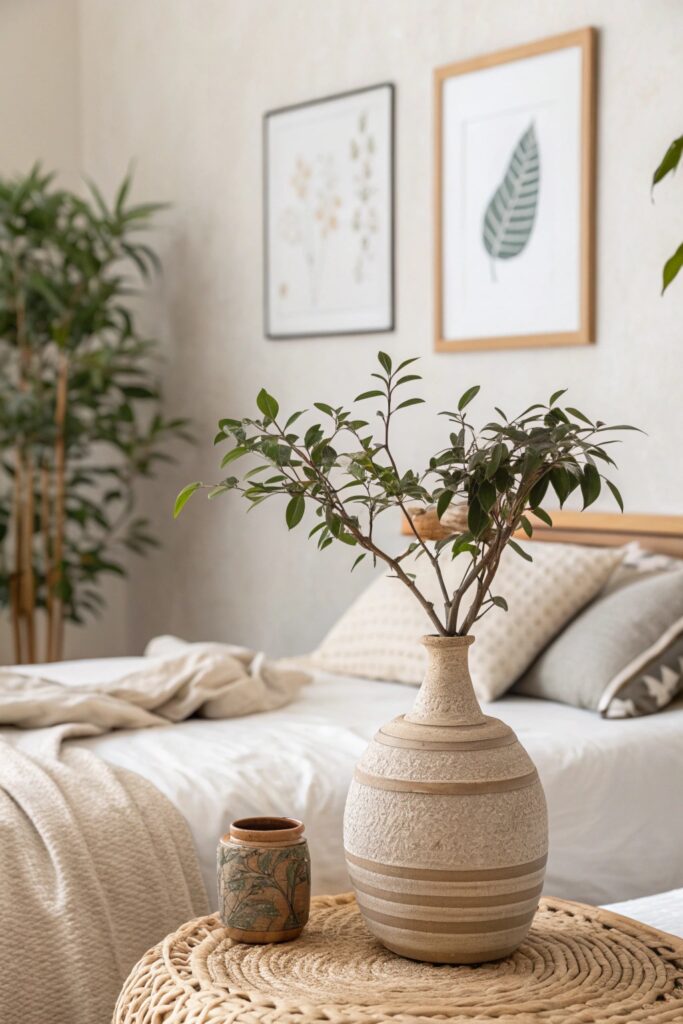
I used to overdecorate my bedroom. Plants, frames, candles—you name it. Japandi taught me to slow down and choose better, not more.
Stick to:
- One or two art pieces you love
- Handmade ceramics or pottery
- A single plant with character
Each item should earn its place. Do you really need five candles, or does one do the trick?
6. Soft Textiles That Invite You In
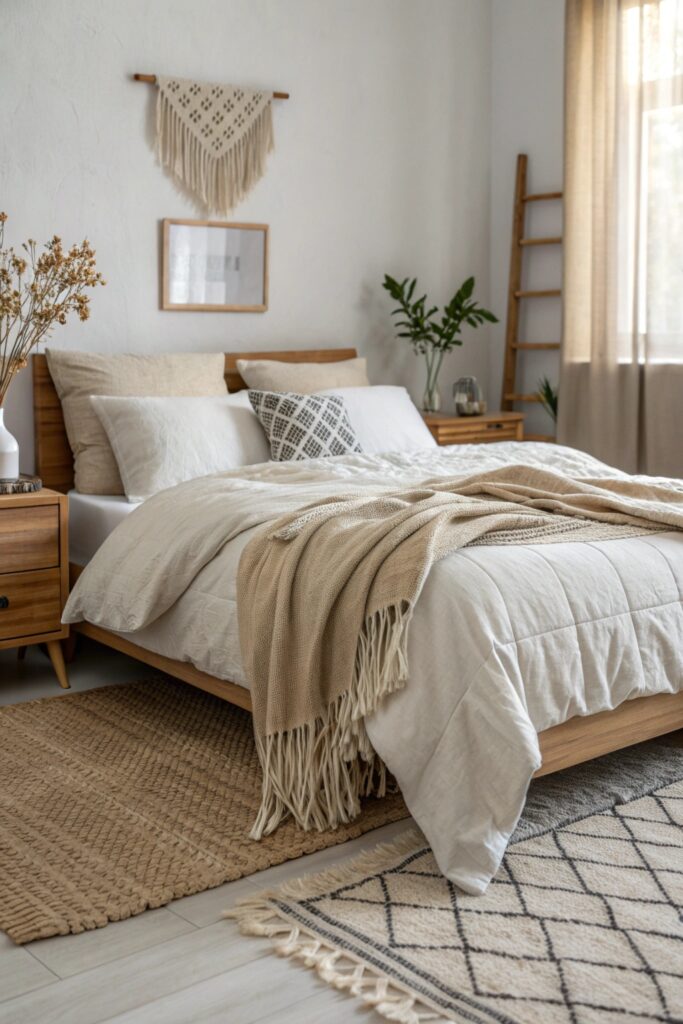
A modern Japandi bedroom never feels stiff. Soft textures balance all that minimalism. I layer linen, cotton, and wool to keep things cozy.
Try this combo:
- Linen duvet for breathability
- Cotton sheets for comfort
- Wool or knit throw for warmth
These textures make the room feel lived-in, not styled for strangers on the internet. Comfort always wins.
7. Floating Furniture to Free Floor Space
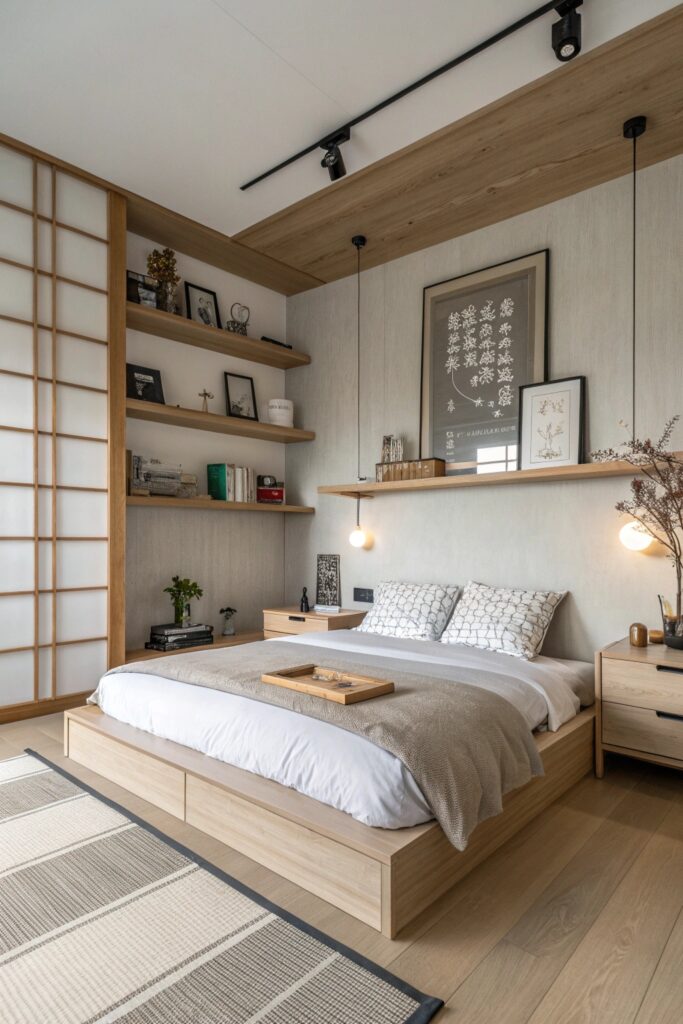
Floating furniture changed my small bedroom game completely. Wall-mounted nightstands and shelves open up the floor and make cleaning easier.
This approach fits the Japandi interior bedroom design perfectly because it feels light and intentional. Plus, who enjoys bumping into furniture at night anyway?
8. Sliding Doors That Save Space
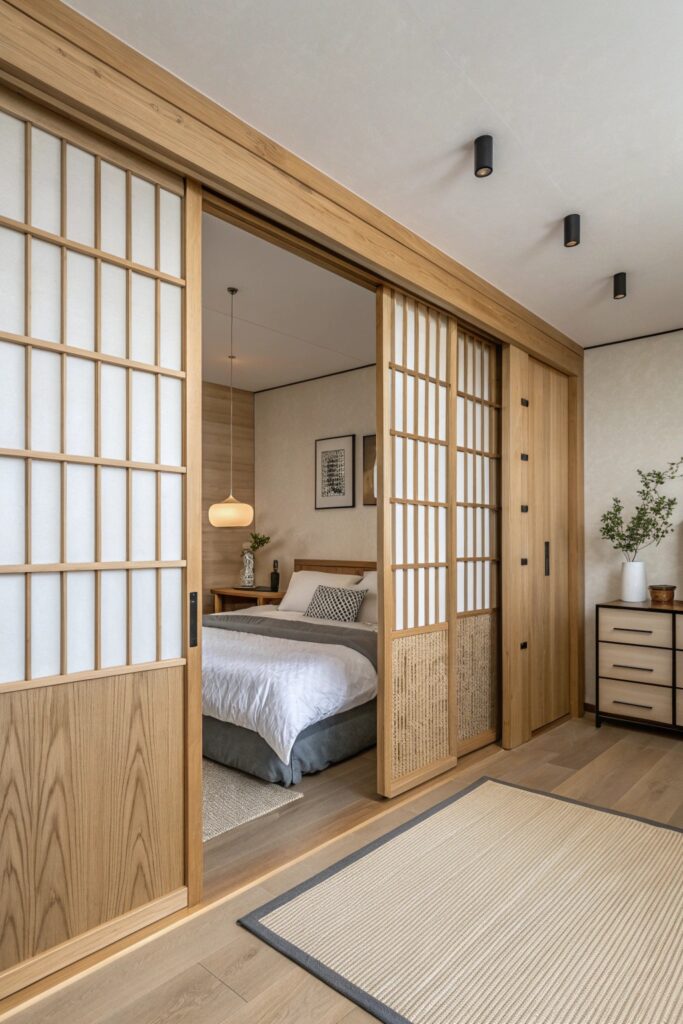
Traditional doors waste space. I replaced mine with a sliding wooden door, and I never looked back. It freed up room and added instant Japandi charm.
Sliding doors work well for:
- Wardrobes
- Ensuite bathrooms
- Entry points in tight rooms
They look sleek and solve real problems. That’s my kind of design win.
9. Natural Light as a Design Element
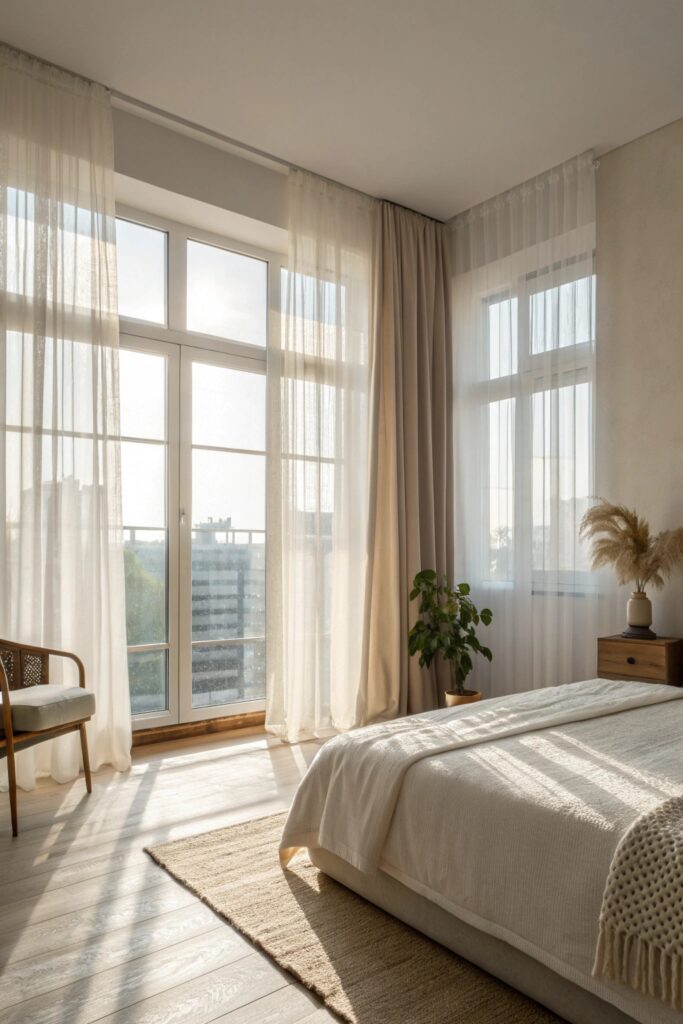
Japandi interiors bedroom styling treats light like decor. I avoid heavy curtains and use sheer fabrics instead. Natural light makes even the smallest bedroom feel open.
If privacy matters, layer sheer curtains with simple blinds. Why block sunlight when it does half the work for you?
10. Simple Lighting That Sets the Mood
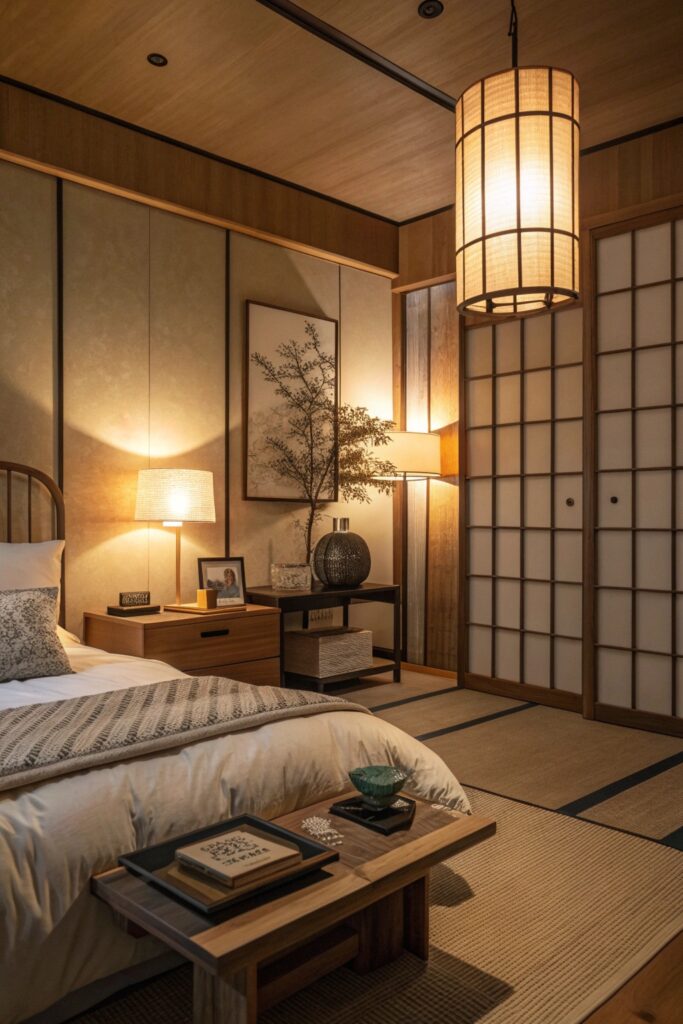
Overhead lights alone ruin the vibe. I mix soft bedside lamps with warm wall sconces. The room instantly feels calmer.
Good lighting tips:
- Warm bulbs only
- Minimal fixtures
- Focus on mood, not brightness
Lighting should whisper, not shout. Your bedroom isn’t a supermarket.
11. Floor-Level Seating for a Zen Feel
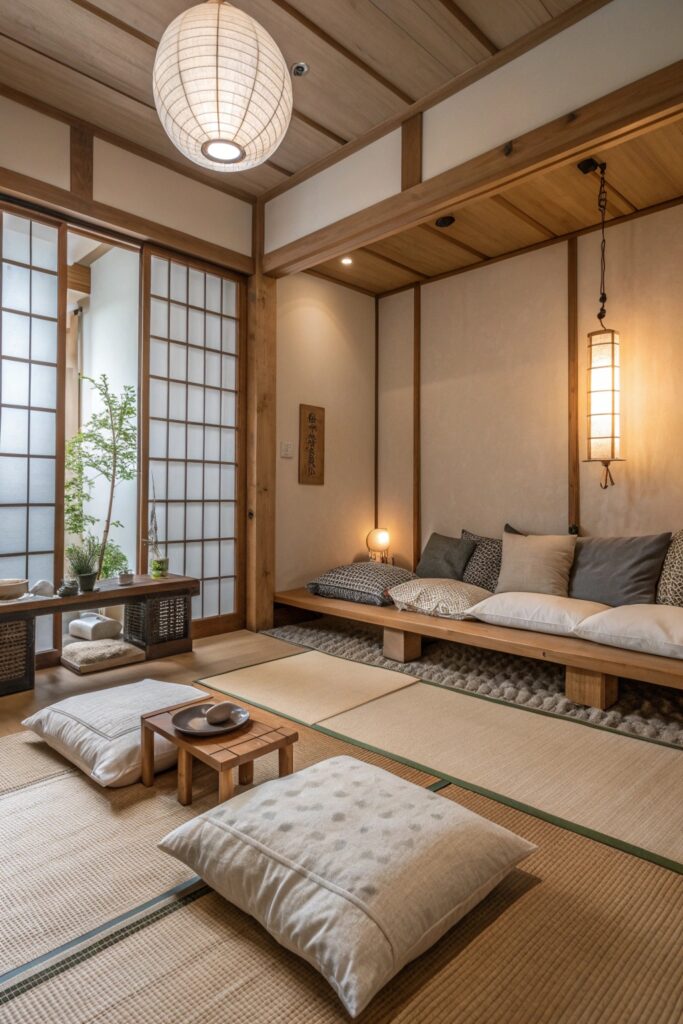
This one surprised me. A small floor cushion or low bench adds function without clutter. It gives you a spot to read, meditate, or just exist.
Floor-level seating fits modern Japandi bedroom design because it keeps everything connected to the ground. Ever notice how sitting low instantly slows you down?
Making Japandi Work in Real Life
Japandi interiors bedroom design doesn’t demand perfection. It asks for intention. I mix old and new, affordable and handmade, simple and cozy.
Focus on:
- Fewer but better items
- Calm colors and textures
- Smart use of space
You don’t need a massive room or budget. You need clarity.
Common Mistakes to Avoid
I’ve made these mistakes, so you don’t have to:
- Going too cold with colors
- Over-minimalizing until it feels empty
- Ignoring comfort for aesthetics
Japandi should feel welcoming, not museum-like. If you can’t relax, something’s off.
Why Japandi Feels So Right for Small Homes
Small homes benefit from simplicity. Japandi removes visual noise and adds warmth. That combination makes rooms feel bigger and calmer.
I notice better sleep and less stress in a Japandi-style bedroom. Coincidence? I don’t think so.
Conclusion
A thoughtfully designed Japandi interiors bedroom can completely change how a small home feels. These ideas focus on comfort, calm, and smart choices you can actually live with. Start small, trust your instincts, and let your bedroom breathe a little. Who knows, you might even look forward to bedtime more than ever.