If you’ve ever opened Pinterest at midnight, searched japandi bedroom design mood board, and suddenly questioned every furniture choice you’ve ever made—welcome, you’re among friends. I’ve been there too, staring at calm beige rooms while my actual bedroom looked like it missed the memo. The good news? Japandi isn’t about perfection. It’s about intention, comfort, and a vibe that actually works in real life.
I love Japandi because it feels calm without being boring and minimal without feeling cold. It mixes Japanese simplicity with Scandinavian coziness in a way that feels practical, not precious. Let’s walk through 11 Japandi bedroom mood board ideas that make planning easier and don’t require a design degree or a trust fund.
1. Soft Neutrals with Warm Wood Anchors
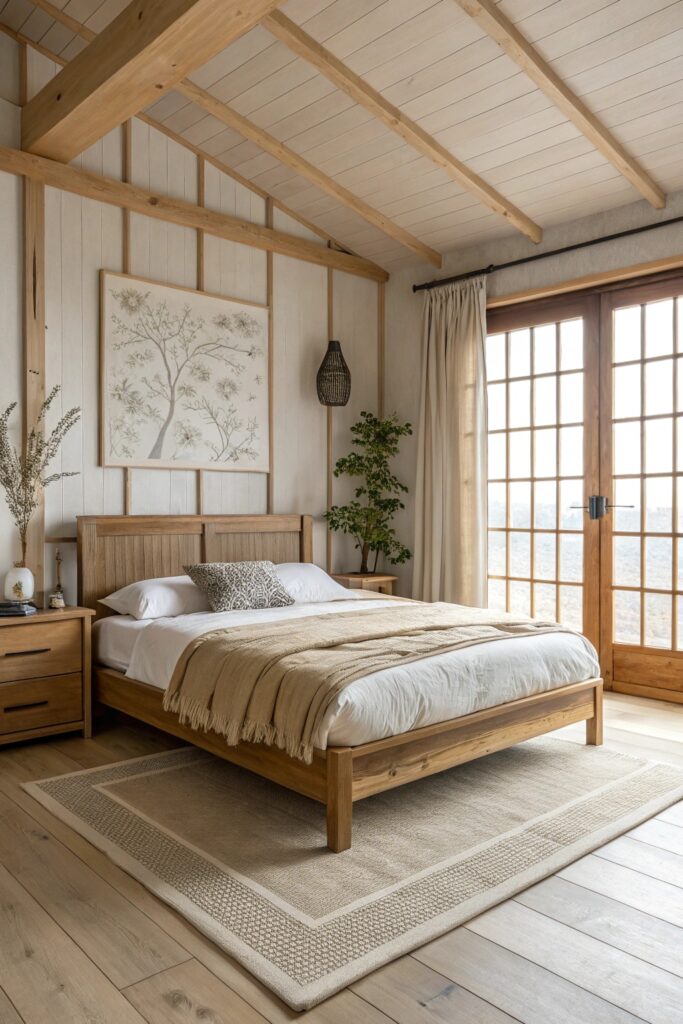
This is where most Japandi journeys begin, and honestly, for good reason. A mood board built around warm wood tones and soft neutrals creates an instant sense of calm. I used this approach in my own room, and even my laundry piles somehow look less offensive.
Think:
- Light oak or ash wood furniture
- Cream, beige, and warm white walls
- Linen or cotton bedding with subtle texture
This Japandi bedroom design works because it feels timeless. Ever notice how you don’t get tired of it? That’s the magic.
2. Low Bed, Big Impact Layout
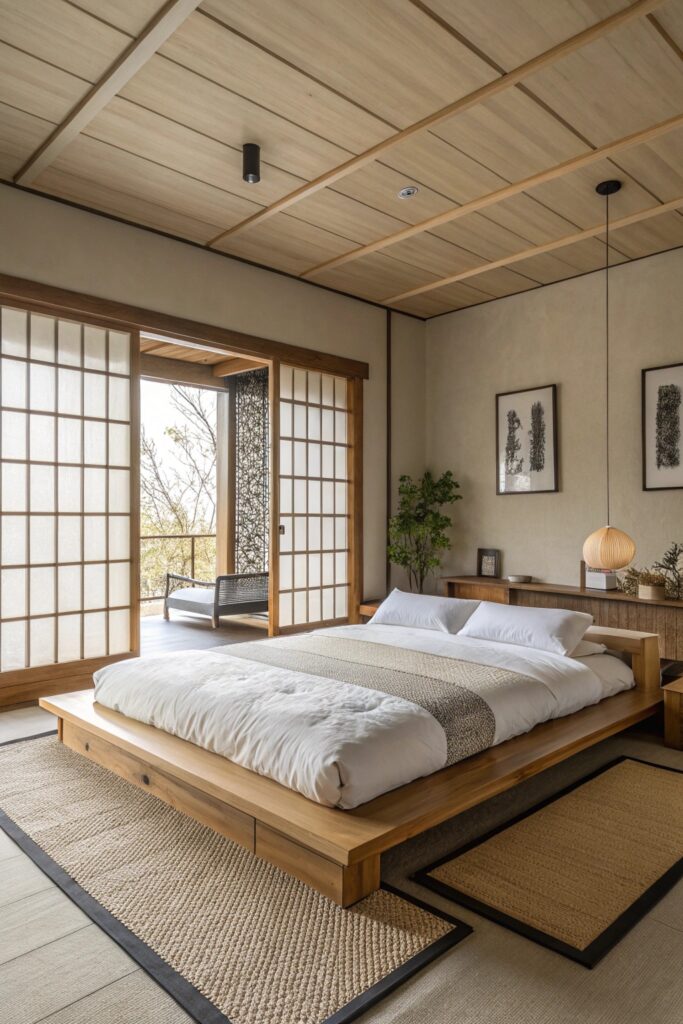
A low-profile bed screams Japandi without actually screaming. It grounds the room and instantly makes the space feel intentional. Plus, it subtly reminds you to slow down, which feels very on brand.
I prefer platform beds with clean lines and no visible hardware. Pair it with a simple rug underneath to define the sleeping zone. Why complicate something that already works so well?
3. Neutral-on-Neutral Texture Play
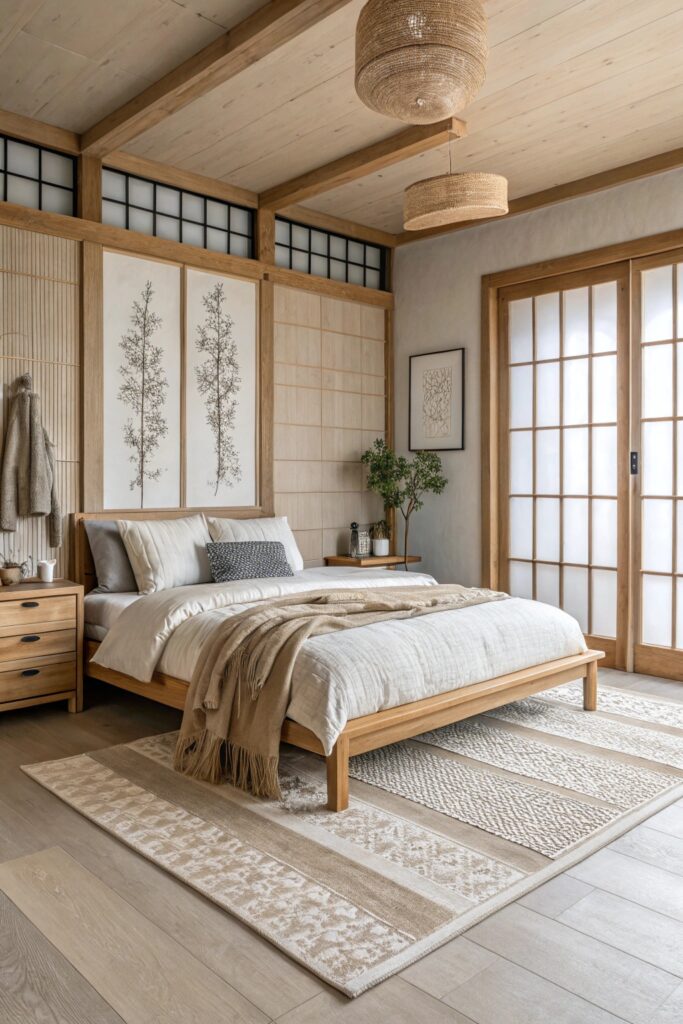
Color takes a back seat here, but texture drives the whole mood board. This idea works wonders when you want calm without flatness. I learned the hard way that all-beige without texture feels like living inside a plain rice cake.
Layer these elements:
- Linen bedding
- Wool or jute rugs
- Matte ceramic decor
- Light wood grain finishes
Japandi interiors bedroom styling thrives on quiet contrast. Texture does the talking.
4. Earthy Accents That Feel Collected
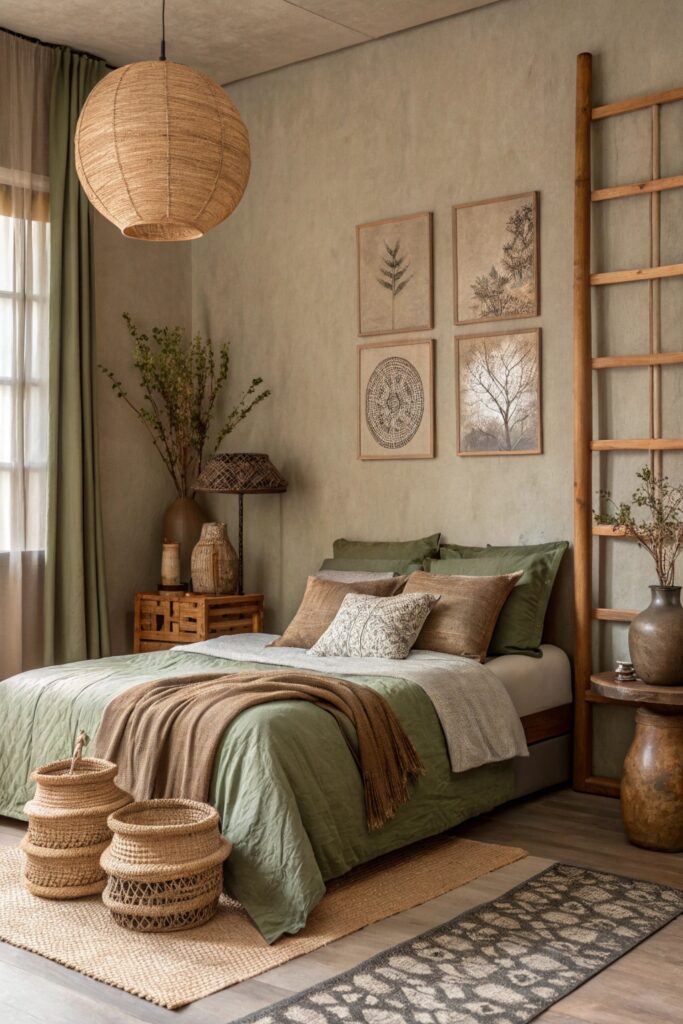
This mood board idea leans into earthy tones like clay, taupe, olive, and soft charcoal. I love this look because it feels curated, not staged. Nothing looks like it came in a matching set.
Add accents through:
- Handmade pottery
- Muted art prints
- A single sculptural vase
Ask yourself: Does this feel calm or cluttered? Japandi always chooses calm.
5. Minimalist Lighting with Warm Glow
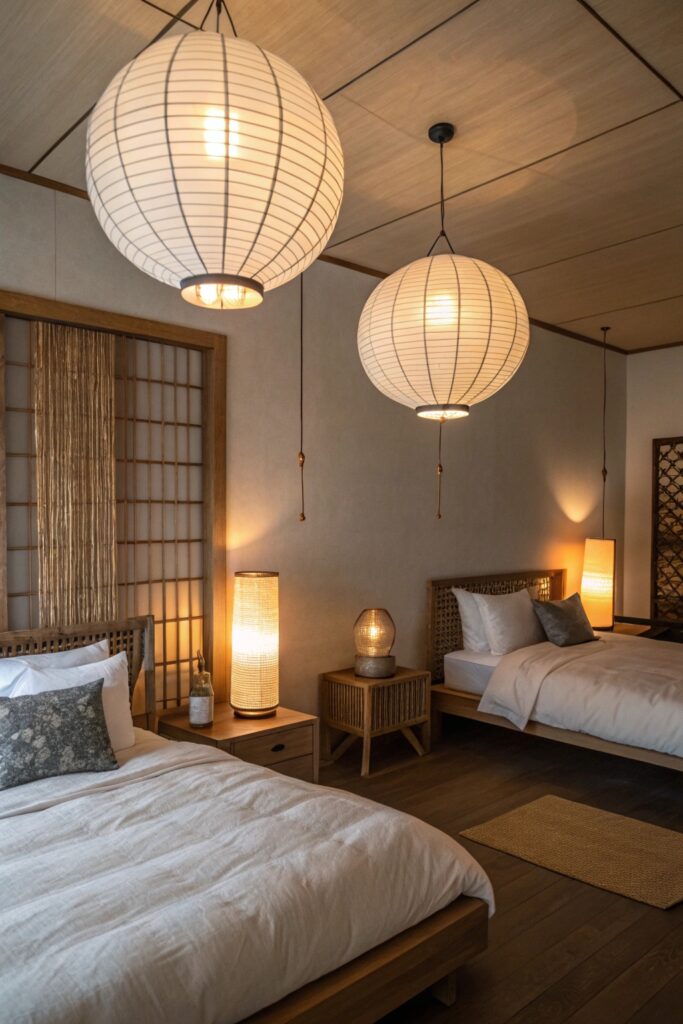
Lighting can make or break your Japandi bedroom design, and I will die on this hill. Harsh white lighting ruins the vibe faster than anything else. I learned this after one brutal LED bulb mistake.
Your mood board should include:
- Paper lanterns or fabric pendants
- Bedside lamps with warm bulbs
- Soft ambient lighting instead of overhead glare
Good lighting makes even simple furniture feel intentional. Bad lighting just feels… sad.
6. Nature-Inspired Calm with Indoor Greens

Japandi and nature go hand in hand, but we’re not turning your bedroom into a jungle. One or two thoughtfully chosen plants bring life without chaos. I stick to plants that don’t punish me for forgetting to water them.
Great options include:
- Olive trees
- Snake plants
- Dried branches in ceramic vases
This bedroom ideas Japandi approach adds softness and a lived-in feel that photos alone can’t achieve.
7. Japandi Meets Subtle Contrast
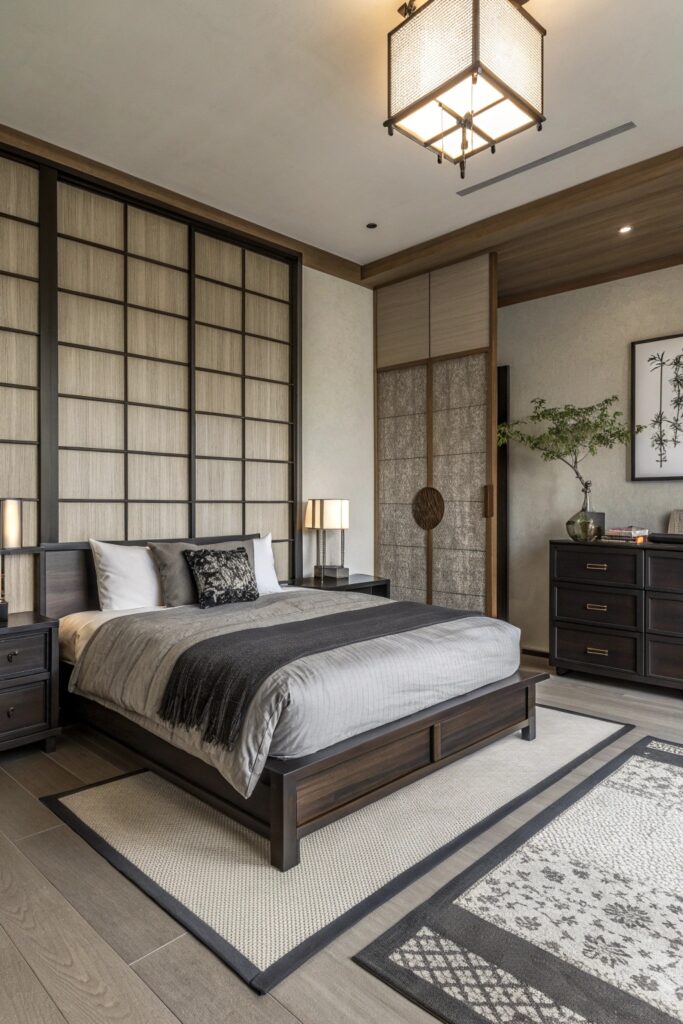
Not all Japandi bedrooms have to be light and airy. This mood board introduces contrast through darker woods or charcoal accents. It feels cozy, grounded, and a bit more dramatic.
Try mixing:
- Dark-stained wood with pale walls
- Black metal accents in small doses
- Neutral bedding to balance the contrast
Ever notice how contrast makes a room feel more intentional? Exactly.
8. Calm Walls with Purposeful Art

Blank walls feel peaceful until they feel unfinished. Japandi art should feel quiet, not loud. I prefer one or two pieces that actually mean something to me.
Think:
- Abstract line art
- Nature-inspired prints
- Soft, muted color palettes
A Japandi bedroom design mood board shines when art feels like a whisper, not a shout.
9. Functional Storage That Disappears
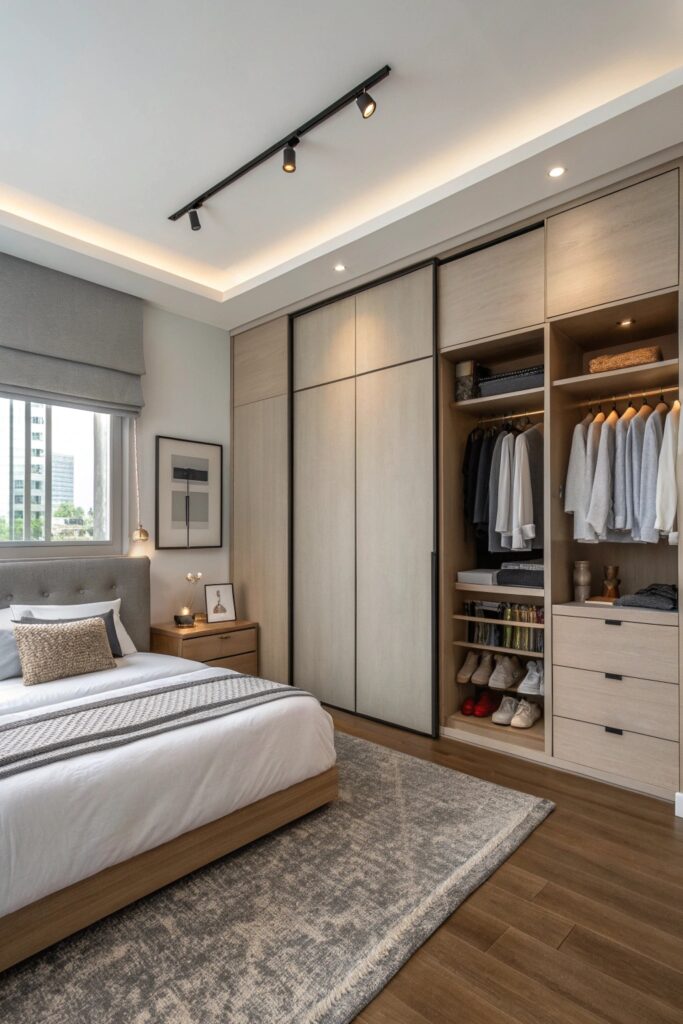
Clutter kills calm faster than anything. This mood board idea focuses on smart storage that blends in. I swear by furniture that works hard but looks effortless.
Include:
- Built-in wardrobes with flat fronts
- Floating nightstands
- Under-bed storage with clean lines
If you can’t see it, your brain relaxes. Science? Maybe. Truth? Absolutely.
10. Cozy Textiles with Seasonal Flexibility
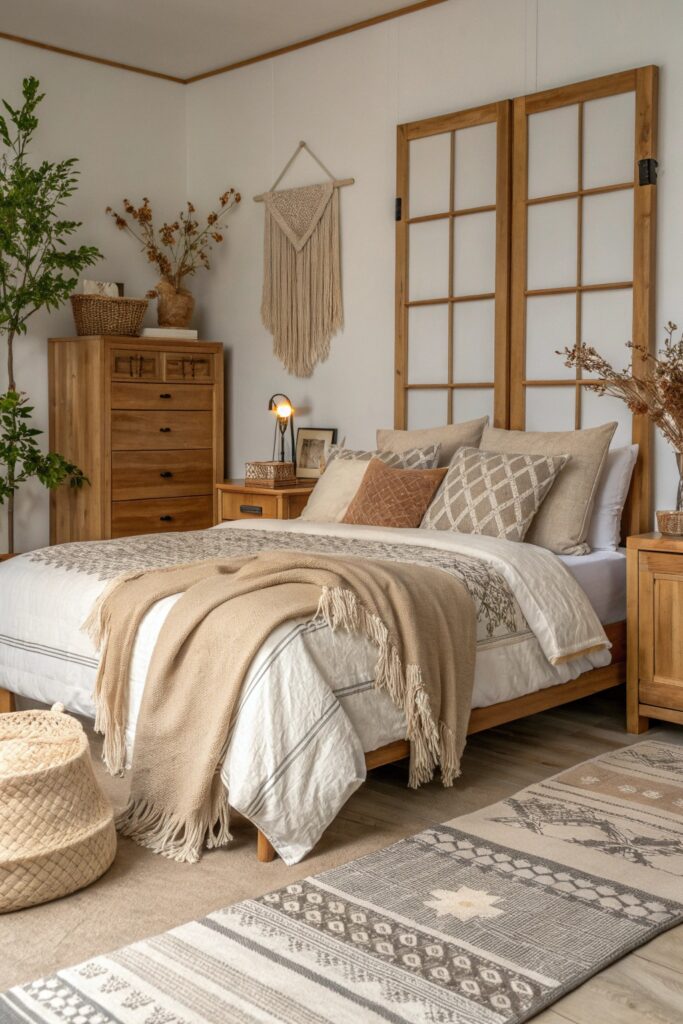
Japandi bedrooms feel cozy without looking heavy. This mood board approach focuses on layers you can switch out without redoing the entire room. I change my throws like other people change playlists.
Build flexibility with:
- Neutral base bedding
- Seasonal throws or cushions
- Natural fabrics only
This keeps your Japandi interiors bedroom fresh year-round without design burnout.
11. Balanced Symmetry for Visual Calm
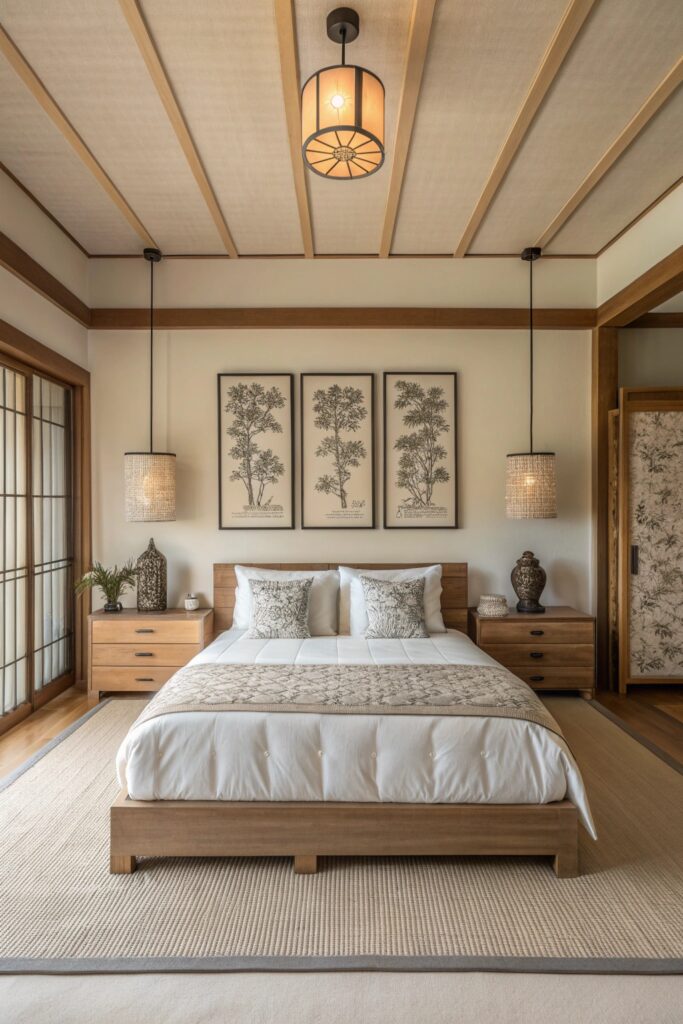
This final mood board idea leans into balance and symmetry. Matching nightstands, aligned lamps, and centered art create instant calm. It feels orderly without feeling rigid.
Symmetry works especially well if your brain hates visual noise. And honestly, who doesn’t after a long day?
Final Thoughts on Planning Your Japandi Mood Board
A Japandi bedroom design mood board isn’t about copying a perfect image online. It’s about creating a calm, functional space that fits your real life. Start with materials, layer textures, and choose pieces that actually serve you.
If you take one thing away, let it be this: Japandi rewards intention, not excess. Plan slowly, trust your instincts, and build a bedroom that makes you exhale the moment you walk in. Isn’t that the whole point?