If you’ve ever searched for bedroom design Japandi inspiration and felt instantly calmer, you’re not alone. Japandi has that quiet magic—it mixes Japanese calm with Scandinavian comfort without trying too hard. I fell for it when my own bedroom started feeling cluttered and noisy, even when it was technically “clean.” Ever had that problem? Let’s talk about how Japandi fixes it in real, livable ways you can actually pull off at home.
1. Low-Profile Beds That Keep Life Grounded
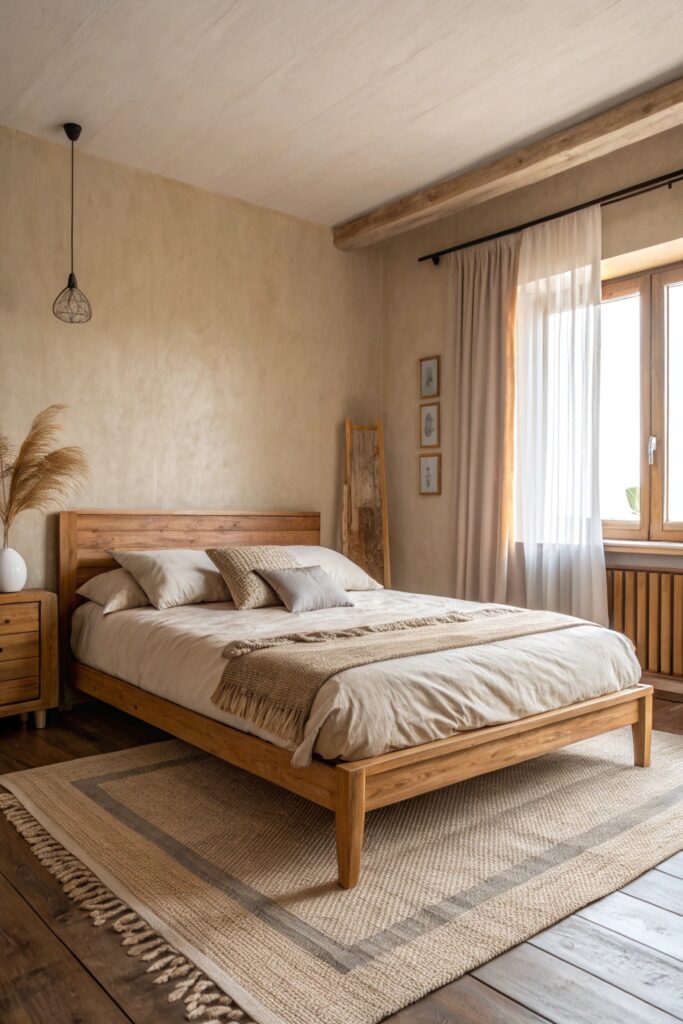
Japandi bedrooms love staying close to the floor, and honestly, I get why. A low-profile bed instantly makes the room feel calmer and more intentional. It also visually opens up the space, which helps if your bedroom isn’t exactly palace-sized.
I tried this after years of bulky bed frames, and wow—it changed the mood overnight. Why does sleeping lower feel so relaxing? Maybe because your brain finally stops shouting and starts whispering.
2. Neutral Color Palettes That Never Get Old
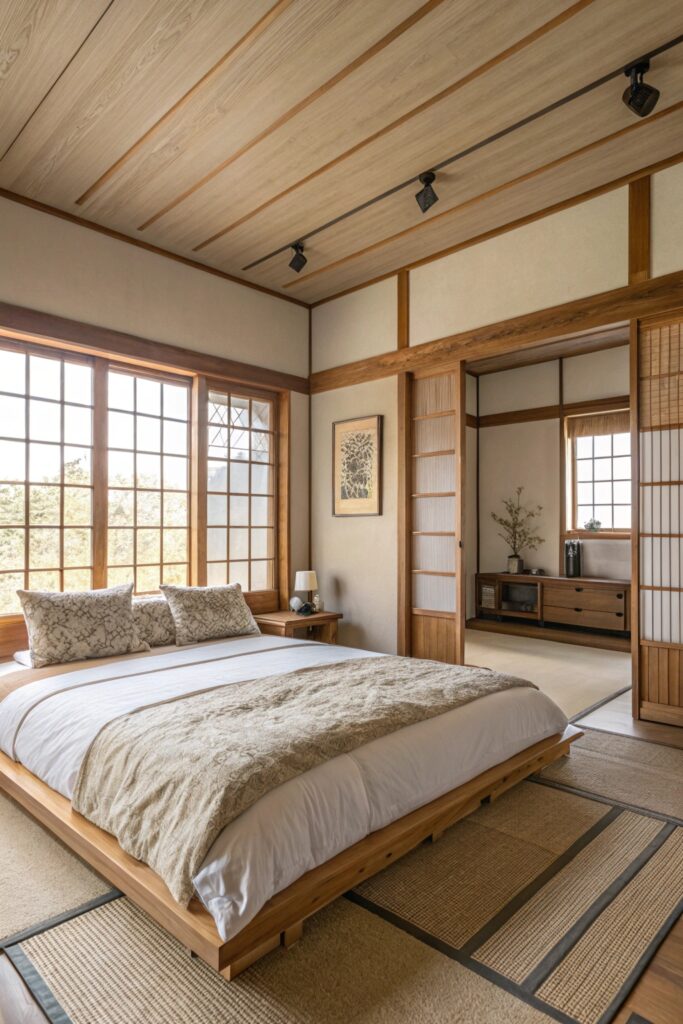
Japandi bedroom design thrives on soft neutrals like beige, warm white, greige, and muted taupe. These colors don’t chase trends, and they don’t get annoying after six months. They just sit there quietly doing their job.
I stick to:
- Warm whites instead of stark white
- Earthy beiges with a hint of gray
- Soft browns inspired by natural wood
Does color really affect sleep? Trust me, your eyes know the answer.
3. Natural Wood That Feels Honest
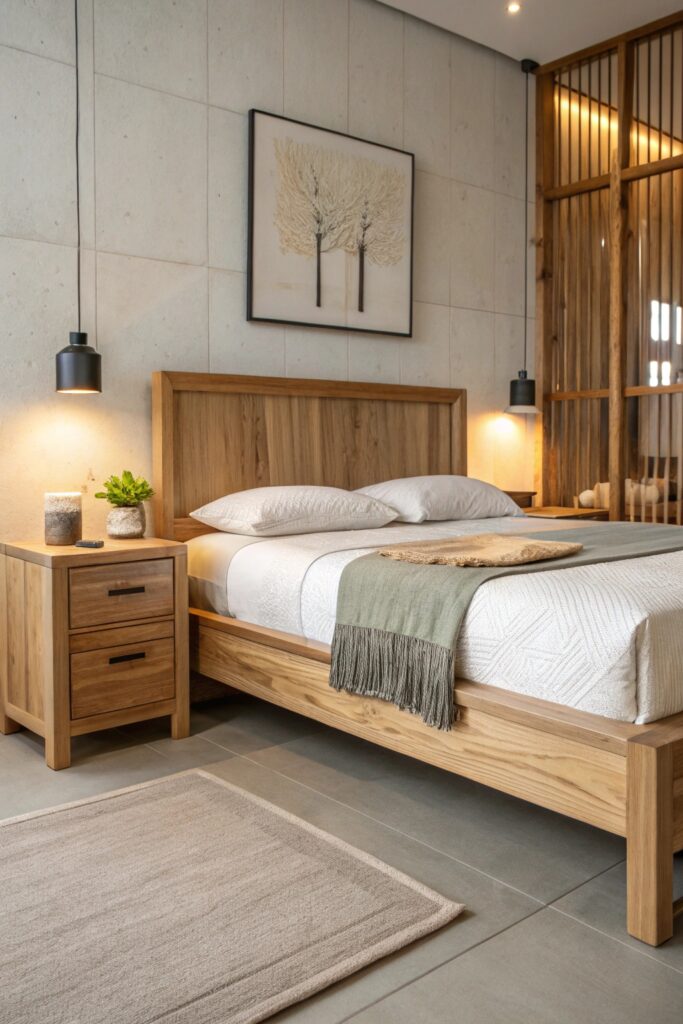
Every Japandi interior bedroom needs real or realistic wood tones. Think oak, ash, or walnut with visible grain. Skip glossy finishes because Japandi doesn’t show off—it whispers.
I swapped shiny furniture for matte wood, and the room instantly felt warmer. Isn’t it funny how fake finishes always feel a little… fake?
4. Minimal Furniture With Maximum Purpose
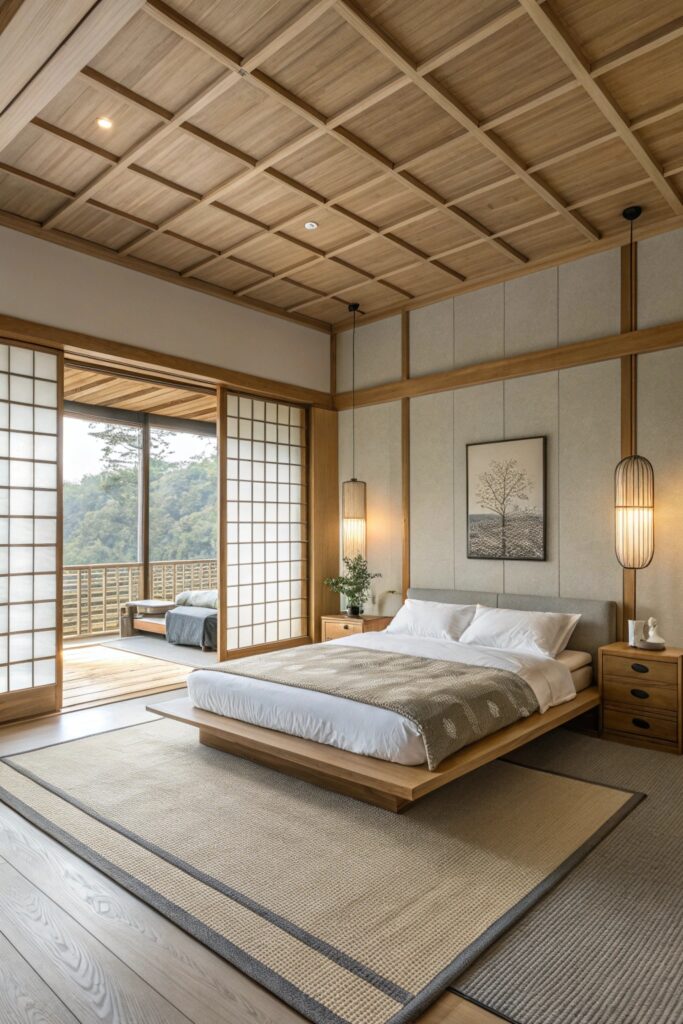
Japandi style bedroom layouts hate clutter, but they love usefulness. Every piece of furniture earns its place. If it doesn’t serve a purpose, it politely exits the room.
Focus on:
- One bed
- One or two nightstands
- A simple wardrobe or dresser
Do you really need that extra chair that just holds laundry? Be honest.
5. Soft, Layered Lighting Instead of Harsh Overheads
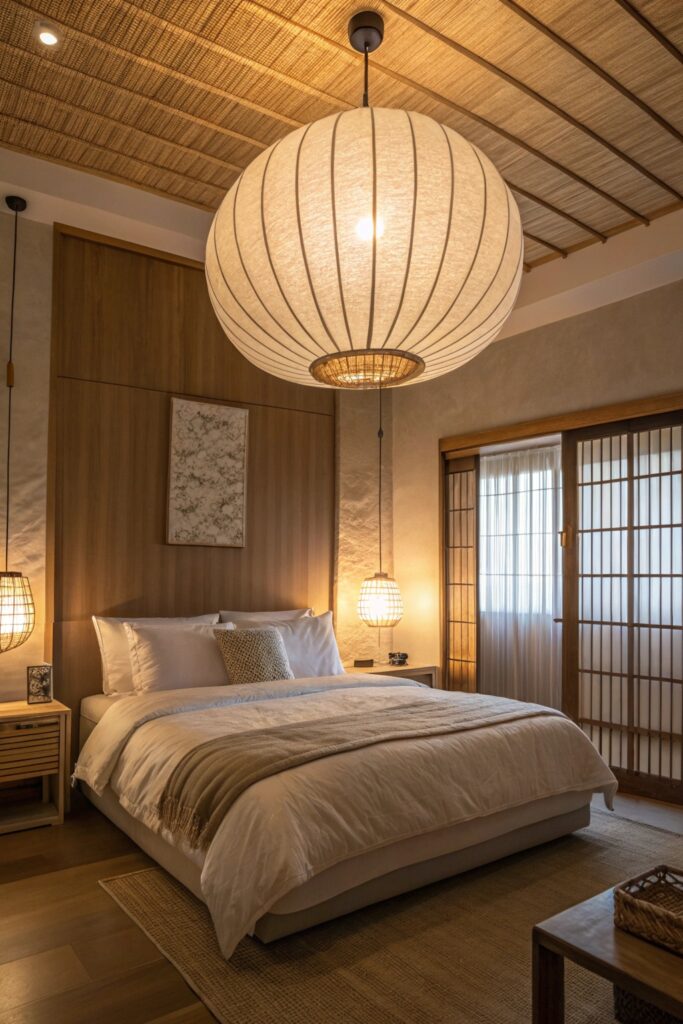
Overhead lighting alone kills the mood faster than a loud alarm clock. Japandi bedrooms use layered lighting to create softness and depth. I learned this the hard way after years of relying on one ceiling light.
Try:
- Paper or fabric pendant lights
- Warm bedside lamps
- Hidden LED strips behind headboards
Ever noticed how soft light makes everything feel more expensive?
6. Textures That Invite You In

Japandi bedroom design looks simple, but it never feels flat. Texture does all the heavy lifting. Linen, wool, cotton, and light wood keep the space interesting without visual noise.
I love mixing:
- Linen bedding
- A wool throw
- A subtly woven rug
Why does texture matter so much? Because your eyes crave variety, even when your mind wants calm.
7. Calm Walls That Don’t Compete for Attention
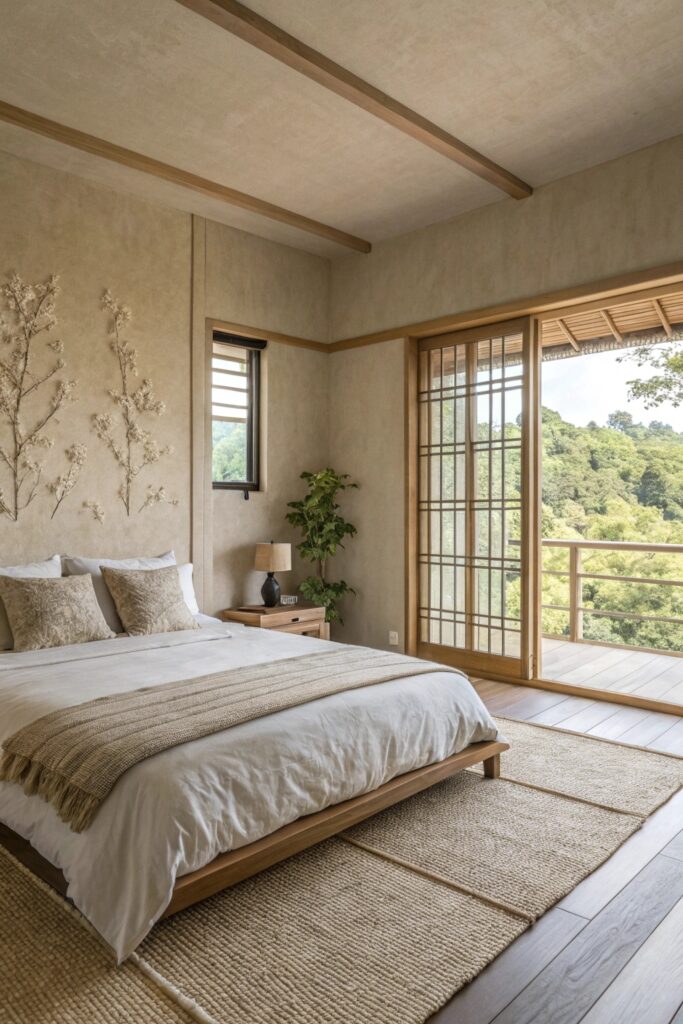
Walls in a Japandi-style bedroom stay quiet on purpose. Neutral paint, limewash finishes, or light wood paneling work beautifully. Loud wallpapers and busy patterns take a backseat here.
I once tested a bold accent wall and immediately regretted it. Have you ever stared at a wall and felt stressed for no reason?
8. Thoughtful Decor, Not Shelf Clutter
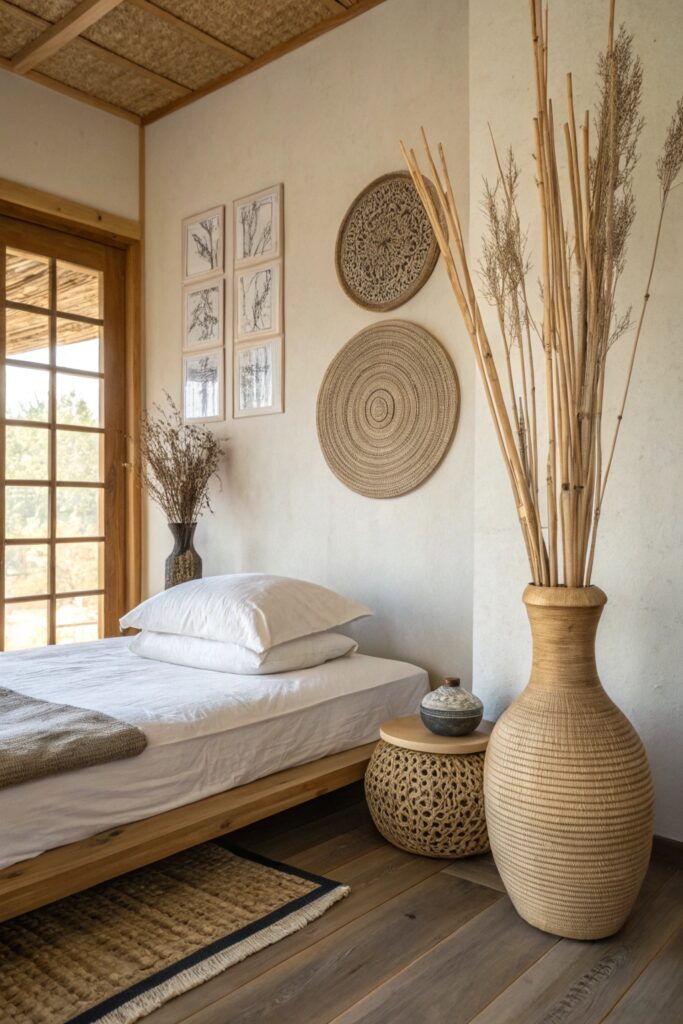
Japandi decor follows a strict rule: less, but better. One ceramic vase beats five random decor items every time. I now choose pieces slowly, and I enjoy them way more.
Stick to:
- Handmade pottery
- Simple art with space to breathe
- Natural elements like stone or wood
Doesn’t it feel nicer when every object has a story?
9. Built-In Storage That Hides the Chaos
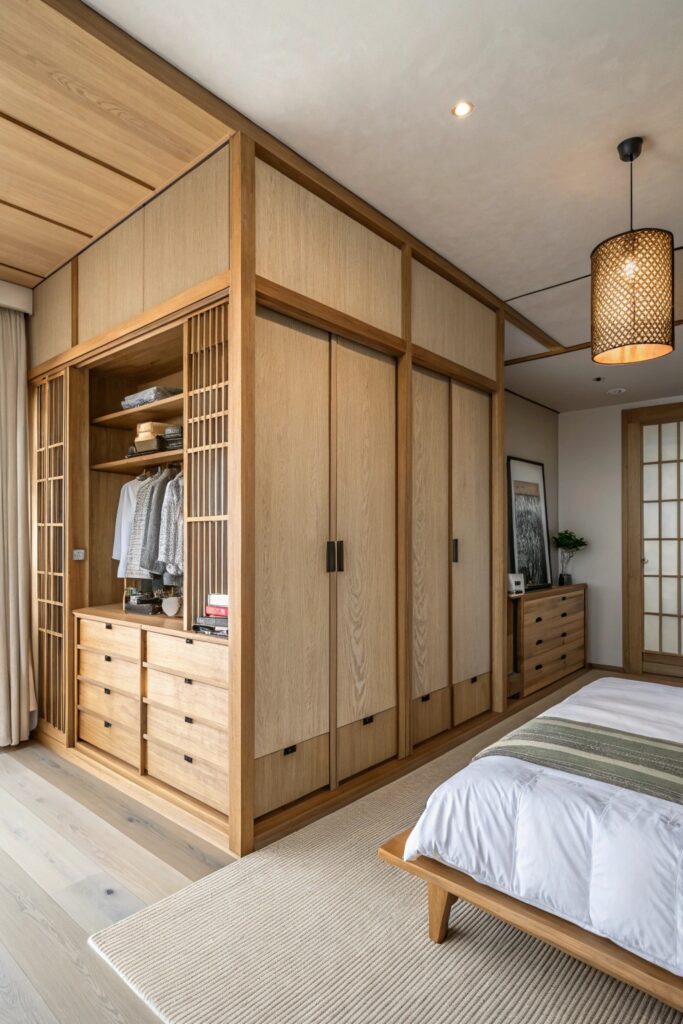
A timeless Japandi interior bedroom looks calm because it hides real life. Built-in wardrobes, under-bed drawers, and closed storage keep visual clutter away. I swear this alone improved my sleep.
Smart storage ideas include:
- Flush wardrobes
- Storage benches
- Minimal drawer handles
Why let mess steal your peace when cabinets exist?
10. Soft Bedding That Feels Lived-In
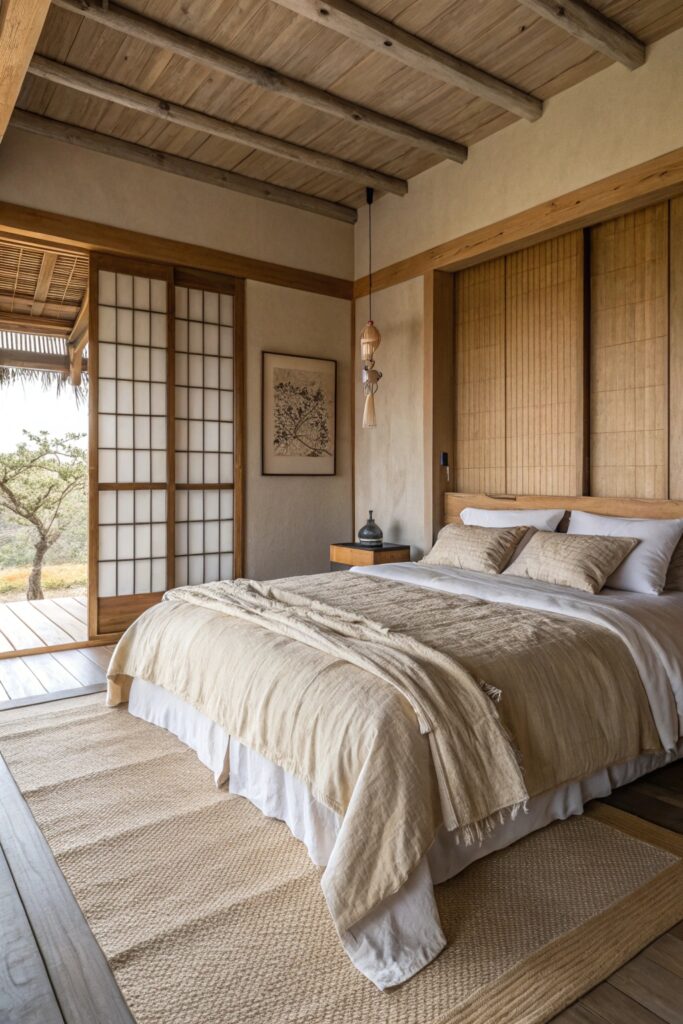
Japandi bedding never looks stiff or hotel-perfect. It looks comfortable, slightly wrinkled, and welcoming. Linen works especially well because it breathes and ages beautifully.
I stopped ironing my bedding, and nothing bad happened. Shocking, right?
11. Organic Shapes That Soften the Space
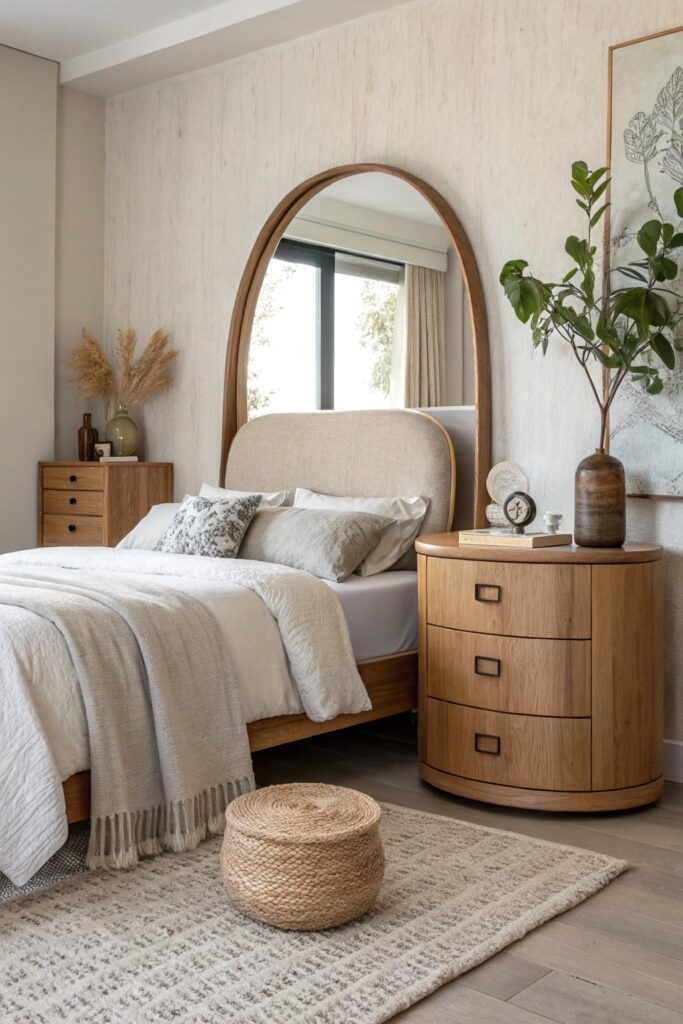
Straight lines dominate modern design, but Japandi adds gentle curves to balance things out. Rounded nightstands, curved headboards, or soft-edged mirrors work wonders.
I added a round mirror once, and the room instantly felt friendlier. Can furniture feel welcoming? Apparently, yes.
12. Subtle Japanese Influence Without Overdoing It
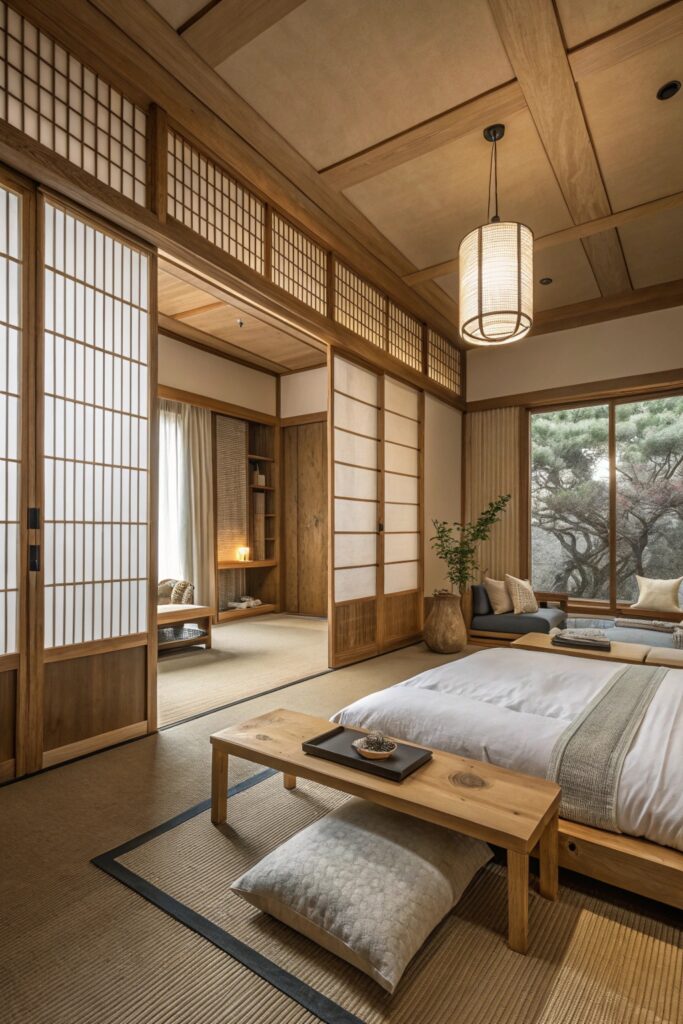
You don’t need a full Zen garden to achieve Japandi. Small nods work better. Think shoji-inspired panels, low furniture, or minimalist art.
Avoid turning the room into a theme park. Ever seen a space try too hard? It never ends well.
13. Scandinavian Comfort That Keeps Things Cozy
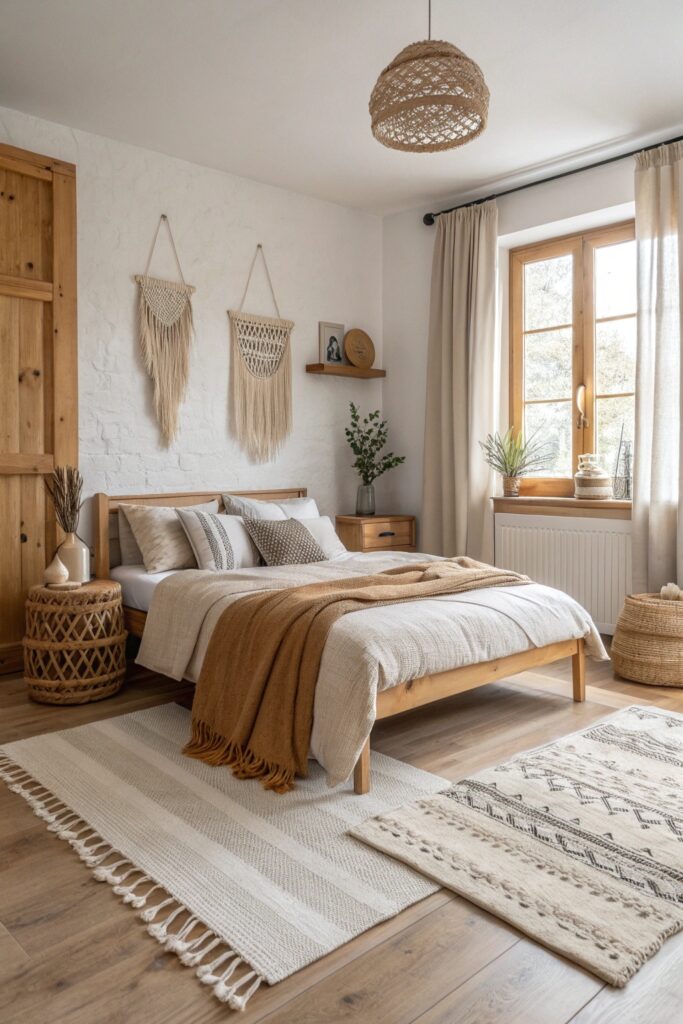
Japandi bedroom design borrows warmth from Scandinavian interiors. Soft rugs, cozy throws, and layered textiles prevent the space from feeling cold.
I balance minimalism with comfort by adding:
- A warm rug underfoot
- A chunky knit throw
- Soft pillows in muted tones
Who says minimal can’t feel cozy?
14. A Calm Layout That Lets You Breathe
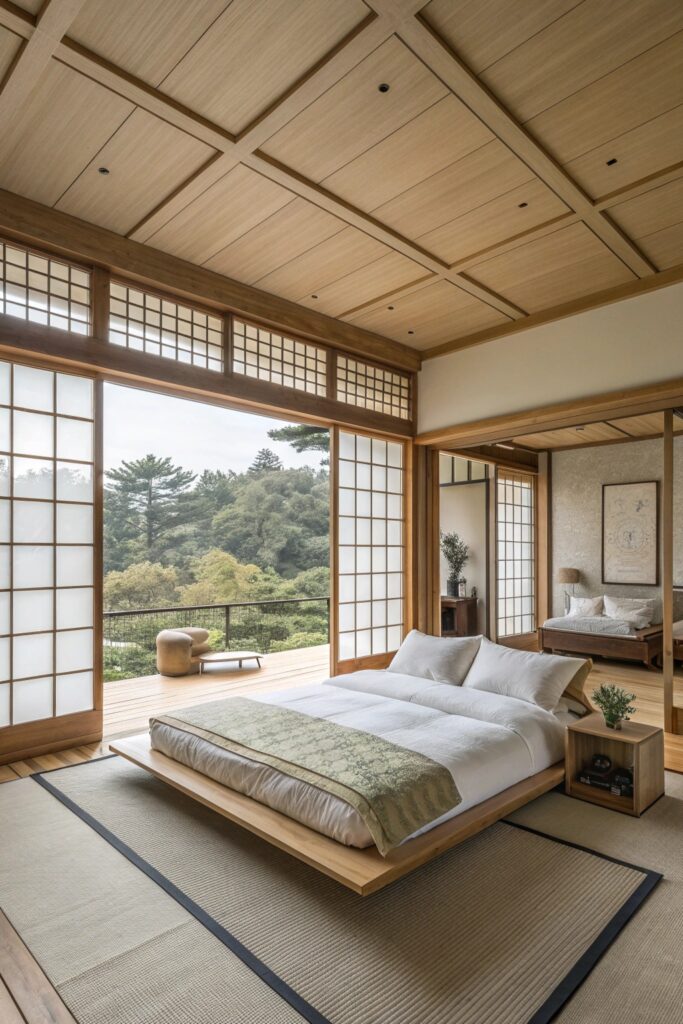
The layout matters just as much as furniture. Japandi bedrooms need space to breathe. Leave walking room around the bed and avoid cramming furniture against every wall.
I rearranged my bedroom to create negative space, and the calm felt immediate. Have you ever noticed how empty space feels full in the best way?
How to Make Japandi Work in Real Life
You don’t need a full renovation to embrace Japandi bedroom design. Start small and stay intentional. Replace one loud item with something calmer and see how it feels.
Simple starting points:
- Swap bedding
- Change lighting
- Declutter one surface
Small changes build momentum faster than dramatic overhauls.
Common Japandi Bedroom Mistakes to Avoid
Even good ideas can go wrong when pushed too far. I’ve made these mistakes, so you don’t have to.
Watch out for:
- Rooms that feel cold instead of calm
- Too much beige with no texture
- Over-minimalizing until it feels empty
Balance always wins.
Why Japandi Bedrooms Truly Feel Timeless
Trends come and go, but calm never goes out of style. Japandi style bedroom spaces focus on comfort, balance, and materials that age gracefully. That’s why they still look good years later.
I notice that I sleep better, think clearly, and relax faster in my Japandi-inspired space. Isn’t that the whole point of a bedroom?
Final Thoughts on Bedroom Design Japandi
A well-planned bedroom design Japandi approach, creates a space that feels peaceful, warm, and deeply personal without screaming for attention. You don’t need perfection—you need intention. Start with what you have, simplify where you can, and choose pieces that make you feel calm the moment you walk in. If your bedroom can help you exhale at the end of the day, you’ve already won.