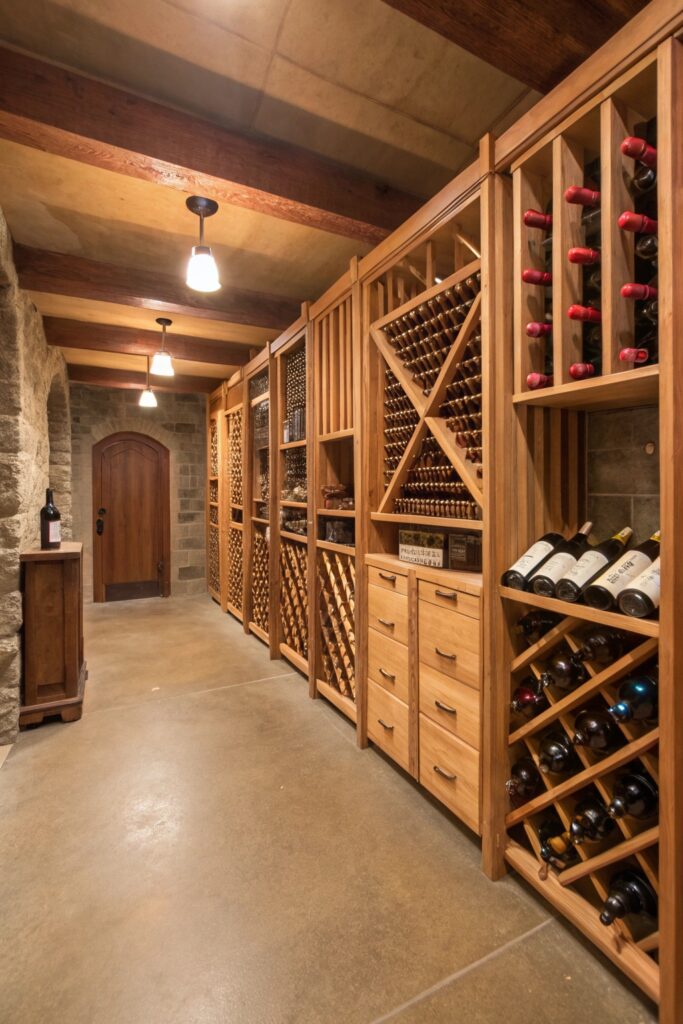
Turning a basement into a home theater feels like giving your house a secret upgrade. You walk downstairs, shut the door, and suddenly the rest of the world goes quiet. I still remember hosting my first basement movie night—average popcorn, great sound, and zero daylight messing with the screen. Totally worth it.
Basements already check a lot of boxes. They stay darker, quieter, and cooler than most rooms upstairs. That combo works perfectly for movie nights, game days, and long binge sessions. Ever wondered why movies feel better in a dark room? Yeah, that’s not an accident.
Here are 10 home theater ideas for the basement that actually work in real homes, not just picture-perfect setups online.
1. Tiered Seating That Feels Like a Real Theater

Tiered seating instantly makes a basement home theater feel intentional. You don’t need stadium-style rows, but raising the back seats changes everything. Everyone sees the screen clearly, and nobody shifts around trying to peek past someone’s head.
I’ve seen simple wood platforms with carpet work just as well as expensive builds. You can even run wires underneath to keep the space tidy.
Why tiered seating works
- Clear sightlines for every seat
- True theater vibe at home
- Hidden cables and cleaner floors
Who doesn’t want the back row to feel just as good as the front?
2. Projector Screens Beat Big TVs Down Here
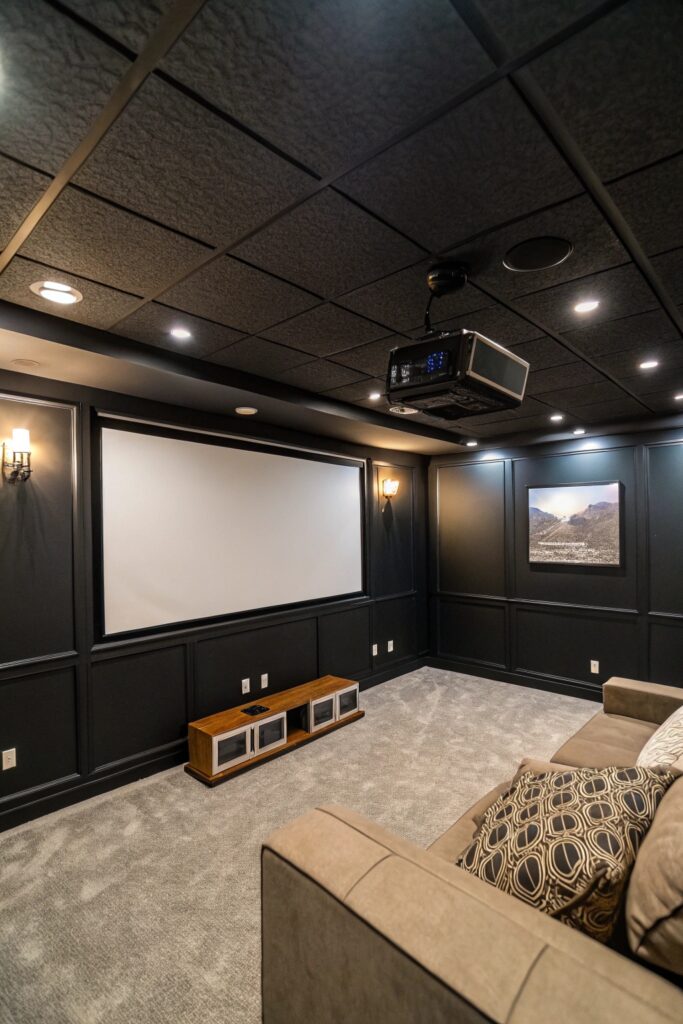
A big TV looks great, but a projector feels right in a basement. The darker space helps the picture stand out without blasting your eyes. IMO, this setup feels closer to an actual movie theater.
You don’t need top-tier gear either. Many mid-range projectors look sharp and rich when paired with a proper screen.
Why projectors shine
- Larger screen size for less money
- Softer lighting that feels natural
- Less glare in dark rooms
Once you watch a movie on a wall-sized screen, it’s hard to go back.
3. Soundproof the Space Without Going Overboard
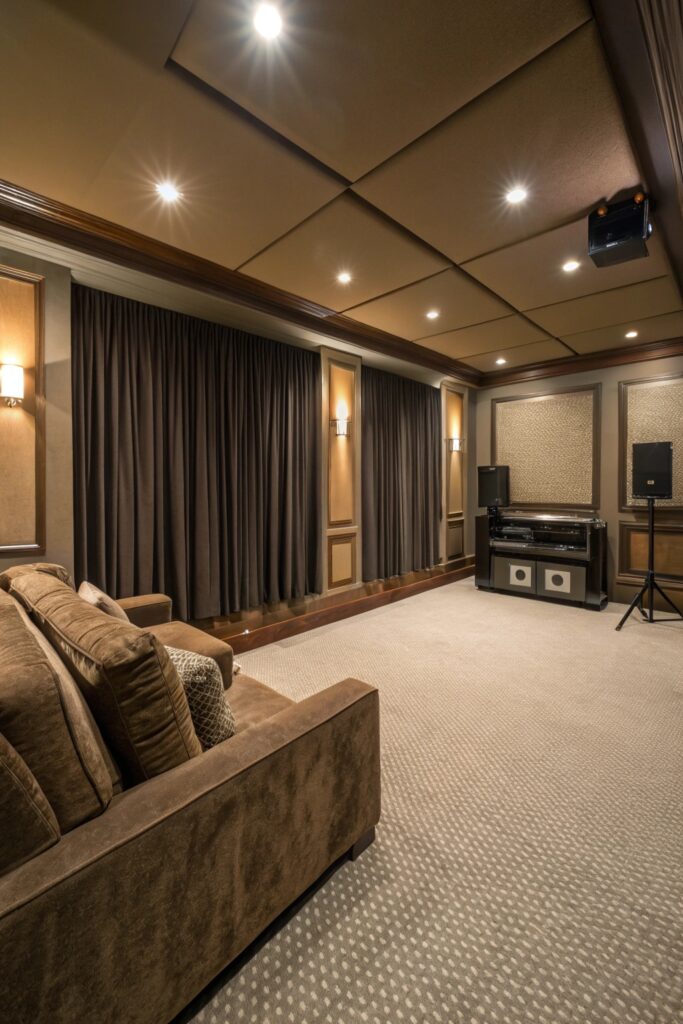
Great sound makes or breaks a basement home theater. Bad audio ruins even the best visuals. I learned that after my first action movie shook the dishes upstairs.
You don’t need to seal the room like a vault. Focus on managing echo and keeping sound contained.
Simple sound upgrades
- Acoustic wall panels
- Thick rugs or carpet
- Curtains or fabric panels
Your ears will notice the difference immediately.
4. Dark Walls and Ceilings Set the Mood
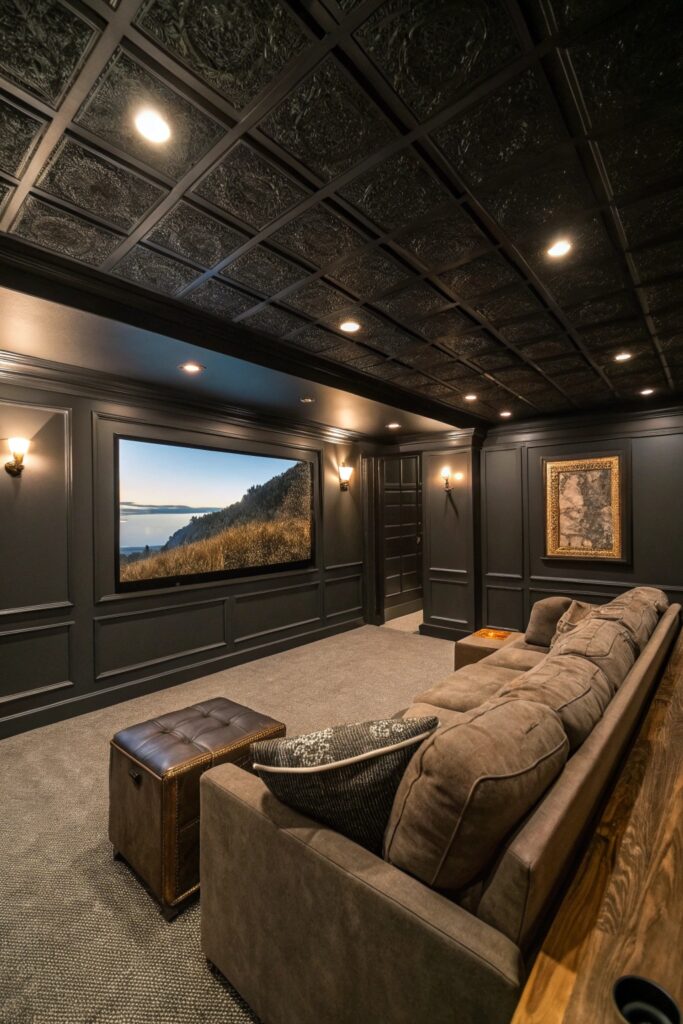
Bright walls reflect light, and reflections pull attention away from the screen. Dark colors keep your focus where it belongs. Basements already feel cozy, so leaning into darker tones makes sense.
You don’t need jet black paint everywhere. Charcoal, navy, or deep gray work beautifully. I once painted a basement ceiling dark gray, and the picture instantly looked sharper.
Why darker colors help
- Reduced glare
- More immersive viewing
- Cozy theater atmosphere
Nobody wants glowing walls during a dramatic scene.
5. Low, Layered Lighting Works Best
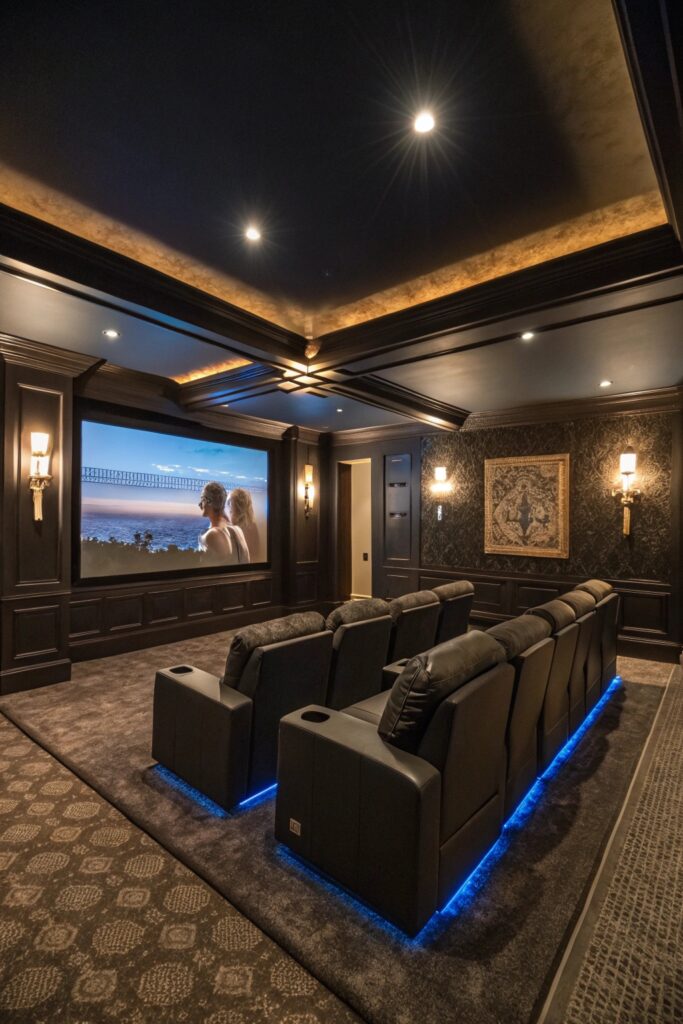
Overhead lights kill the mood fast. Layered lighting keeps the room usable without stealing attention from the screen.
Wall lights, LED strips, and step lights do the job perfectly. You want just enough light to grab snacks without breaking immersion.
Lighting ideas that work
- LED strips under seating
- Wall sconces with dimmers
- Low floor lighting for safety
FYI, dimmers change everything with one simple adjustment.
6. Comfort-First Seating Always Wins
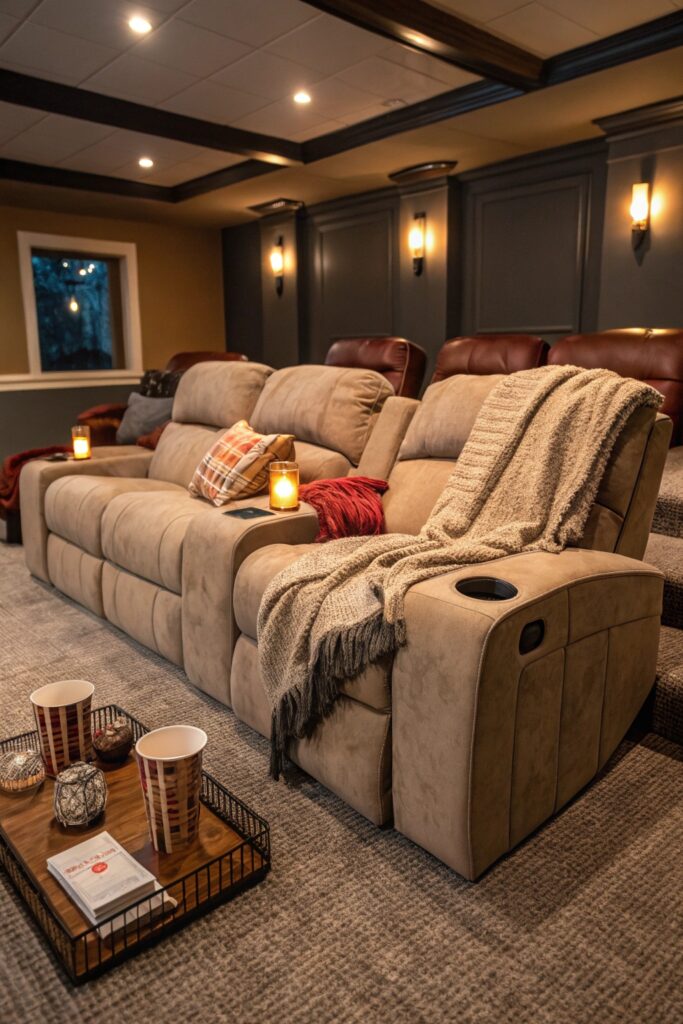
Stylish seats look nice, but comfort decides how long people stay. Recliners, deep sofas, or sectionals work great in a basement theater.
I always test seating with a full movie. If my back complains halfway through, the seat fails. Simple as that.
Comfort essentials
- Wide, cushioned seats
- Foot support or recline
- Side tables or cup holders
Three-hour movies feel much shorter with the right seating.
7. Hide Tech and Cables From View
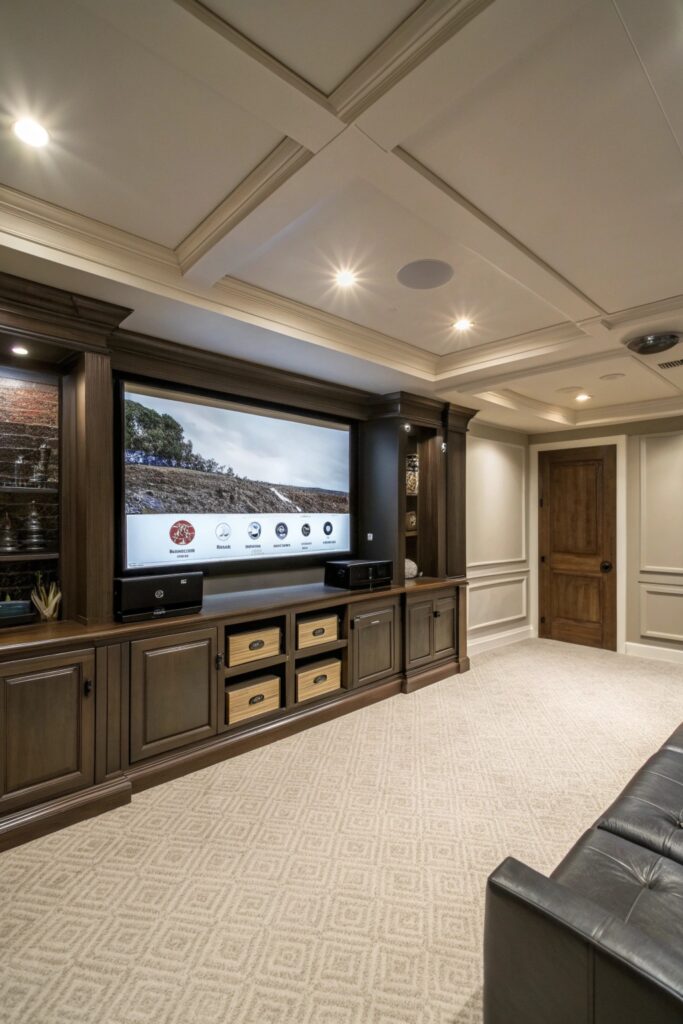
Visible wires and blinking lights pull attention away from the screen. A clean setup keeps the room calm and focused.
Built-in cabinets or media consoles hide gear while keeping everything easy to access. Ventilation still matters, so don’t seal equipment too tightly.
Clean setup tips
- Cable channels behind walls
- Closed storage with airflow
- Simple universal remotes
Less clutter makes the room feel bigger and more relaxed.
8. Add a Small Snack and Drink Area
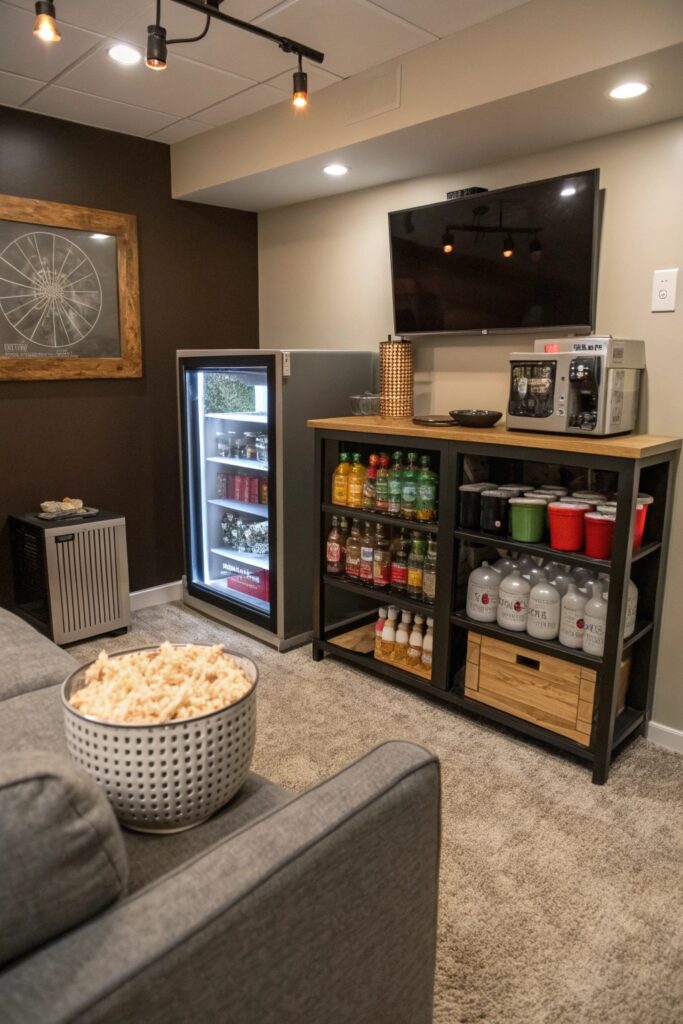
Running upstairs for snacks breaks the experience. A small refreshment station keeps everyone settled.
You don’t need a full bar. A mini fridge, shelves, or even a rolling cart works. I added a small cart once, and it became the most popular spot in the room.
Snack station basics
- Mini fridge for drinks
- Easy-access storage
- Quick-clean surfaces
Let’s be honest—snacks matter.
9. Let Acoustics Guide Your Decor Choices
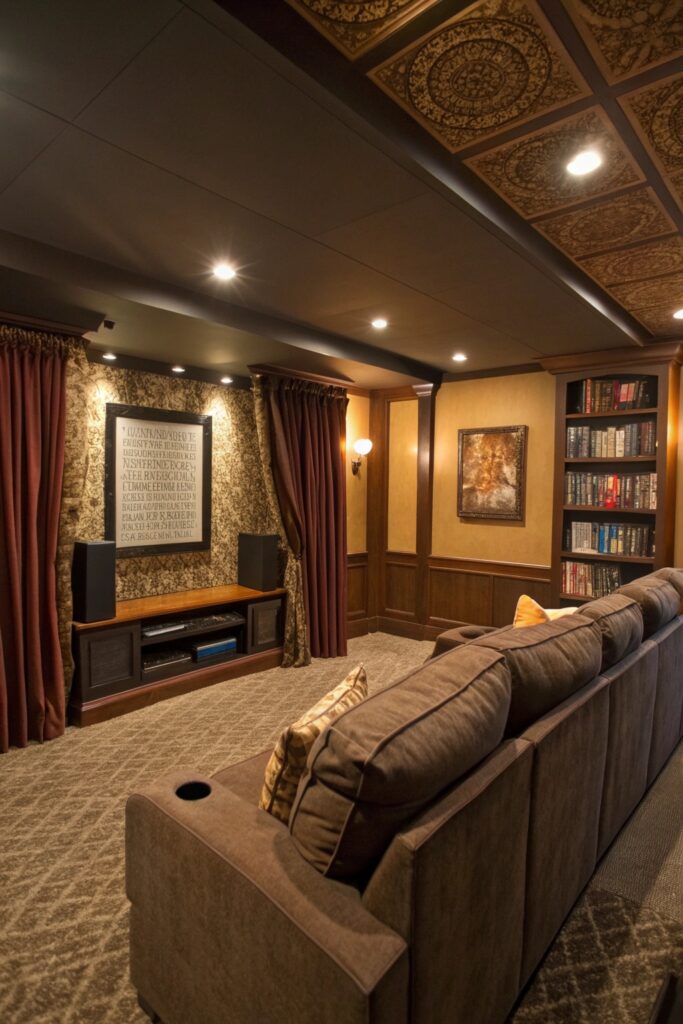
The decor looks great, but the sound quality deserves priority. Soft materials improve audio while still looking stylish.
Fabric wall art, padded panels, and curtains help control echo without turning the room into a studio.
Decor that helps sound
- Fabric wall art
- Bookshelves with uneven depth
- Curtains behind seating
Ever notice how empty rooms sound hollow? This fixes that fast.
10. Keep It Flexible for More Than Movies
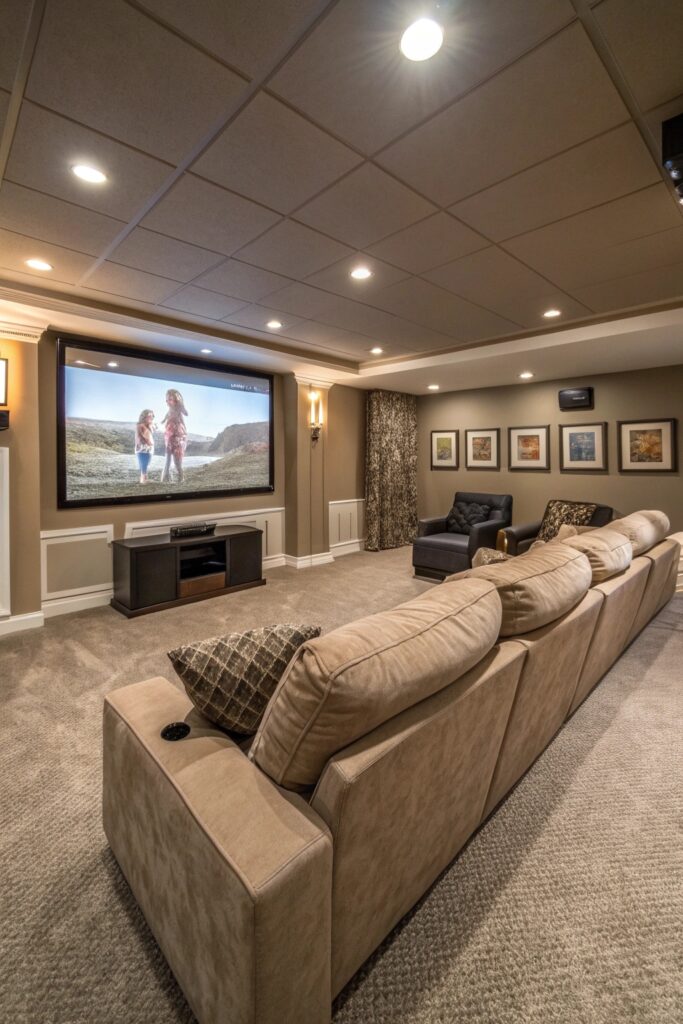
Not everyone wants a room only for movies. A basement home theater can handle sports, gaming, and casual hangouts, too.
Flexible seating and movable tables keep the space useful. The screen stays central, but the room still adapts.
Multi-use ideas
- Modular seating
- Foldable side tables
- Neutral decor for all activities
This way, the room works even when the credits roll.
Conclusion
A basement already gives you a strong foundation for a home theater. Darkness, quiet, and separation from daily noise work in your favor. Smart choices turn that space into something special.
From tiered seating and sound control to cozy lighting and comfortable seating, each idea adds to the experience. You don’t need perfection. You need comfort, solid sound, and a setup that fits how you actually watch movies.
So ask yourself this—what would make you want to stay down there longer? Start there, build around it, and enjoy every show, game, and movie night.