I’ll be honest—bedroom japandi became my obsession the moment I realized my bedroom felt noisy without actually making a sound. Too many colors, too much furniture, zero calm. If you’ve ever stood in your room thinking, “Why does this stress me out when all I want to do is sleep?” you’re in the right place. Japandi fixes that exact problem, and it does it without turning your bedroom into a cold showroom. Ready to talk real, livable ideas you can actually pull off?
1. Start with a Low-Profile Bed (Yes, It Matters)
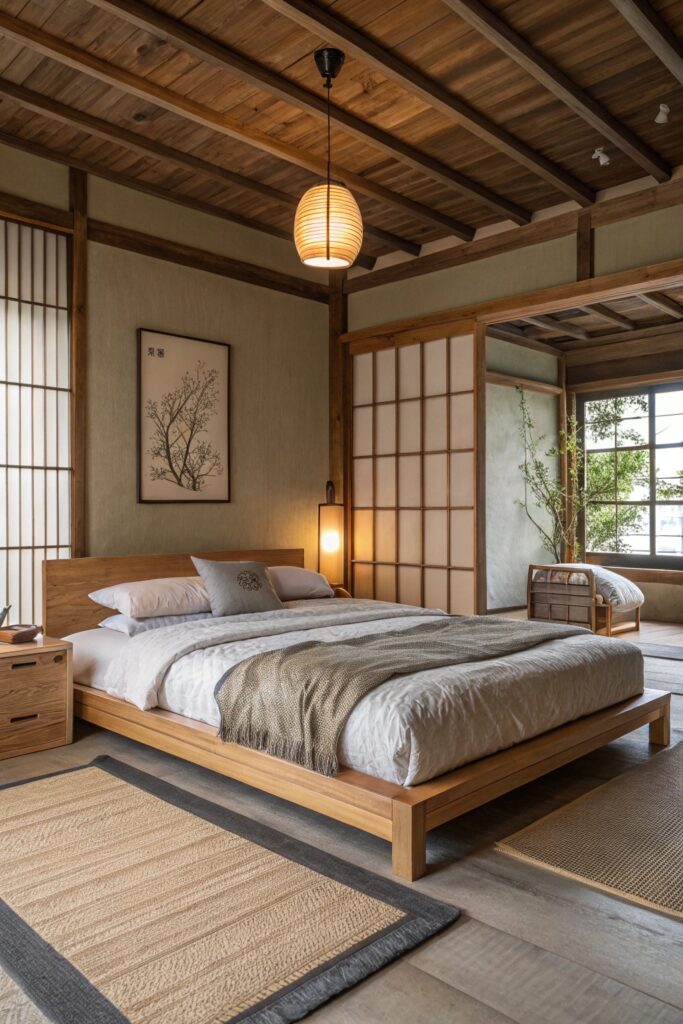
A low bed instantly sets the tone for a Japandi-style bedroom. I switched from a bulky frame to a low wooden platform, and my room suddenly felt grounded instead of top-heavy.
Low beds work because they:
- Keep visual lines clean
- Emphasize calm and balance
- Make small bedrooms feel wider
Ever notice how tall beds dominate a room? Japandi quietly refuses that drama.
2. Stick to a Soft, Neutral Color Palette
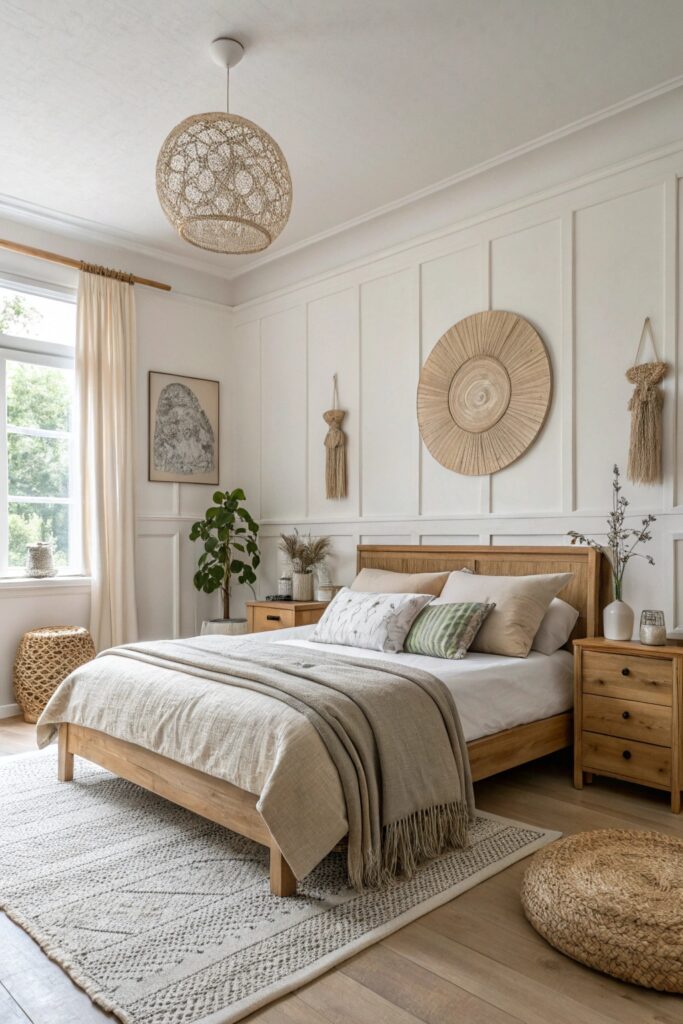
I know, neutrals sound boring on paper. In practice, they feel like a deep breath. Japandi bedroom ideas thrive on colors that don’t shout for attention.
Think:
- Warm whites
- Soft beige
- Greige and light taupe
- Muted clay or stone tones
Why overload your walls when your brain already has enough tabs open?
3. Choose Natural Wood Over Trendy Finishes
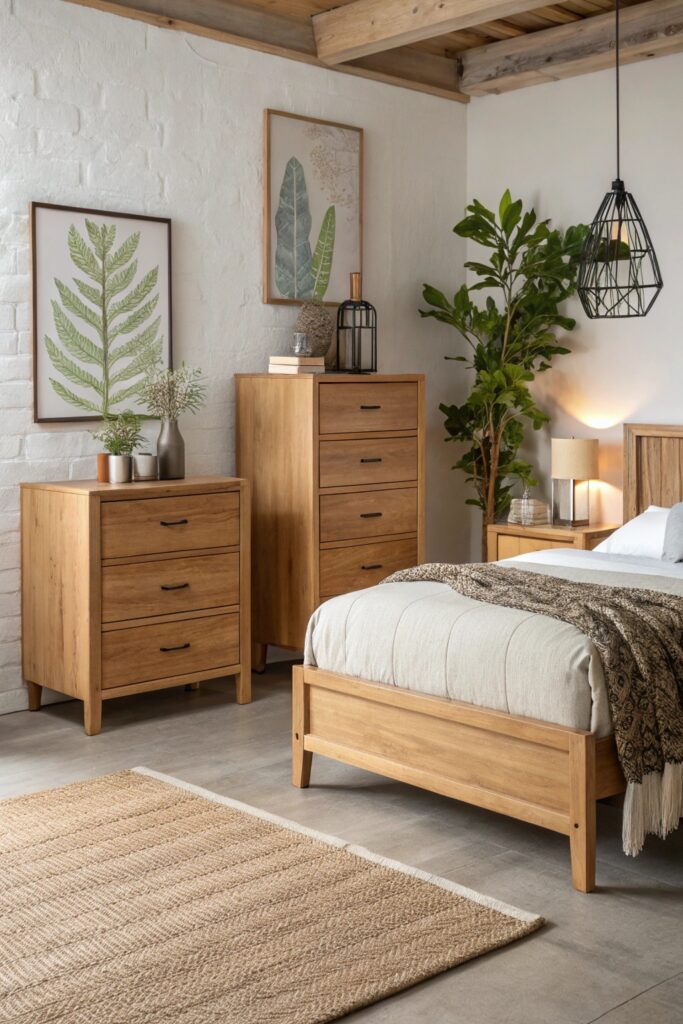
Japandi interior bedroom design loves wood that looks like it came from nature, not a glossy catalog. I learned this the hard way after buying a shiny laminate nightstand that screamed “wrong vibe.”
Go for:
- Oak
- Ash
- Walnut in matte finishes
Natural grain adds warmth without trying too hard. Isn’t that the goal?
4. Keep Furniture Minimal—but Not Miserable
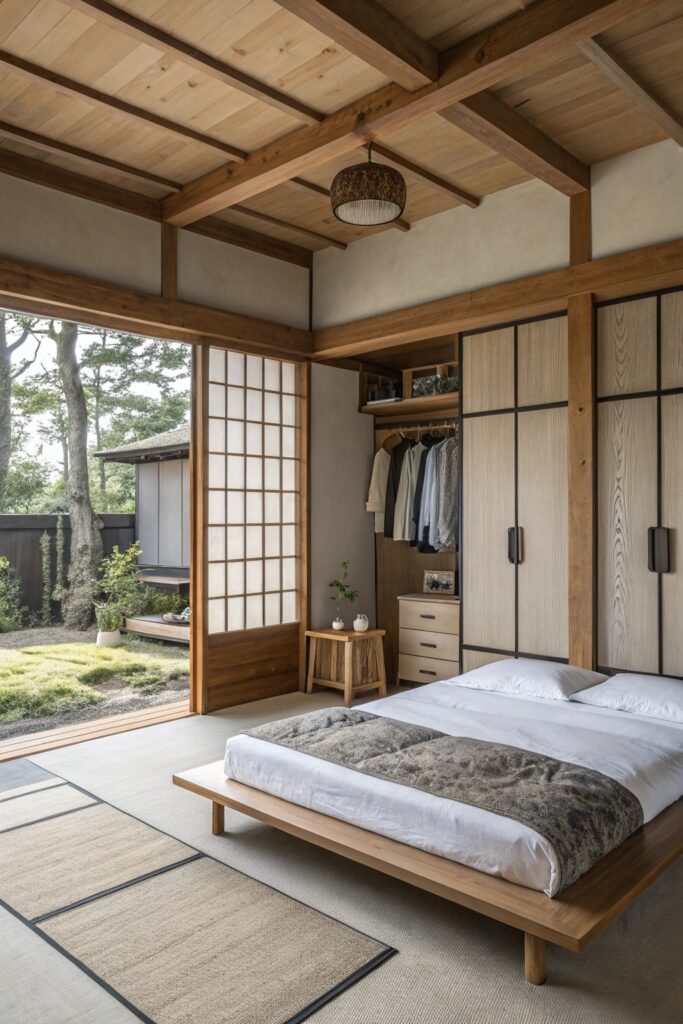
Minimal doesn’t mean empty. I still want my water, my book, and my phone within reach. Japandi just asks you to be intentional.
Limit furniture to:
- Bed
- One or two nightstands
- A simple dresser or wardrobe
If you haven’t used it in months, does it really deserve floor space?
5. Add Texture Through Bedding, Not Patterns
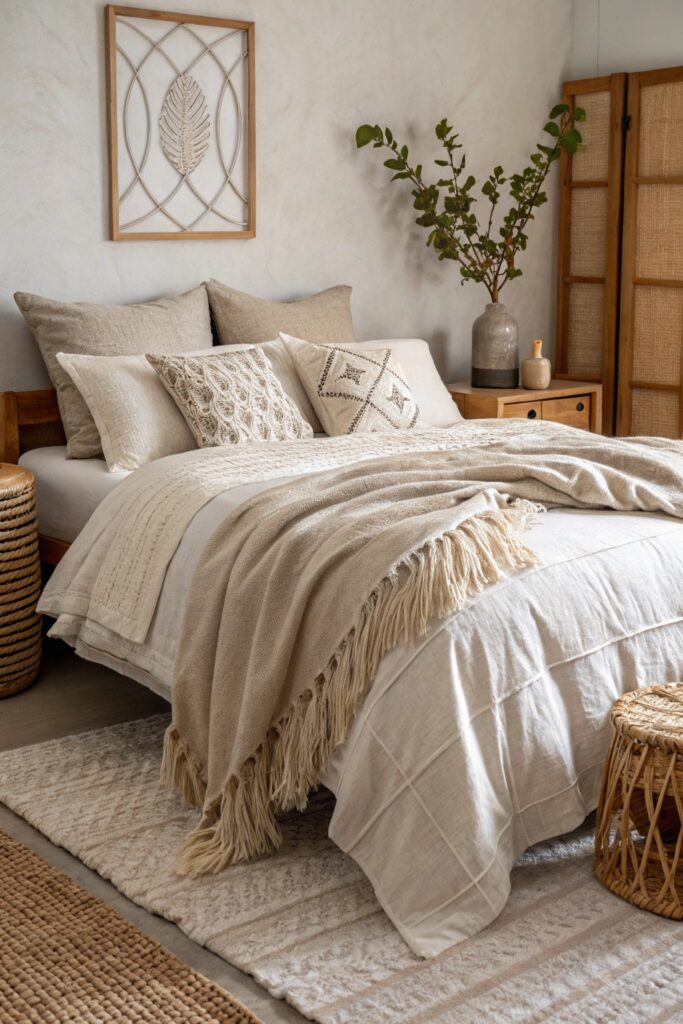
Busy prints fight against calm energy. Japandi bedroom ideas rely on texture to keep things interesting.
I layer:
- Linen sheets
- Cotton duvet
- A soft wool or knit throw
The bed feels cozy, not chaotic. Who needs loud patterns when texture does all the work?
6. Let Natural Light Do the Heavy Lifting
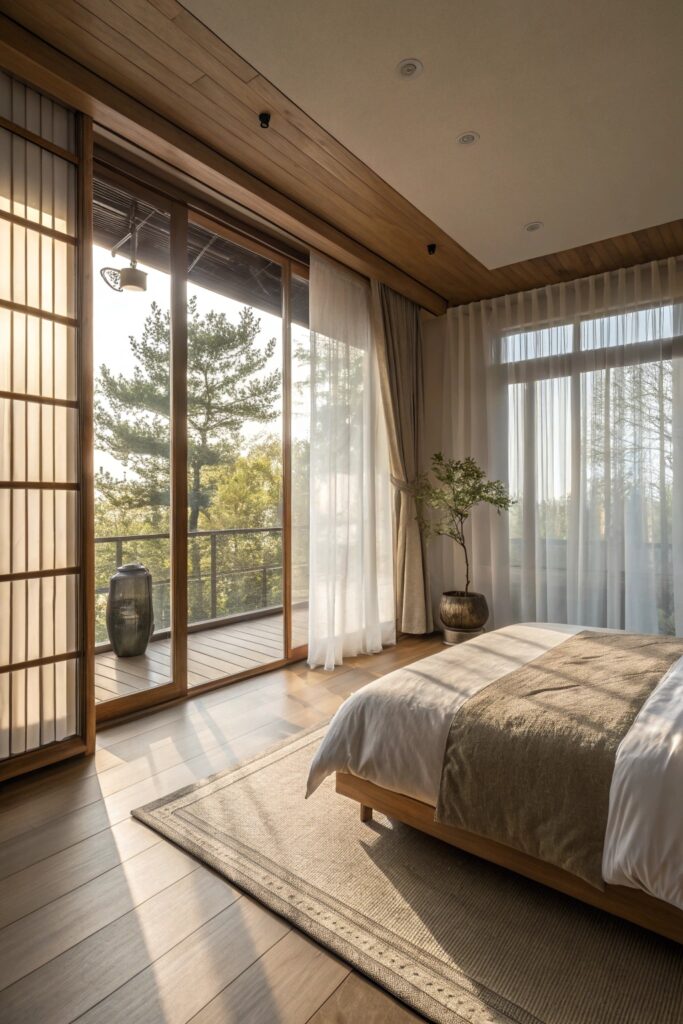
Japandi style bedroom layouts love daylight like plants love water. I stopped blocking my windows with heavy curtains, and my room felt instantly calmer.
Use:
- Sheer curtains
- Light-filtering blinds
- Bare windows if privacy allows
Why hide good light when it’s free?
7. Choose Calm, Functional Lighting
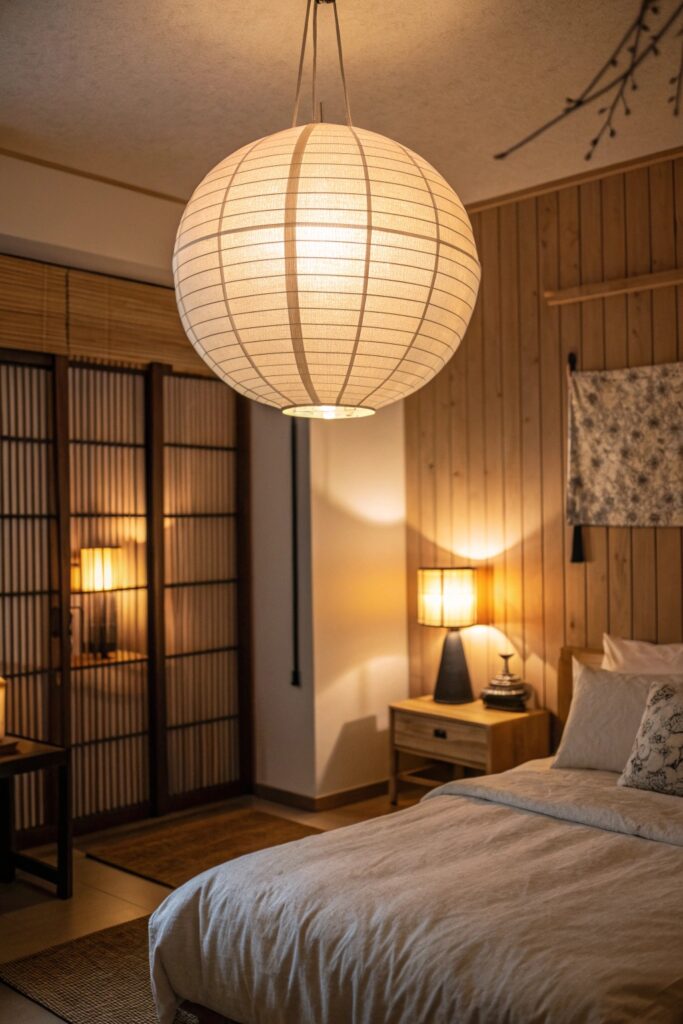
Overhead lights ruin the mood faster than you think. Japandi interior bedroom lighting stays soft and intentional.
I recommend:
- Warm bedside lamps
- Paper or fabric shades
- Simple wall sconces
Do you really want hospital lighting right before bed?
8. Keep Decor Purposeful (One Statement Is Enough)
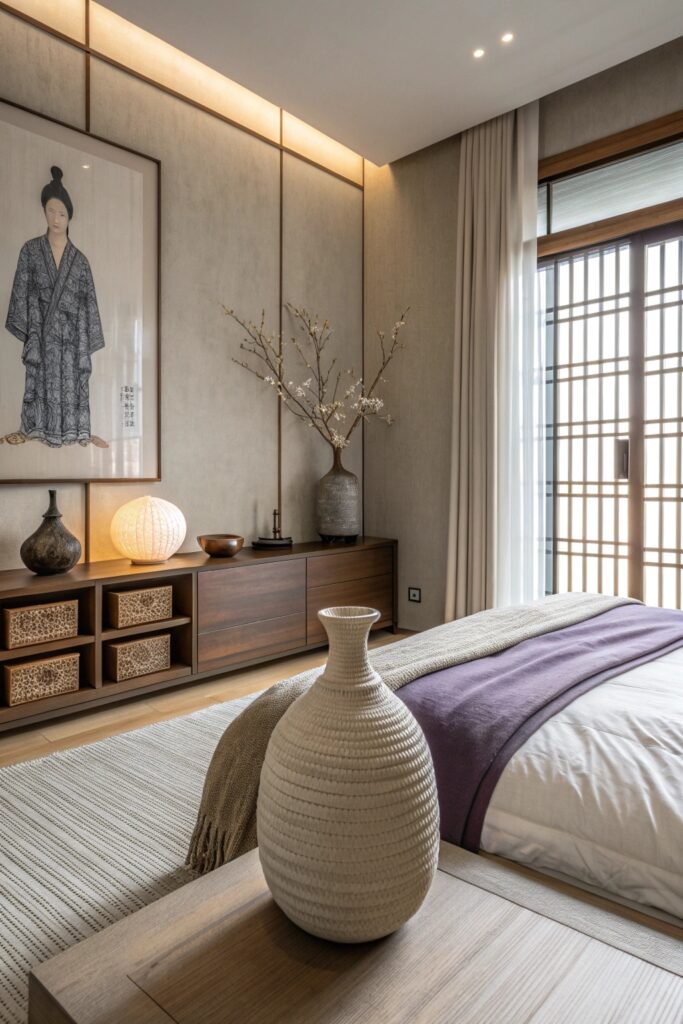
I used to scatter decor everywhere. Japandi taught me restraint, and honestly, my room thanked me.
Pick:
- One ceramic vase
- One framed art piece
- One sculptural object
Too many accents turn “thoughtful” into “cluttered” real fast.
9. Bring Nature In—But Don’t Overdo It
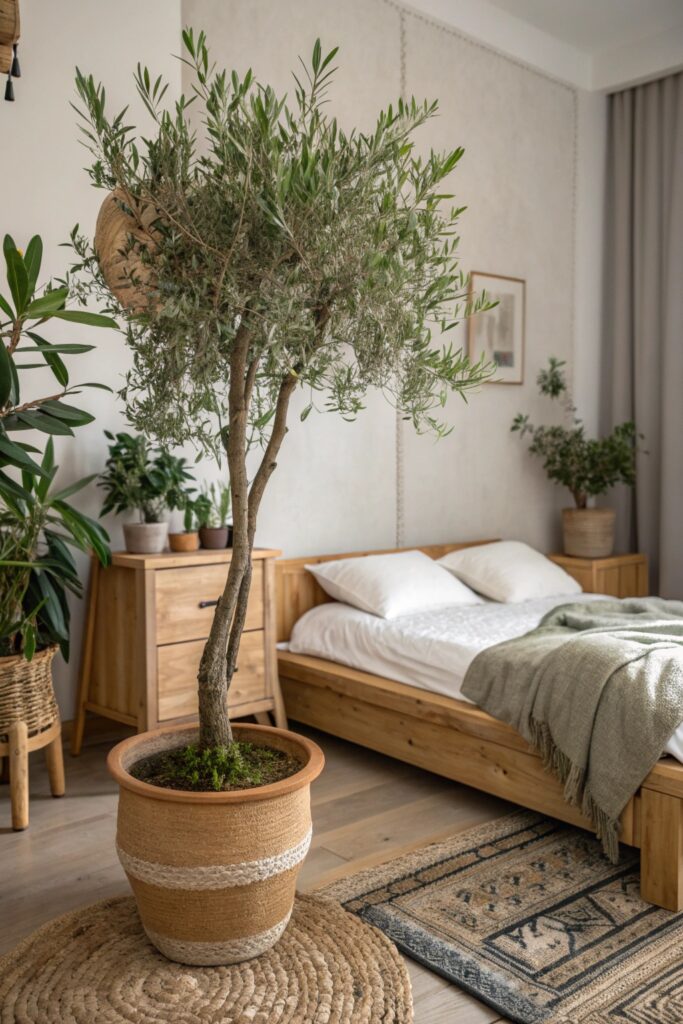
Plants feel right in a bedroom Japandi setup, but you don’t need a jungle. One or two well-placed plants create balance without chaos.
Good options:
- Snake plant
- Fiddle leaf fig (if you’re brave)
- Olive tree for soft elegance
Ever notice how greenery instantly softens a space?
10. Hide Storage Whenever Possible
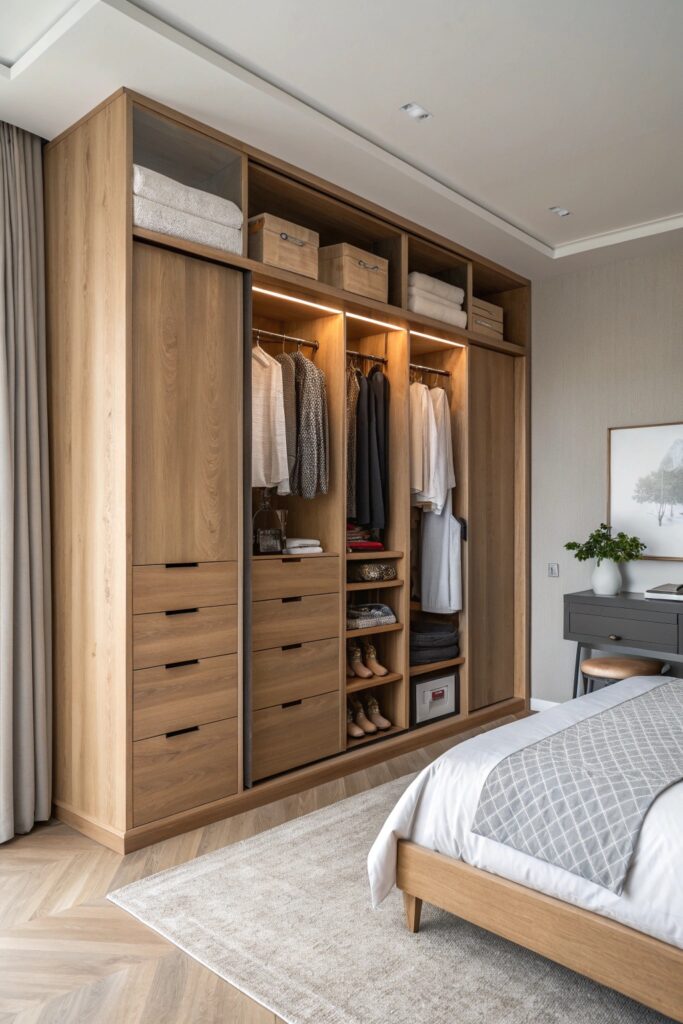
Visible clutter kills calm energy. I learned to love closed storage once I stopped staring at piles of “stuff I’ll organize later.”
Japandi bedroom ideas favor:
- Drawers over open shelves
- Wardrobes with clean fronts
- Under-bed storage
Out of sight really does mean peace of mind.
11. Use Art That Feels Quiet, Not Loud
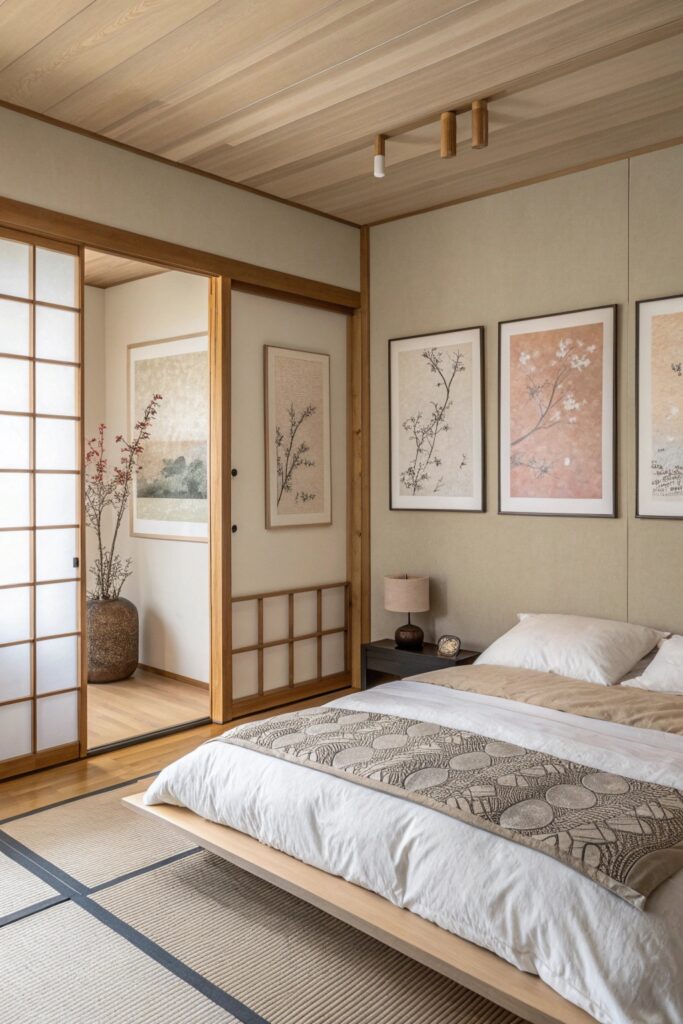
Abstract art works beautifully in a Japandi-style bedroom, as long as it whispers instead of yells. I stick to soft brushstrokes and neutral tones.
Look for:
- Minimal line art
- Nature-inspired prints
- Black-and-white photography
Art should support the room, not steal the spotlight.
12. Keep Walls Simple (Yes, Even the Accent Wall)
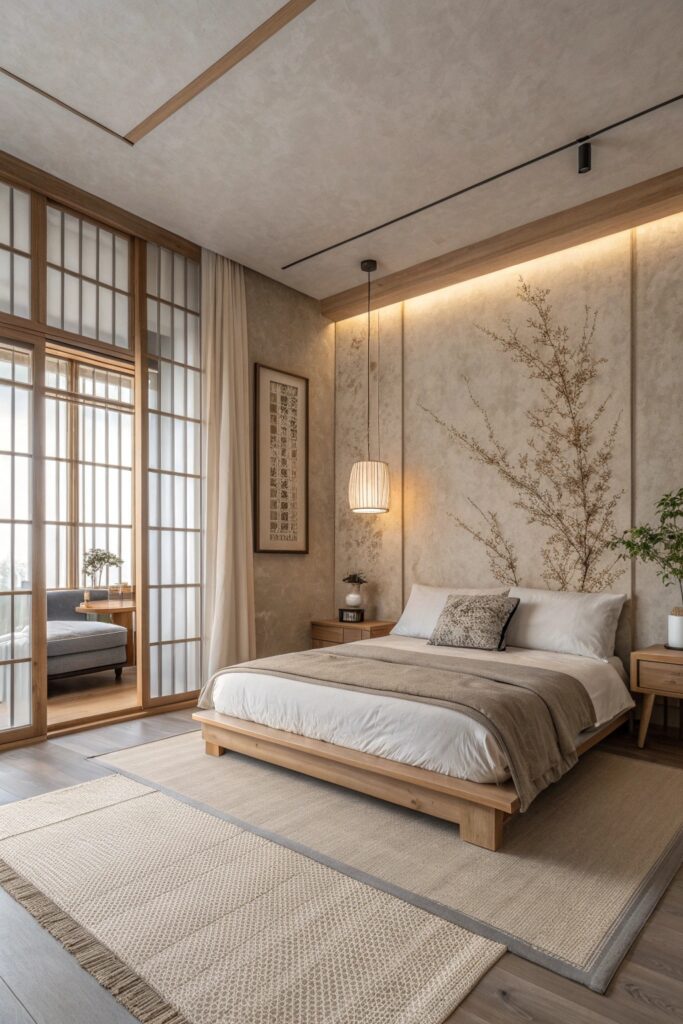
Japandi doesn’t ban accent walls—it just asks you to behave. I chose textured plaster instead of bold paint, and the effect felt subtle but rich.
Wall ideas:
- Limewash paint
- Textured plaster
- Light wood paneling
Why shout when a whisper feels more confident?
13. Mix Japanese Calm with Scandinavian Comfort
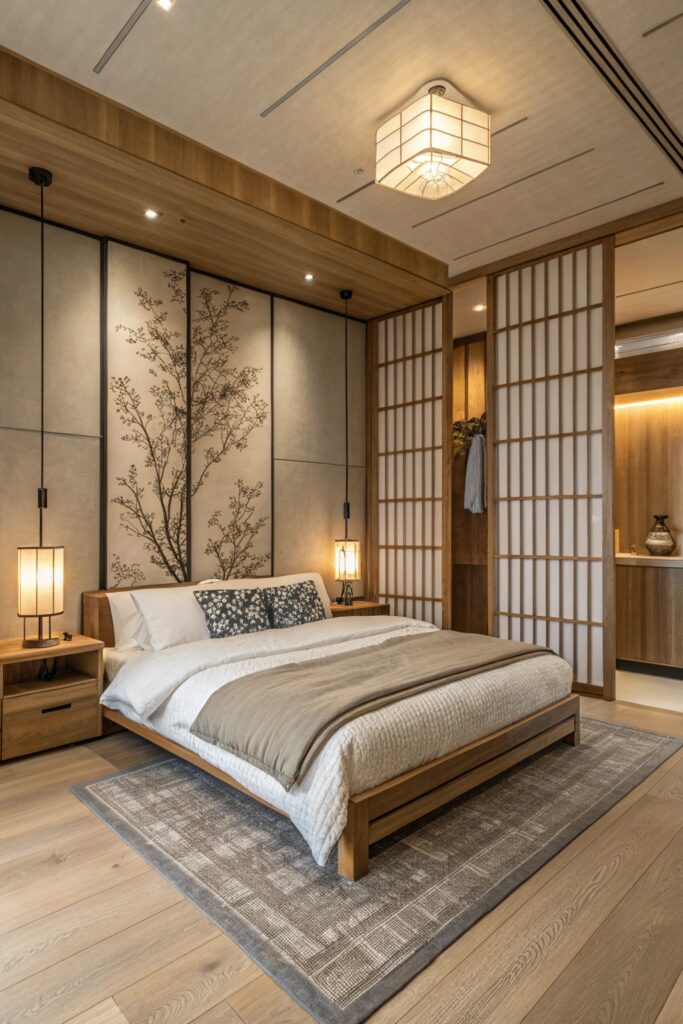
This balance defines Japandi interior bedroom design. Japanese minimalism brings serenity, while Scandinavian design adds warmth.
I blend both by:
- Pairing clean lines with cozy textiles
- Using minimal furniture with soft finishes
- Balancing space with comfort
Too cold feels unlivable. Too cozy feels cluttered. Balance wins every time.
14. Edit Ruthlessly—and Then Edit Again
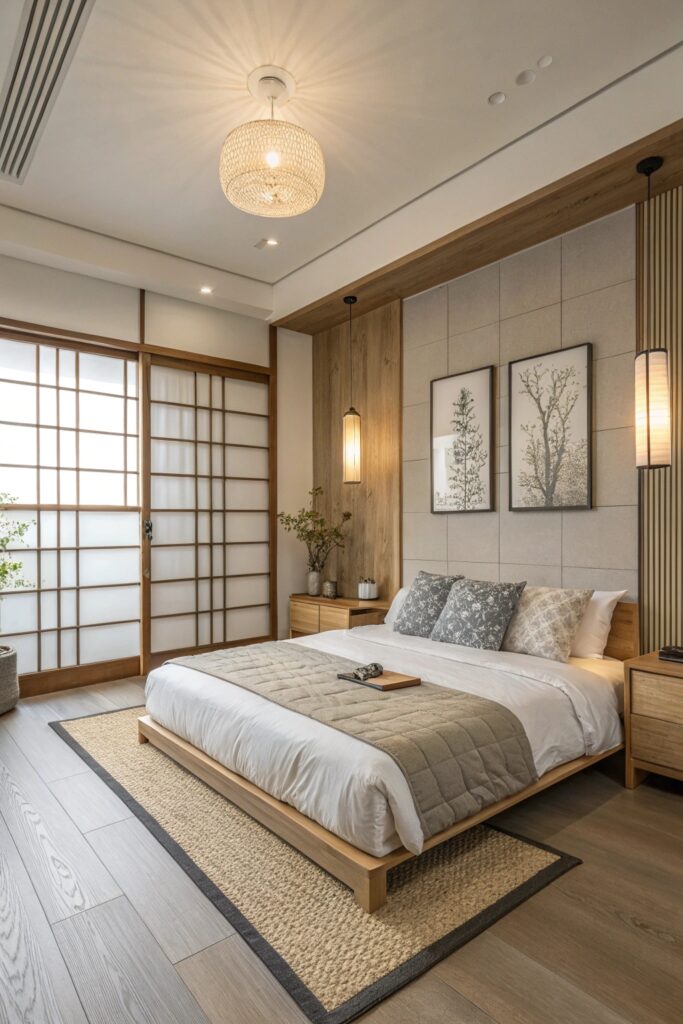
Here’s my not-so-secret rule: remove one more thing than you think you should. Every time I do this, my bedroom feels better.
Ask yourself:
- Does this add calm?
- Do I use it daily?
- Does it serve a purpose?
If the answer stays “no,” let it go. Your bedroom deserves peace.
Final Thoughts on Creating a Balanced Japandi Bedroom
A well-designed bedroom Japandi space doesn’t chase trends or perfection. It focuses on calm mornings, better sleep, and rooms that feel good to exist in. When you choose natural materials, soft colors, and intentional design, your bedroom stops working against you. Start small, trust your instincts, and let balance guide every choice. Your future well-rested self will absolutely thank you.