I fell for the Japandi bedroom look the moment I realized it didn’t demand perfection. It just wanted calm, comfort, and a little common sense. If your bedroom feels cluttered, noisy, or oddly stressful for a place meant for sleep, this style fixes that without turning your life upside down. Ever wondered why some bedrooms instantly relax you while others feel like a storage unit with a bed? Let’s talk about that.
Japandi blends Japanese simplicity with Scandinavian coziness, and honestly, it feels made for real people who want peace without living in a showroom. I’ve tried plenty of design styles, and this one sticks because it actually works day after day. No drama, no fuss, no trendy nonsense you’ll hate in six months. Ready to make your bedroom calmer without remodeling your entire house?
1. Start With a Calm, Neutral Color Palette
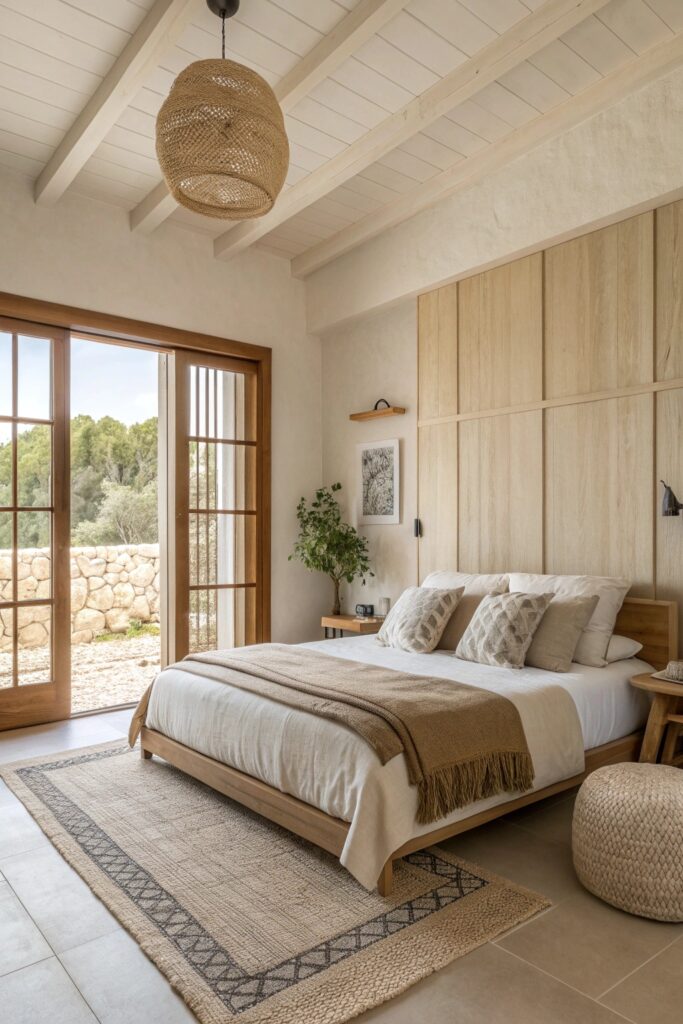
Color sets the mood before furniture even enters the room. Japandi bedrooms thrive on soft neutrals like beige, warm white, greige, and muted taupe. I once painted a bedroom bright white and instantly regretted it because it felt cold, not calm.
Neutral tones feel gentle on tired eyes and help your mind slow down at night. They also make small bedrooms feel bigger, which never hurts. Why fight your own brain with loud colors when you can let it relax?
Good Japandi-friendly shades include:
- Warm off-white instead of stark white
- Soft beige or sand tones
- Muted gray with warm undertones
- Light earthy browns
2. Choose a Low, Simple Bed Frame
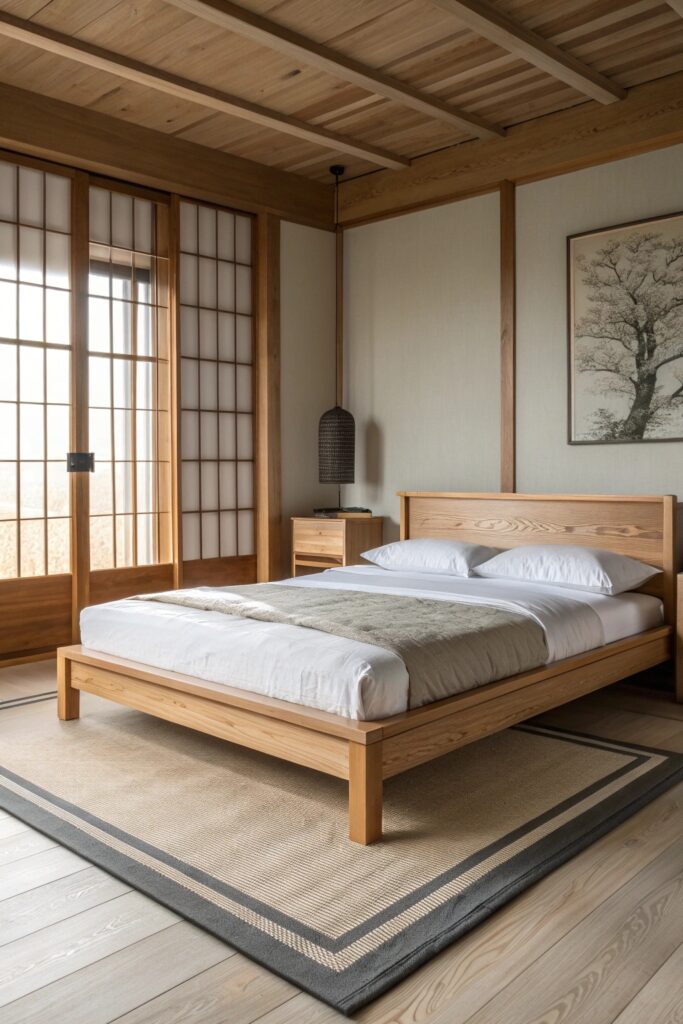
A low-profile bed anchors the whole bedroom Japandi vibe. Japanese interiors favor beds closer to the ground, while Scandinavian design keeps things practical and cozy. I switched from a bulky bed frame to a simple wooden one, and the room instantly felt calmer.
Low beds make ceilings feel higher, and spaces feel grounded. They also look intentional instead of overwhelming. Ever notice how massive beds can make a room feel bossy?
Look for:
- Solid wood frames
- Clean lines with no carving
- Natural finishes like oak or walnut
- No headboard or a slim one
3. Embrace Minimal but Cozy Bedding
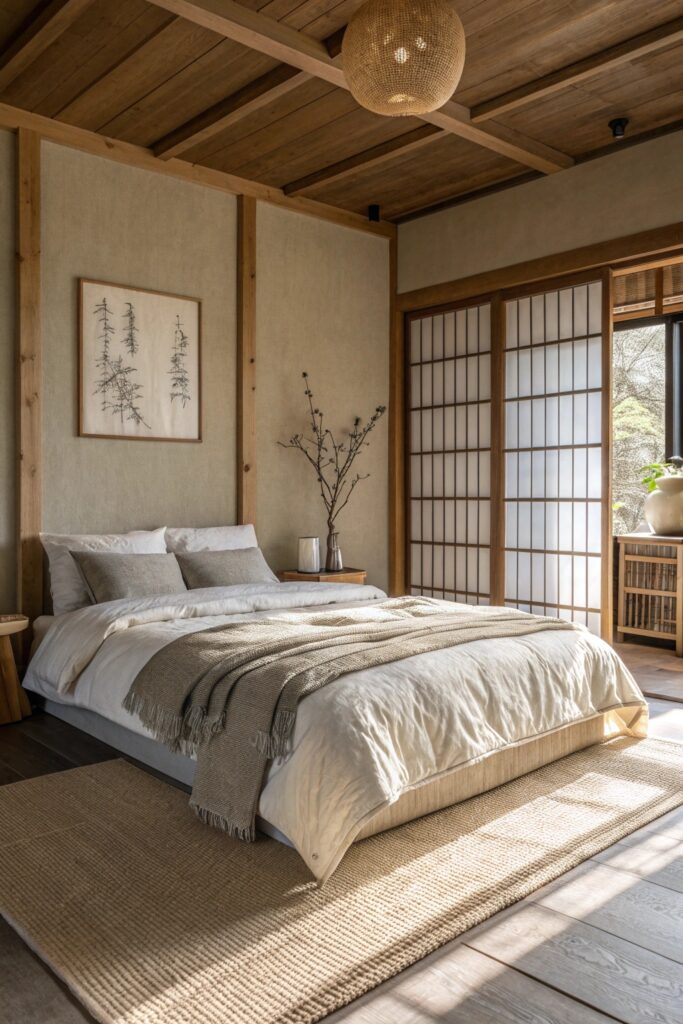
Japandi minimalist bedroom design doesn’t mean uncomfortable bedding. It means fewer layers, better quality, and textures that feel good against your skin. I ditched decorative pillows I never used, and my bed finally felt like a place to sleep, not stage photos.
Stick to breathable fabrics and neutral tones. Layer lightly so the bed looks inviting, not chaotic. Why pile on ten pillows when two great ones do the job?
Ideal bedding choices:
- Linen or cotton duvet covers
- Neutral or muted earthy colors
- One or two pillows per person
- A soft throw for texture
4. Use Natural Materials Everywhere You Can
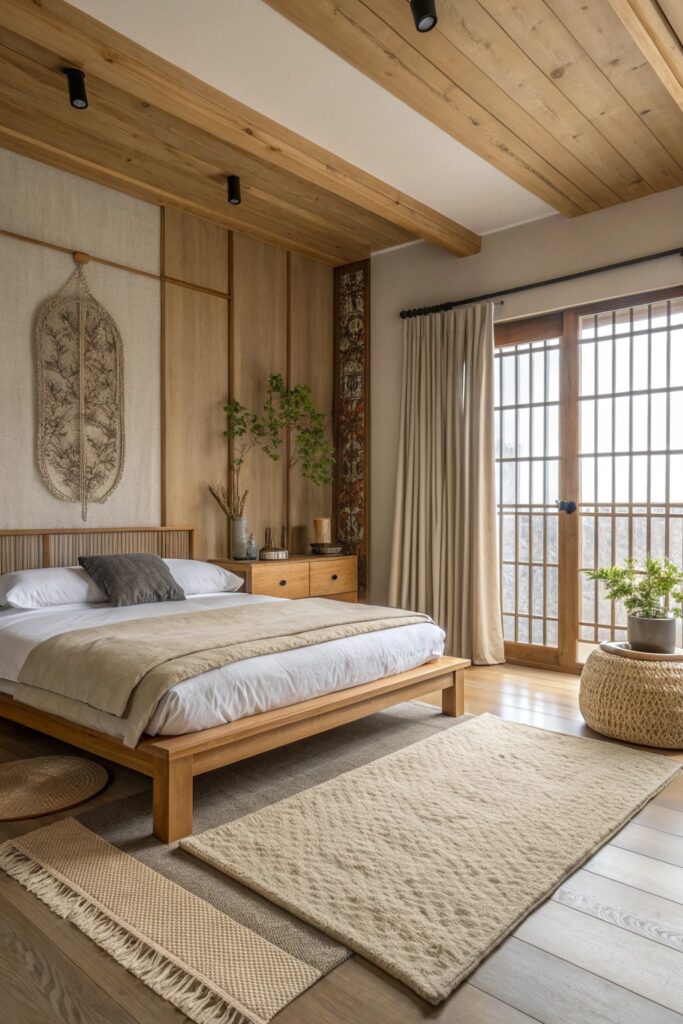
Natural materials define Japandi bedroom decor more than any color palette ever could. Wood, linen, wool, and even clay bring warmth without visual noise. I once replaced a glossy nightstand with a raw wood one, and the difference shocked me.
Natural textures calm the space and age beautifully over time. They also hide better than shiny surfaces. Isn’t it nice when furniture looks better instead of worse as it gets older?
Great materials to focus on:
- Solid wood furniture
- Linen curtains or bedding
- Wool or cotton rugs
- Ceramic or stone decor
5. Keep Furniture Functional and Intentional
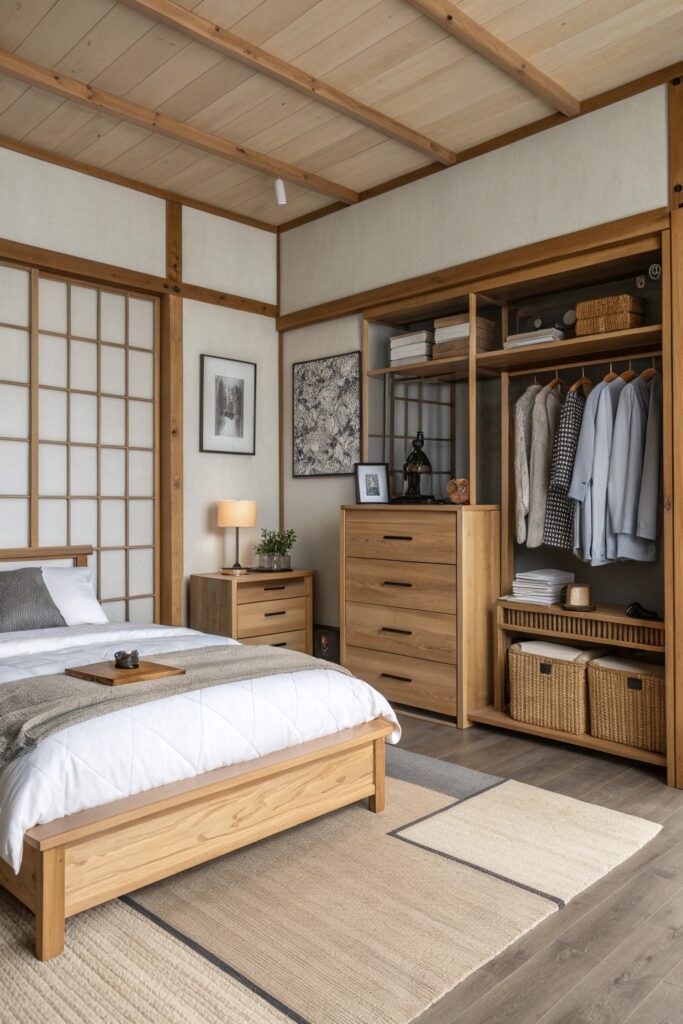
Every piece in a bedroom Japandi setup should earn its spot. If you don’t use it, question it. I removed a chair that only collected laundry, and suddenly the room felt bigger and calmer.
Japandi loves practicality without excess. Furniture should solve problems, not create clutter. Why keep something that stresses you out every time you see it?
Ask yourself:
- Do I actually use this?
- Does it add comfort or calm?
- Can one piece do multiple jobs?
6. Let Natural Light Do the Heavy Lifting
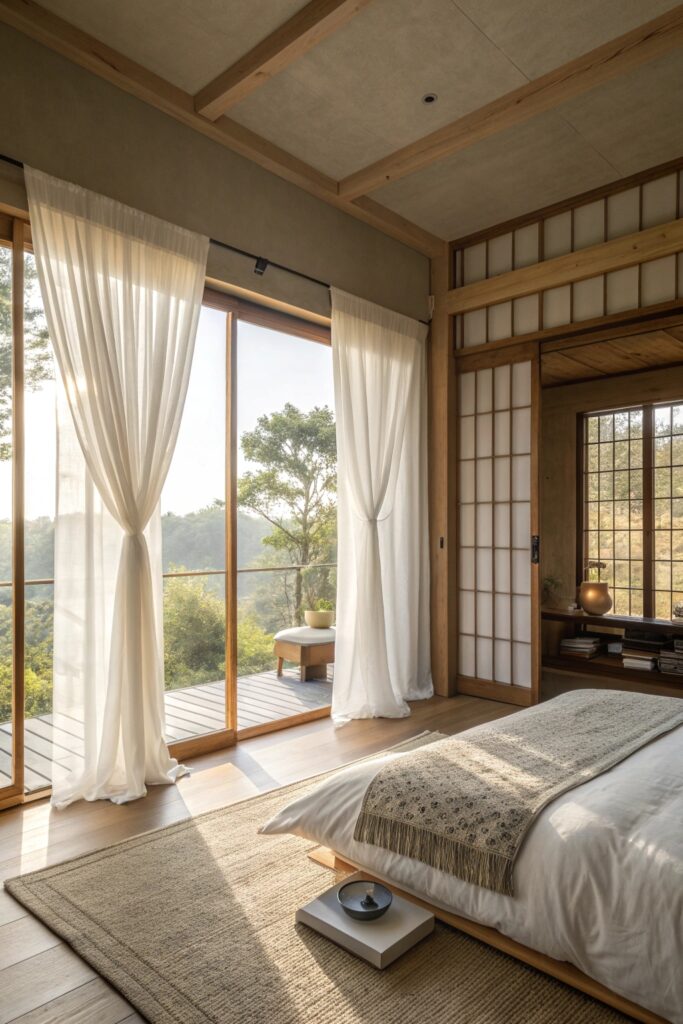
Japandi bedrooms rely on soft, natural light whenever possible. I stopped blocking my windows with heavy curtains, and mornings instantly felt better. Light affects mood more than we admit.
Use sheer curtains or light-filtering shades to keep privacy without darkness. Natural light highlights textures and makes neutral colors feel alive. Ever notice how sunlight makes even simple rooms feel special?
Tips for better light:
- Sheer linen curtains
- Avoid dark, heavy drapes
- Keep window areas clutter-free
- Use mirrors sparingly to reflect light
7. Add Warm, Soft Lighting for Evenings
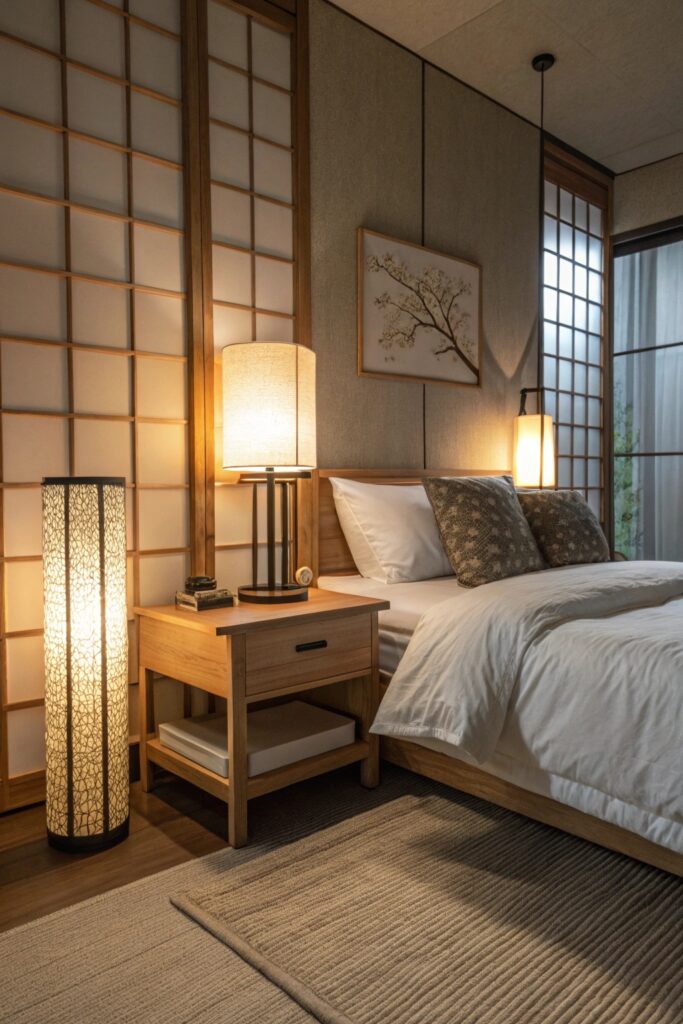
When the sun goes down, harsh lighting kills the mood fast. Japandi bedrooms favor warm, diffused lighting that feels cozy instead of clinical. I swapped bright overhead bulbs for warm lamps, and bedtime suddenly felt relaxing again.
Layer your lighting instead of relying on one source. Soft light helps your body wind down naturally. Why fight sleep with lights that feel like an office?
Lighting ideas that work:
- Warm LED bulbs
- Bedside table lamps
- Wall sconces with soft glow
- Paper or fabric lamp shades
8. Keep Decor Minimal but Meaningful
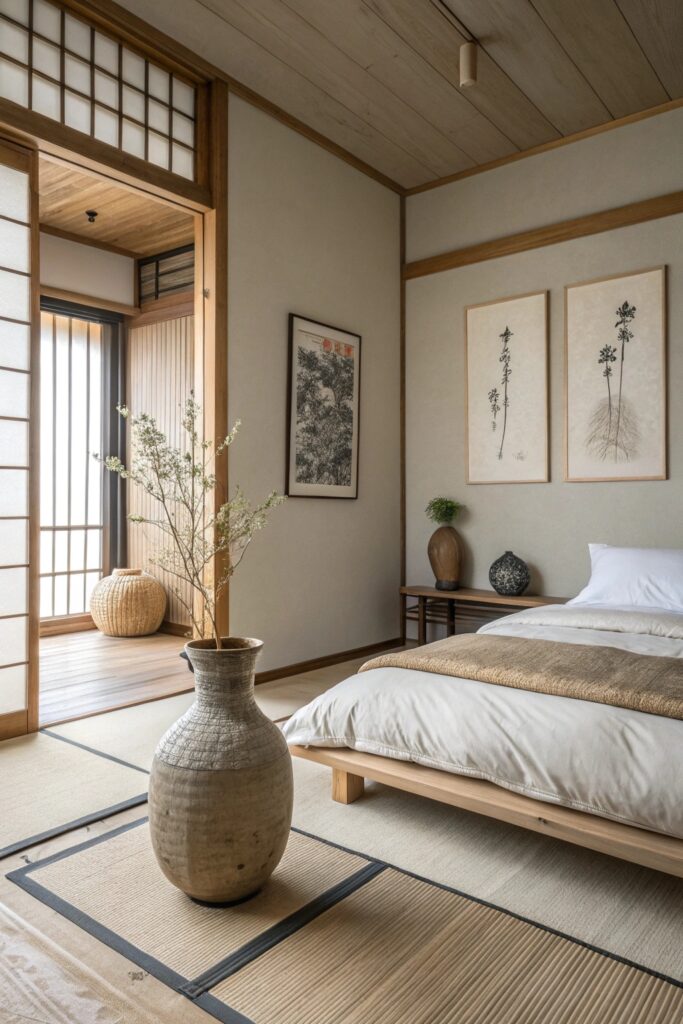
Japandi minimalist bedroom decor doesn’t ban decor; it just asks you to choose wisely. One thoughtful piece beats ten random ones every time. I keep a single ceramic vase on my nightstand, and it feels intentional instead of cluttered.
Decor should feel calming and personal, not trendy or loud. Skip mass-produced clutter and choose items that tell a quiet story. Doesn’t your bedroom deserve better than impulse buys?
Decor ideas that fit:
- Handmade ceramics
- Simple artwork with space to breathe
- One or two plants
- Natural stone or wood objects
9. Use Storage That Disappears
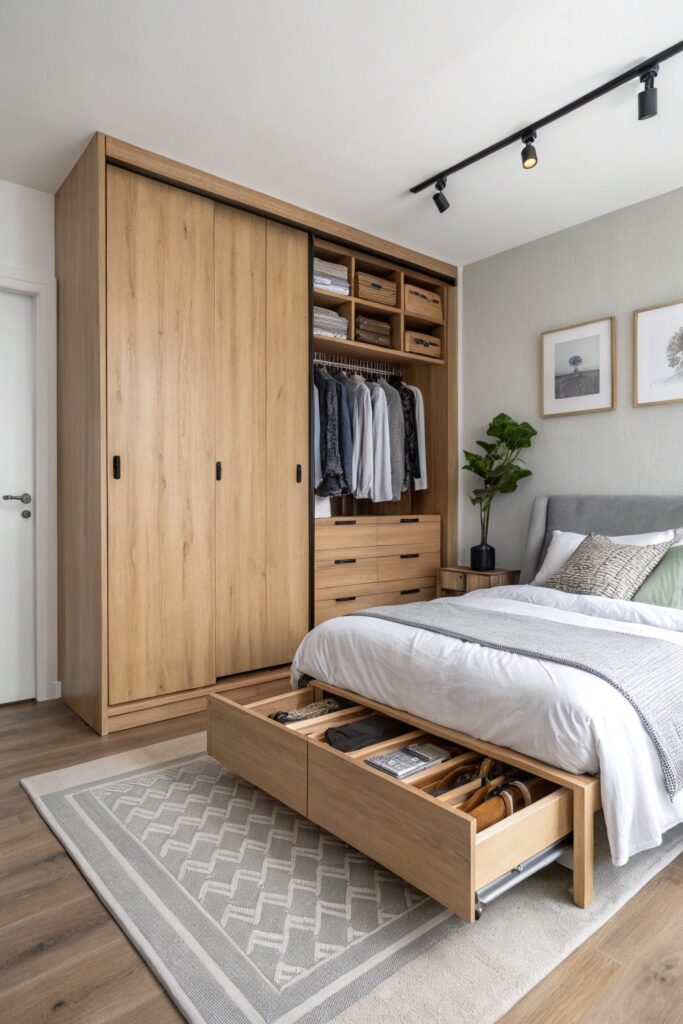
Clutter kills calm faster than almost anything else. Japandi bedrooms hide storage instead of showing it off. I added under-bed storage boxes, and my room finally stayed tidy without effort.
Choose storage that blends in visually and keeps surfaces clear. Out of sight really does mean out of mind here. Why stare at clutter when you can tuck it away?
Smart storage options:
- Under-bed drawers or boxes
- Closed wardrobes instead of open racks
- Bedside tables with drawers
- Neutral storage baskets
10. Bring in a Touch of Nature
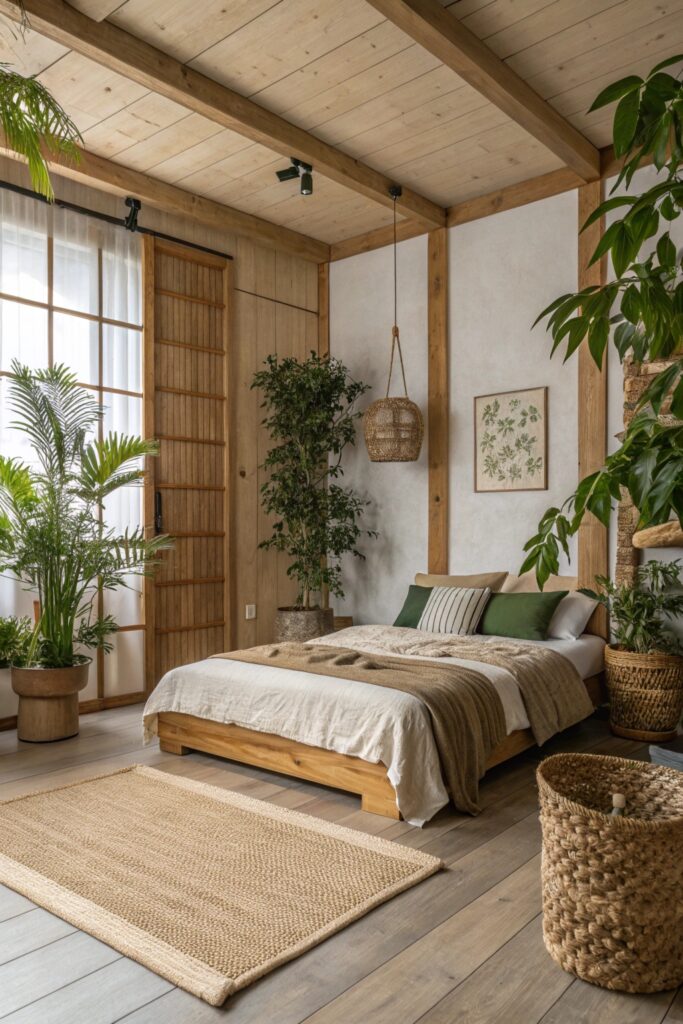
A Japandi bedroom feels incomplete without some connection to nature. Plants, wood grain, or even a nature-inspired print can do the trick. I added a small indoor plant, and the room instantly felt more alive.
You don’t need a jungle. One healthy plant beats five fake ones any day. Doesn’t a little greenery make everything feel calmer?
Easy ways to add nature:
- Low-maintenance plants like snake plants
- Wooden accents with visible grain
- Nature-inspired art
- Neutral rugs with organic textures
Final Thoughts on Creating a Japandi Bedroom You’ll Love
A japandi bedroom works because it respects real life. It values comfort, calm, and function over trends and clutter. You don’t need a massive budget or a full renovation to make it happen, just thoughtful choices and a willingness to let go of excess.
I’ve learned that the best bedrooms don’t shout for attention. They quietly support better sleep, calmer mornings, and slower evenings. So ask yourself, does your bedroom help you rest, or does it quietly stress you out? Try one or two of these ideas, ease into the style, and let your space finally work for you instead of against you.