If your bedroom feels cluttered, cold, or just a little too loud, a Japandi bedroom might be exactly what you’re craving. I remember standing in my own bedroom one morning, coffee in hand, wondering why a place meant for rest felt more stressful than my inbox. That’s when Japandi clicked for me. It blends Japanese calm with Scandinavian warmth, and honestly, it feels like a deep breath in a room.
This style isn’t about stripping everything away until your bedroom looks like a showroom. It’s about choosing better things, fewer things, and letting your space finally relax. Curious how to pull that off without hiring a designer or selling a kidney? Let’s talk real, livable ideas.
1. Stick to a Soft, Earthy Color Palette
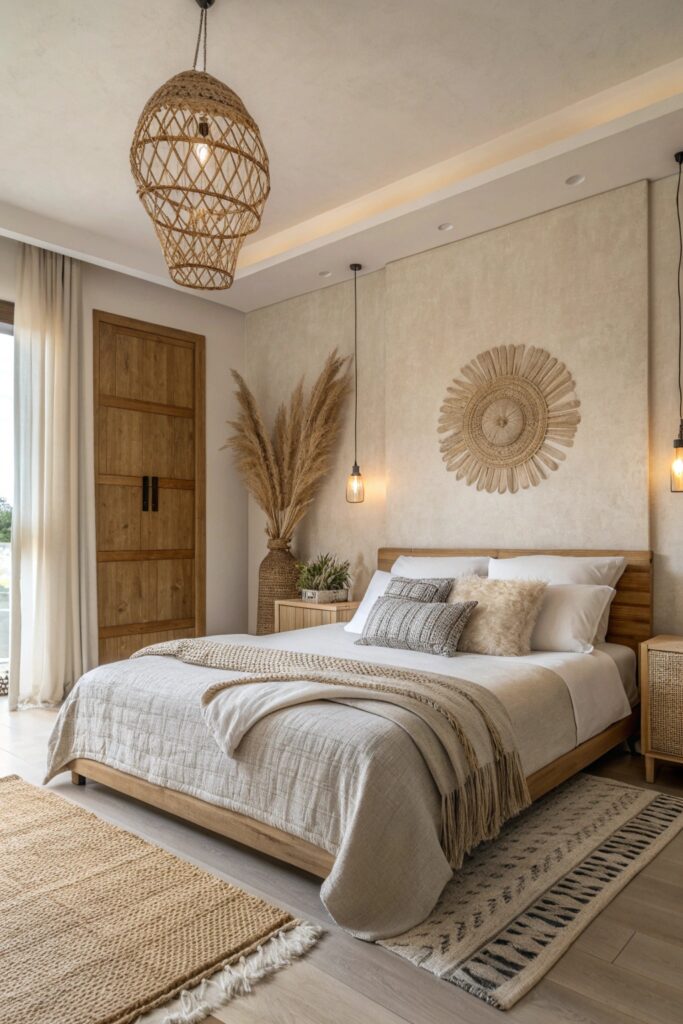
A Japandi bedroom starts with color, and no, that doesn’t mean boring beige everywhere. I like warm whites, muted taupe, soft greige, and gentle clay tones because they calm the room instantly. Ever notice how your shoulders drop when colors stop shouting?
These shades create a quiet backdrop that lets natural textures shine. They also age well, which matters if you don’t want to repaint every year. Trend-proof walls feel like a small life win.
2. Choose a Low-Profile Bed Frame
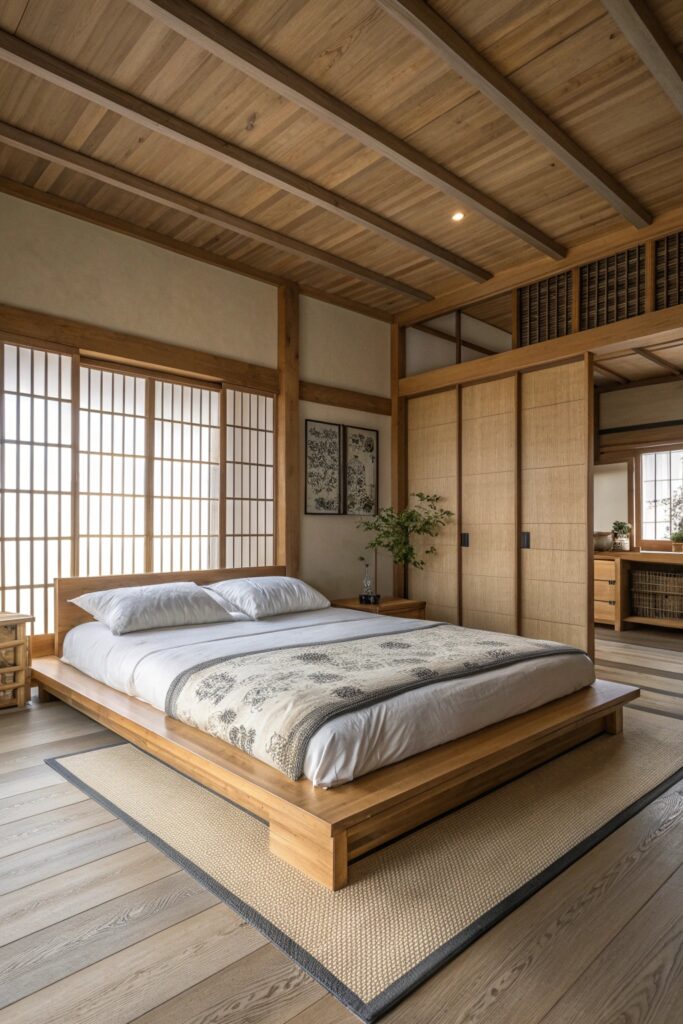
Japandi style bedroom design loves beds that sit closer to the floor. A low-profile wooden frame feels grounded and intentional, not bulky or awkward. I switched to one years ago, and my room instantly felt more open.
Low beds also highlight negative space, which Japandi uses beautifully. Plus, they make your ceiling feel taller without touching a single wall. Who doesn’t want free visual square footage?
3. Embrace Natural Wood (But Keep It Consistent)
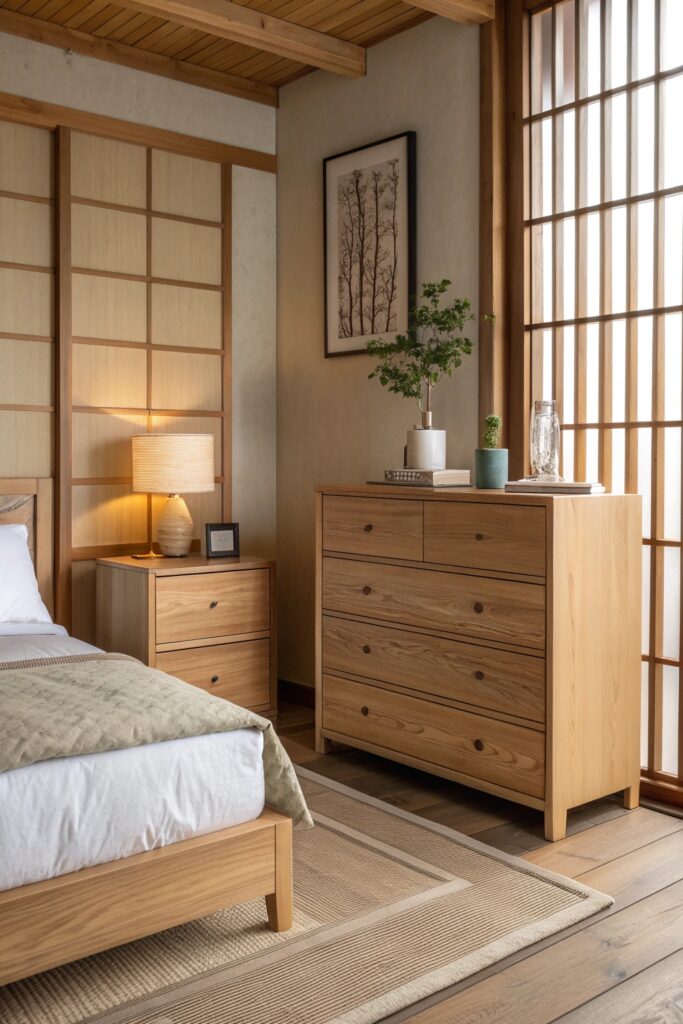
Wood matters a lot in Japandi bedroom ideas, but mixing five wood tones usually kills the vibe. I learned that lesson the hard way. Stick to one or two similar finishes, like light oak or warm walnut.
Natural wood adds warmth without visual noise. It also balances the minimal side of Japandi so the room never feels cold or empty.
4. Keep Furniture Minimal and Functional
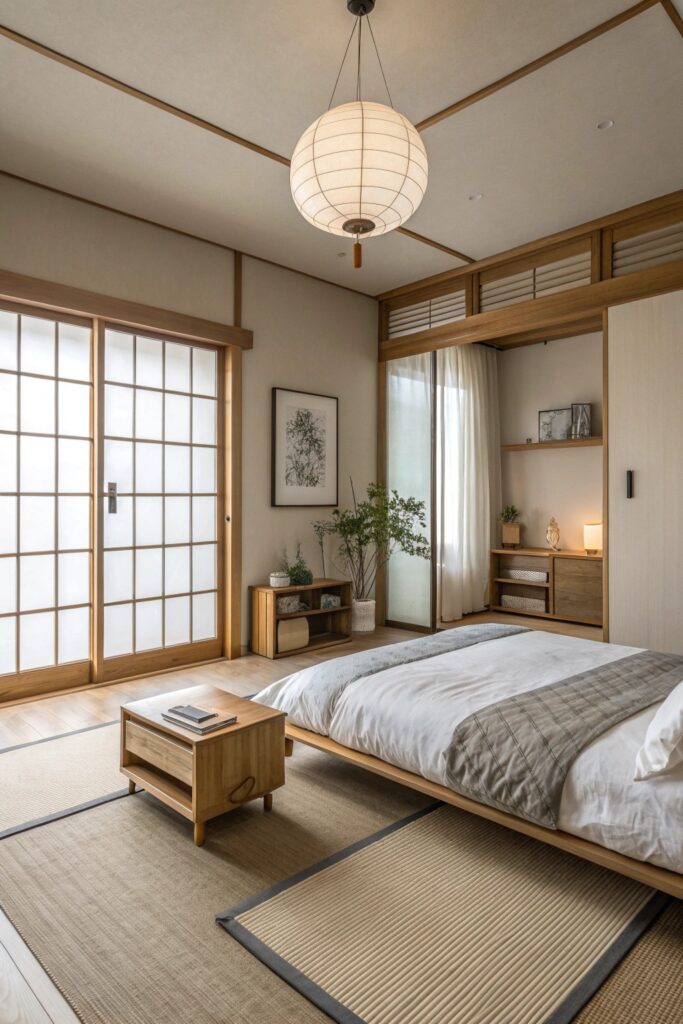
Every piece in a Japandi minimalist bedroom needs a reason to exist. If a chair only collects laundry, it doesn’t deserve the floor space. I ask myself one simple question: Does this make my life easier or calmer?
Look for furniture with clean lines and simple silhouettes. Skip ornate details and flashy hardware. Japandi furniture whispers instead of yelling.
5. Use Textiles to Add Warmth

Minimal doesn’t mean uncomfortable, and textiles prove that. I layer linen bedding, a soft wool throw, and maybe one textured cushion. Ever climbed into a bed that looks calm but feels cozy? That’s the goal.
Stick to natural fabrics like:
- Linen
- Cotton
- Wool
- Soft blends with subtle texture
These materials age beautifully and add warmth without clutter.
6. Let Natural Light Do the Heavy Lifting
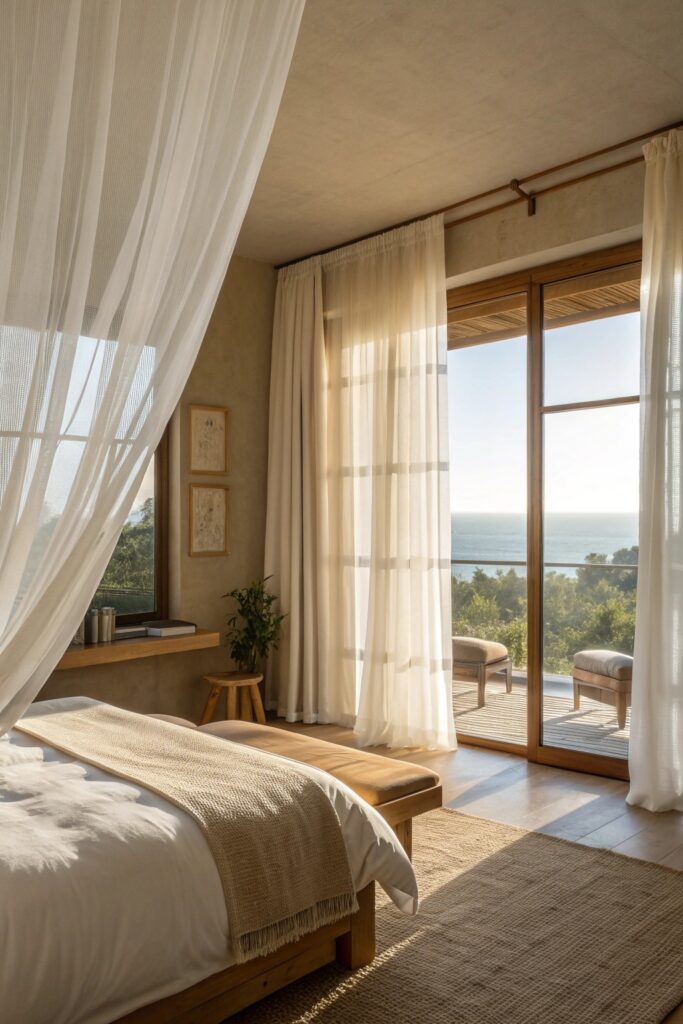
Japandi style bedrooms love light, especially the natural kind. I avoid heavy curtains and use sheer linen panels instead. They soften the light without blocking it.
If privacy worries you, layer sheer curtains with simple blackout shades. This setup keeps the room bright during the day and cave-like at night. Balance always wins.
7. Add One Statement Light Fixture
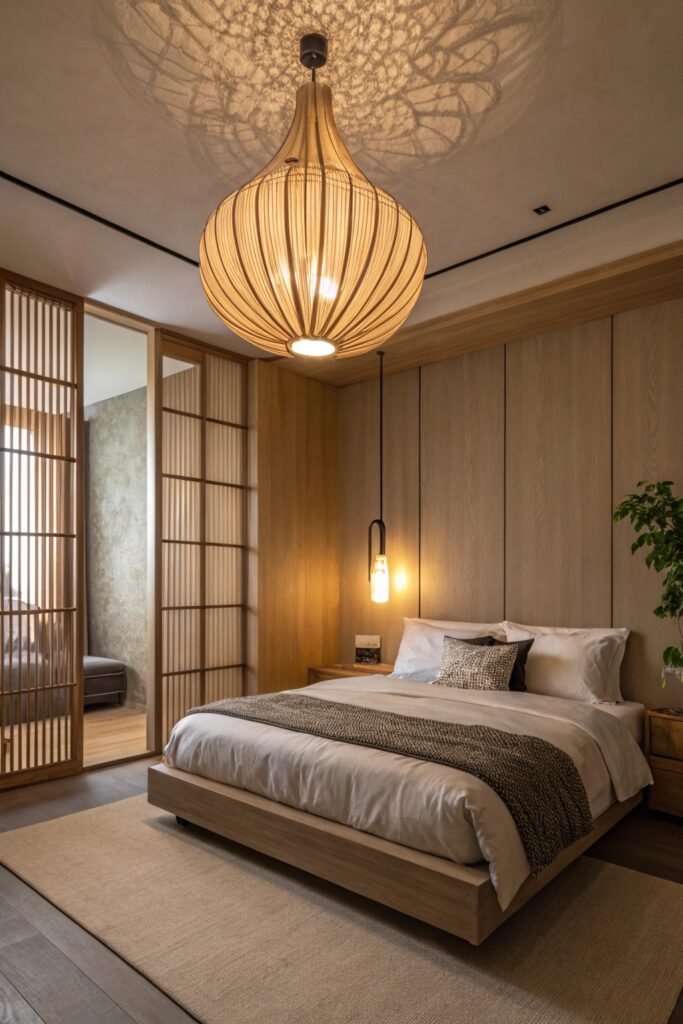
Lighting sets the mood faster than paint ever will. I prefer a single statement pendant or a sculptural paper lantern. It adds personality without visual chaos.
Avoid harsh white bulbs at all costs. Warm lighting feels softer and more inviting, especially in the evening. Your nervous system will thank you.
8. Keep Decor Sparse but Meaningful
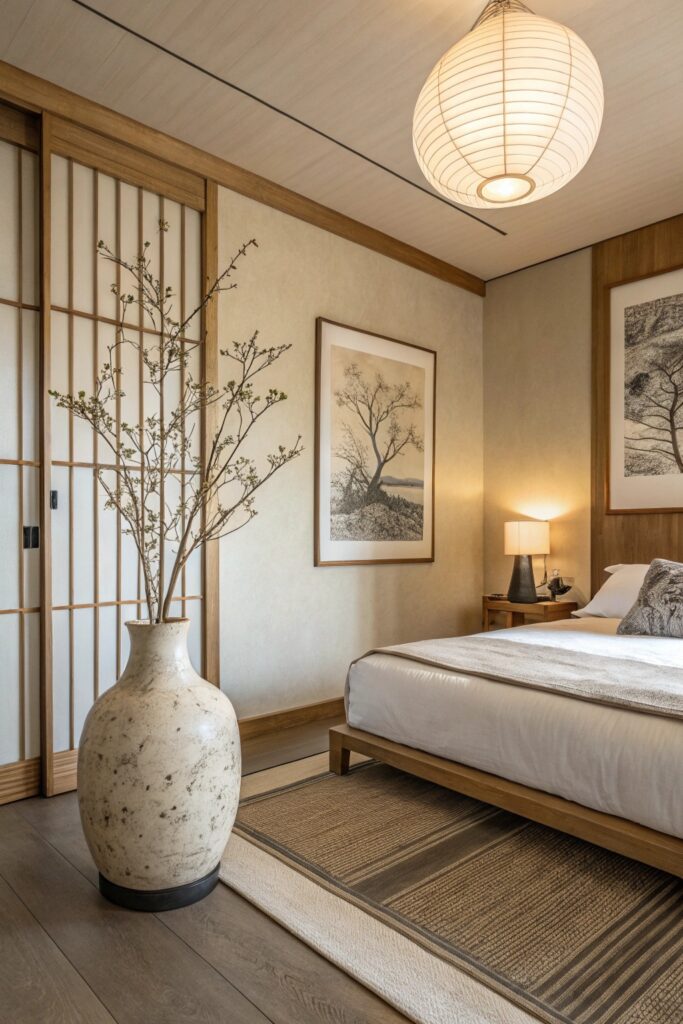
Japandi bedroom ideas focus on intention, not abundance. I display one ceramic vase or a single framed print instead of a gallery wall. Doesn’t it feel nicer when your eyes know where to rest?
Choose decor with a story or texture. Handmade pieces work especially well because they bring subtle character without overwhelming the space.
9. Choose Simple, Grounded Nightstands
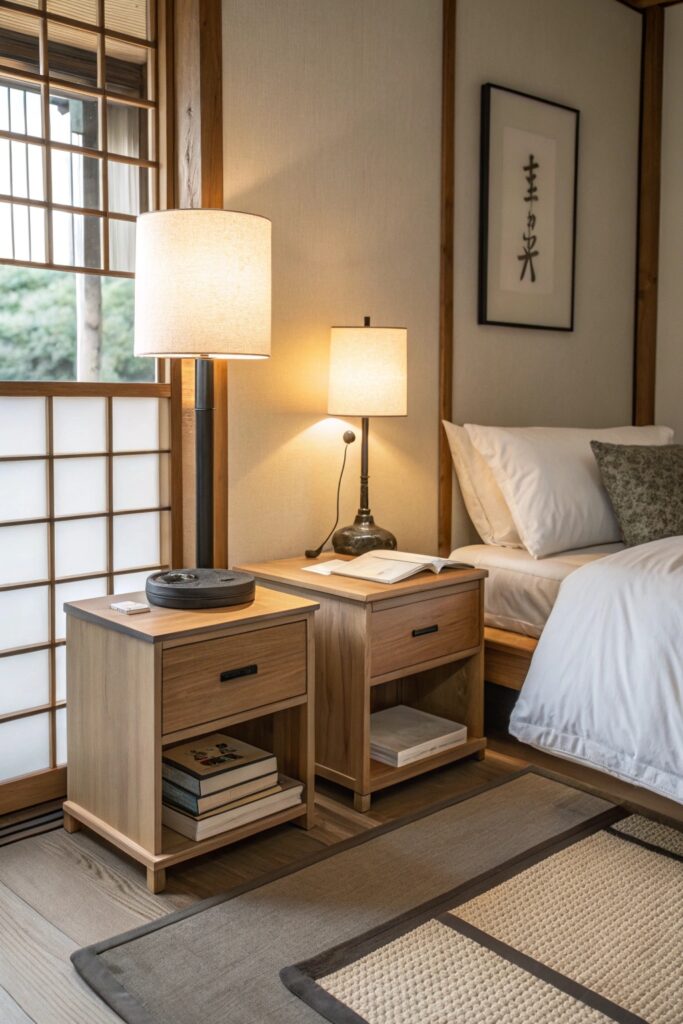
Nightstands often become clutter magnets, so Japandi keeps them simple. I love floating shelves or slim wooden tables with clean lines. They look light but still feel sturdy.
Limit what sits on top:
- A lamp
- A book
- Maybe a small tray
If it doesn’t help you unwind, it probably doesn’t belong there.
10. Bring in Nature (Without Going Jungle Mode)
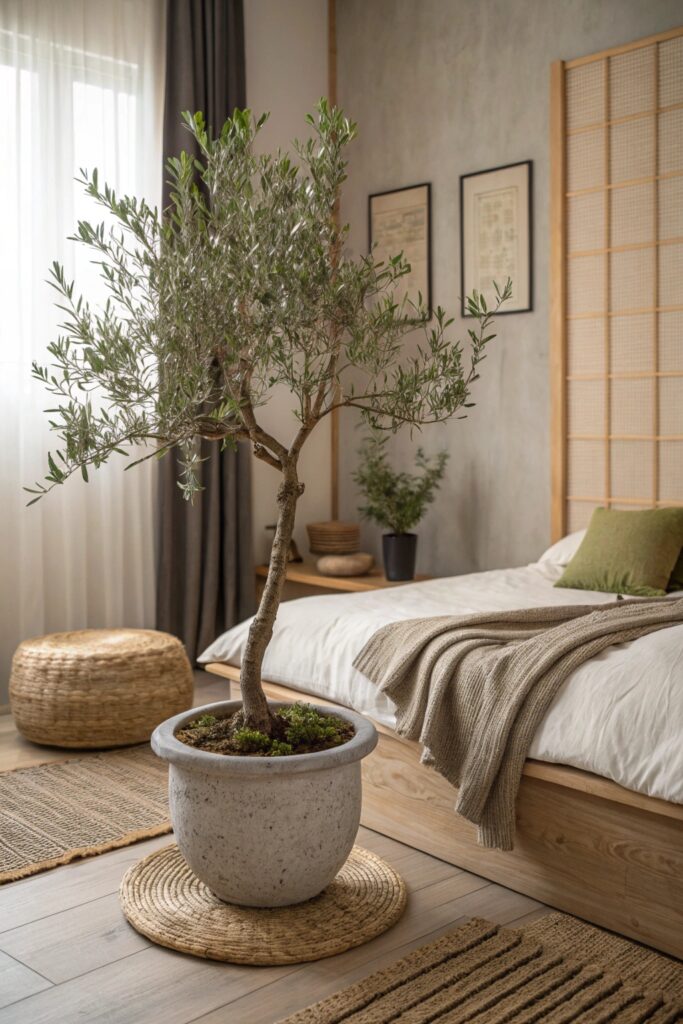
Plants play a quiet role in a Japandi bedroom, and restraint matters. One olive tree or a simple potted plant does the job. Ever notice how greenery instantly softens a room?
Stick to plants with clean shapes and muted greens. Skip anything too wild or high-maintenance unless you enjoy plant-related stress.
11. Focus on Clean, Calm Wall Art
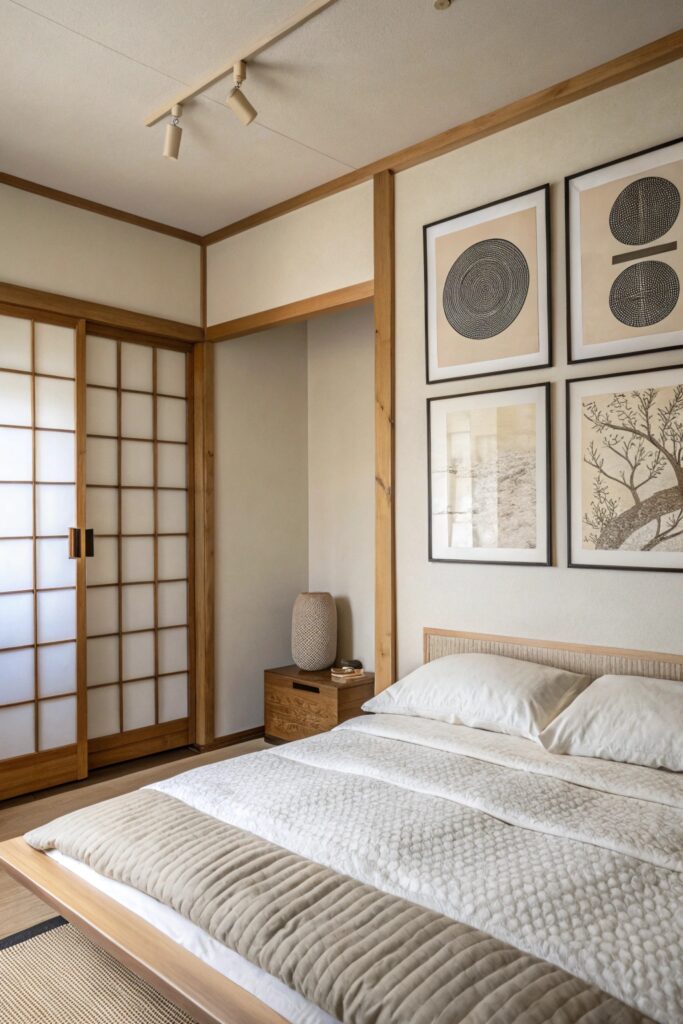
Japandi wall art feels calm, not busy. I lean toward abstract prints, soft landscapes, or minimalist line drawings. They add interest without stealing attention.
Keep frames simple and consistent. Black, wood, or soft neutral frames work best and keep the overall look cohesive.
12. Hide Storage Whenever Possible
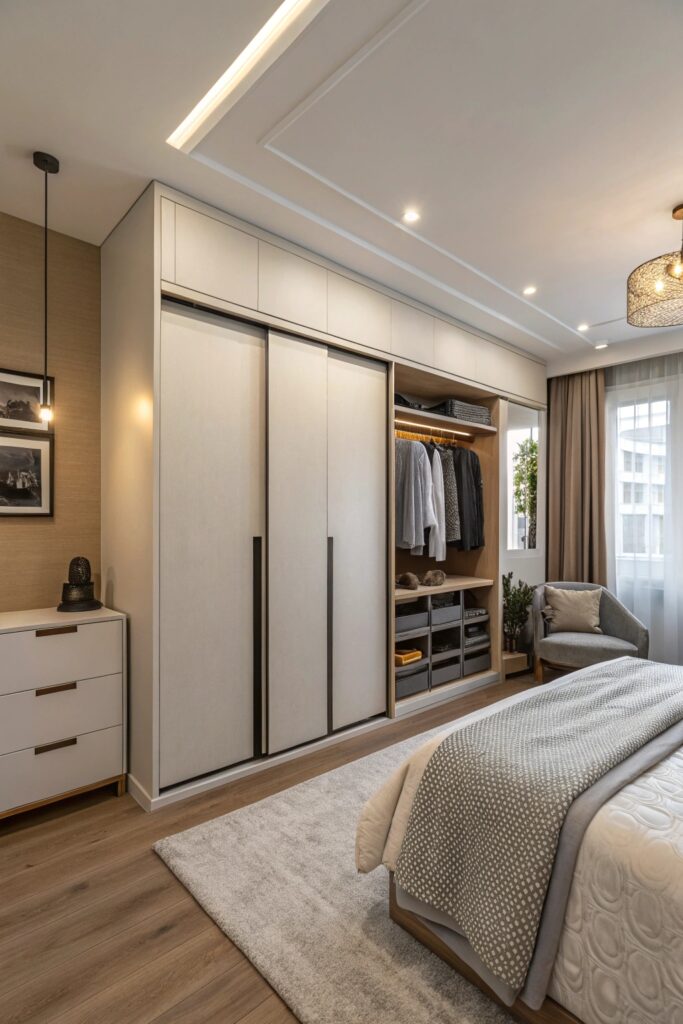
Visual clutter kills Japandi faster than anything else. I use closed storage, under-bed drawers, and wardrobes with flat fronts. Out of sight really does mean out of mind.
If you live in a smaller space, smart storage becomes non-negotiable. A calm bedroom starts with fewer things on display.
13. Use Texture Instead of Pattern
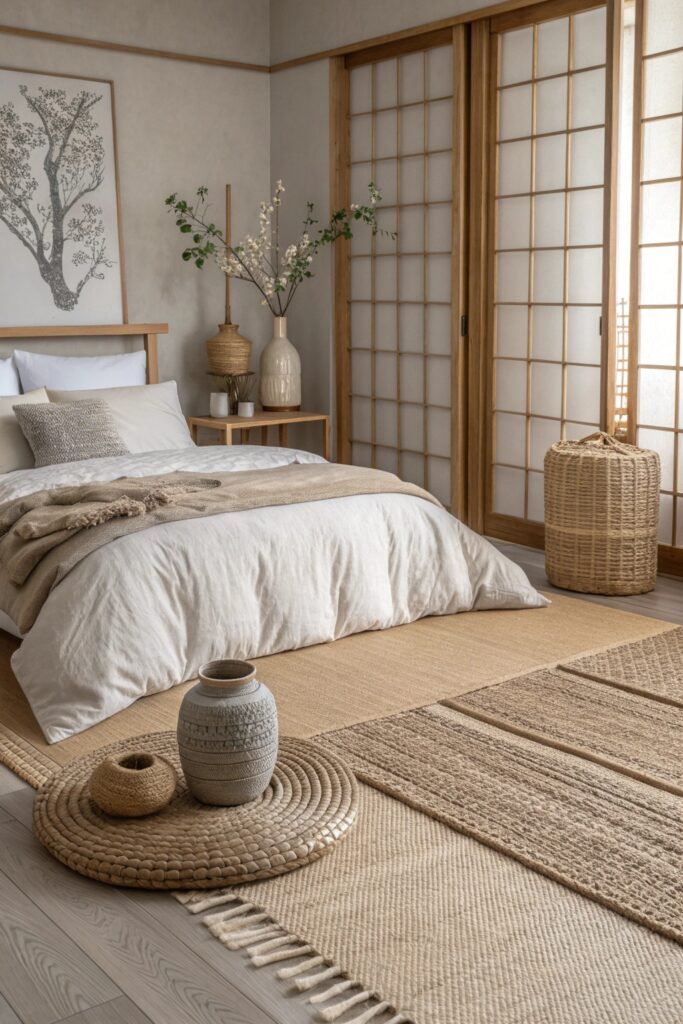
Patterns can feel busy in a Japandi minimalist bedroom. Texture gives you depth without noise. Think woven rugs, ribbed ceramics, or softly crinkled linen.
Texture keeps the room interesting while maintaining calm. It’s like adding seasoning without overpowering the dish.
14. Keep Technology Invisible
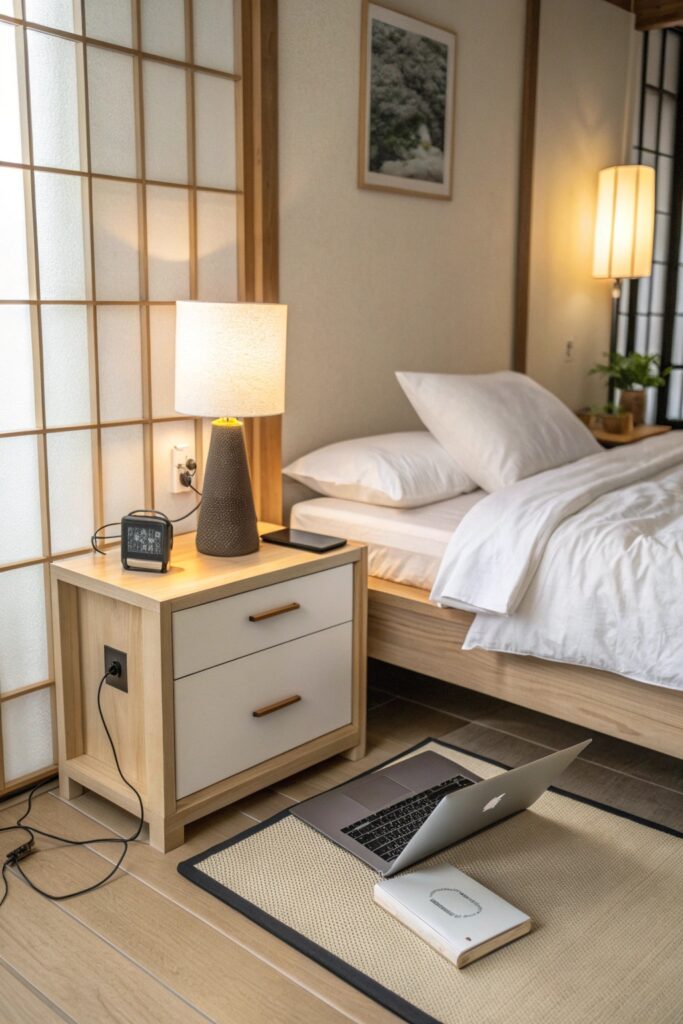
Nothing ruins a peaceful bedroom faster than glowing screens and tangled cords. I hide chargers in drawers and keep electronics off the nightstand. Does your phone really need center stage while you sleep?
If you must keep tech nearby, use cable organizers and neutral accessories. Japandi works best when modern life stays discreet.
15. Let Empty Space Be Part of the Design
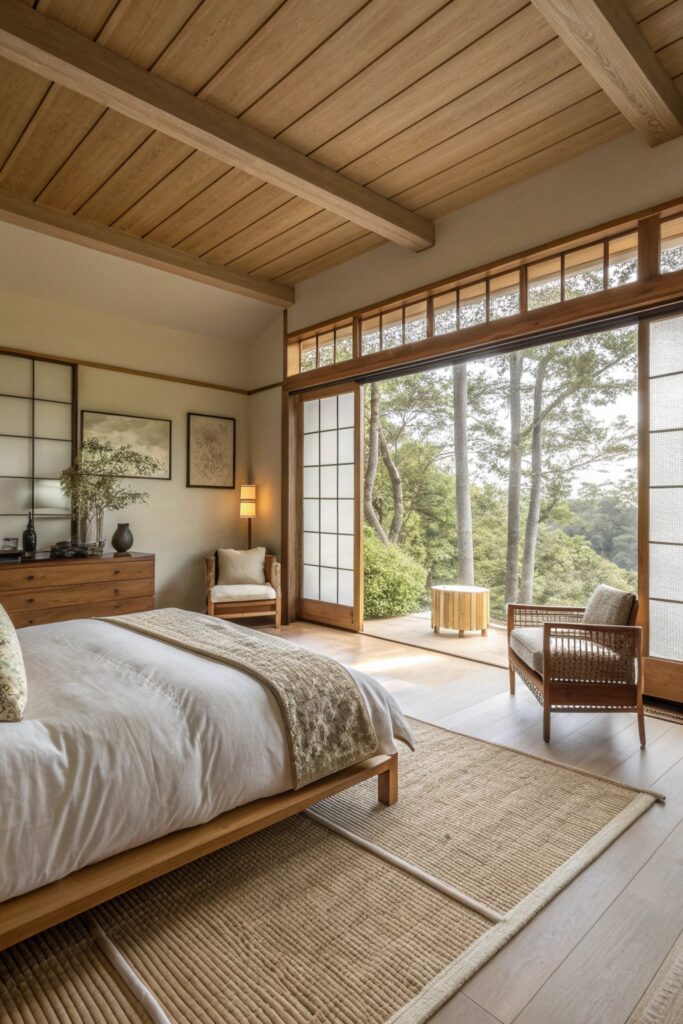
This idea feels uncomfortable at first, especially if you love filling every corner. Japandi bedrooms celebrate space as much as objects. Empty areas let the room breathe.
I stopped forcing decor into every gap, and my bedroom instantly felt calmer. Sometimes doing less actually gives you more.
Conclusion
A Japandi bedroom doesn’t chase trends or perfection. It focuses on warmth, calm, and everyday comfort through thoughtful choices. When you balance minimal design with natural materials, the space finally supports rest instead of fighting it.
If your bedroom currently feels chaotic or cold, start small. Swap one piece, simplify one surface, or soften one corner. With a little intention, your Japandi bedroom can become the calmest place in your home—and honestly, you deserve that.