I’ll say it upfront: Japandi wardrobe design and bedroom choices completely changed how I feel about getting dressed every morning. No drama, no clutter avalanches, no fighting with doors that squeak like they’re auditioning for a horror movie. Just calm, clean, and quietly stylish storage that actually works in real life. Sounds dreamy, right?
If your bedroom feels chaotic or visually loud, your wardrobe probably plays a bigger role than you think. I’ve lived through overstuffed closets and mismatched cabinets, and trust me, they mess with your mood more than you realize. Japandi fixes that sweet spot between Japanese calm and Scandinavian practicality. Let’s talk about wardrobe ideas you can genuinely use, not Pinterest-only fantasies.
1. Minimal Built-In Japandi Wardrobe
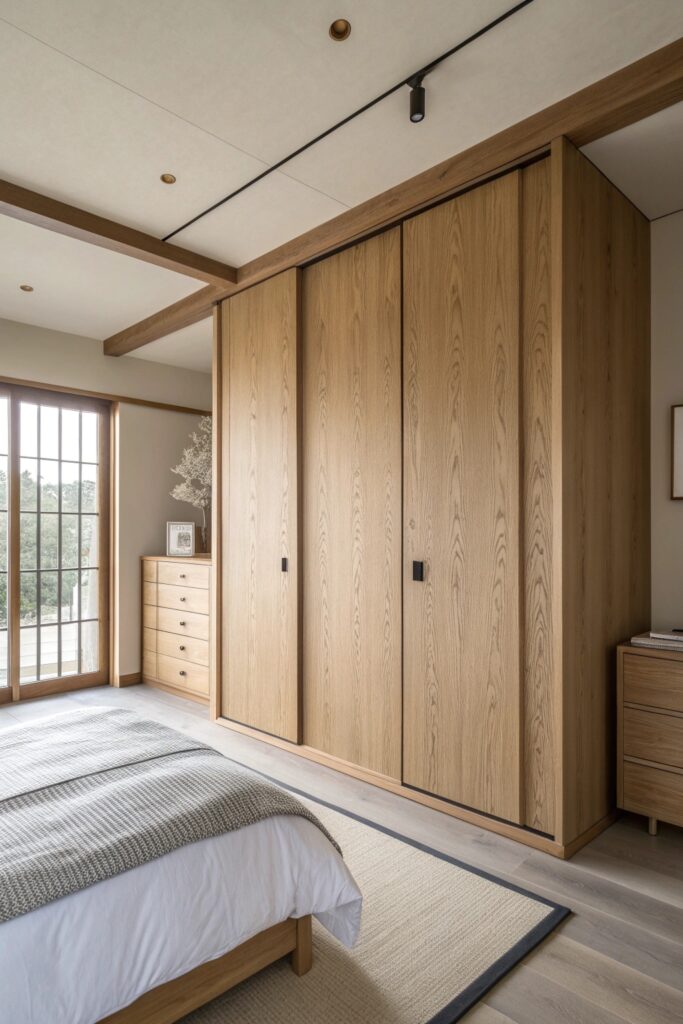
This one sits at the top of my favorites list for a reason. Built-in wardrobes feel intentional, like they belong to the room instead of fighting for attention.
I’ve used this style in a small bedroom, and it made the space feel instantly calmer. The flush doors, soft wood tones, and clean lines blend perfectly into a Japandi bedroom interior design scheme. Ever notice how visual clutter disappears when storage looks seamless?
Why it works so well:
- Flush panels with no bulky frames
- Soft oak, ash, or walnut finishes
- Push-to-open or recessed handles
2. Sliding Door Wardrobe with Wood Slats
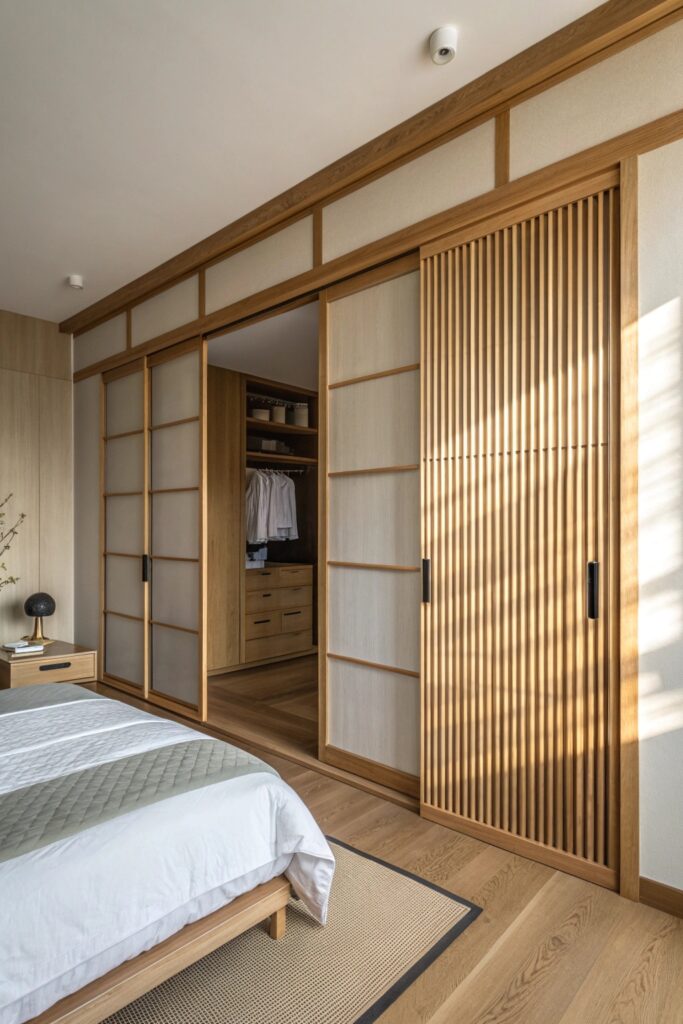
Sliding doors already save space, but add vertical wood slats, and suddenly the wardrobe becomes a feature. I love how this design adds texture without screaming for attention.
This option works beautifully in narrow bedrooms where swing doors feel annoying. Plus, vertical slats visually stretch the height of the room. Who doesn’t want a bedroom that feels taller?
Design tips:
- Stick to matte finishes
- Use warm neutral wood tones
- Pair with soft linen curtains
3. Floor-to-Ceiling Japandi Wardrobe
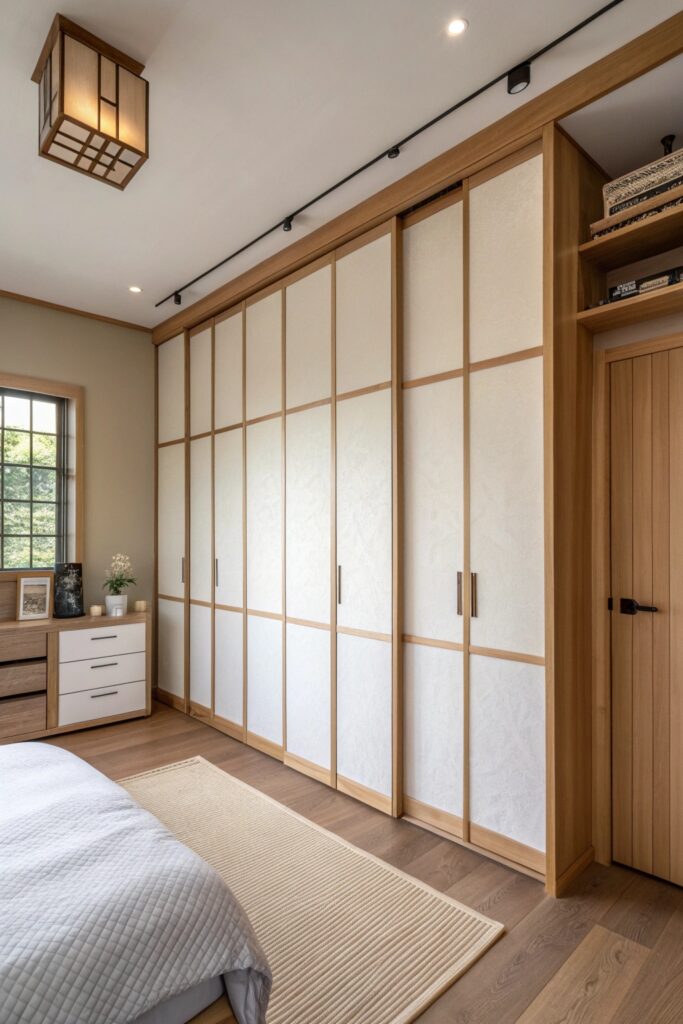
I swear by floor-to-ceiling storage, especially if you hate dust collecting on top of cabinets. This wardrobe style looks clean and maximizes every inch.
In a bedroom Japandi setup, tall wardrobes reinforce that calm, architectural look. I’ve noticed it also forces better organization because you suddenly have no excuse for clutter piles.
Smart features to include:
- Hidden upper cabinets
- Integrated LED strip lighting
- Neutral panel colors like beige or greige
4. Handleless Japandi Wardrobe Design
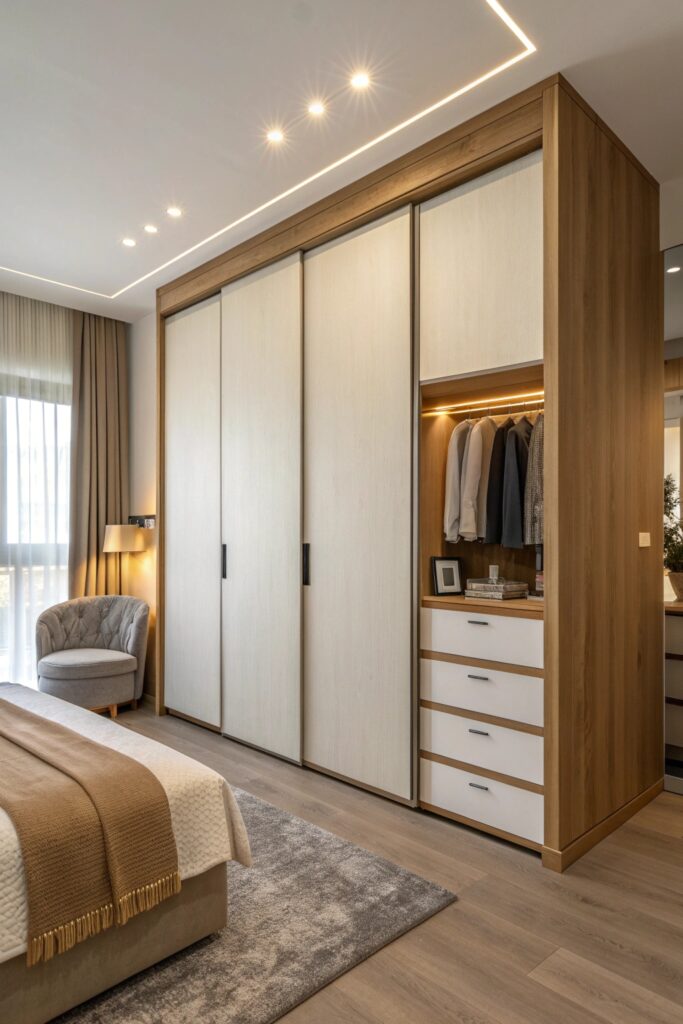
Handles can ruin a clean look faster than you’d expect. I learned this the hard way after installing shiny knobs in an otherwise calm bedroom.
Handleless wardrobes feel smooth, modern, and incredibly Japandi. Touch-latch systems or recessed grooves keep everything visually quiet. Doesn’t your mind relax when surfaces stay uninterrupted?
Best practices:
- Use soft-close hardware
- Choose matte lacquer or wood veneer
- Keep door gaps minimal
5. Open Japandi Wardrobe with Curtains
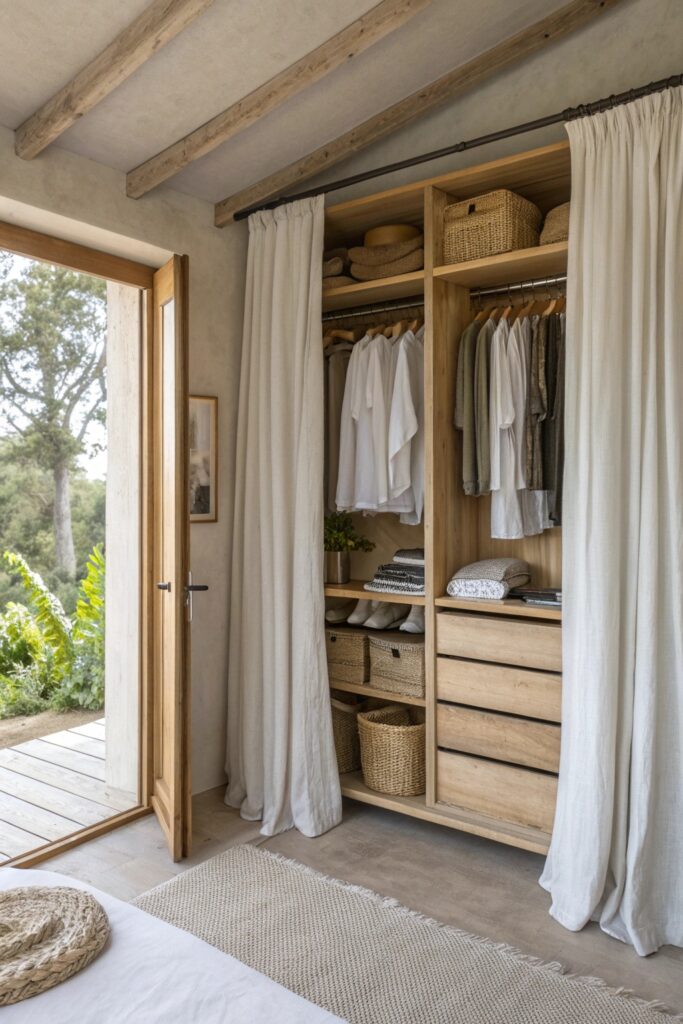
This idea scares some people, but hear me out. Open wardrobes with linen or cotton curtains feel light and surprisingly practical.
I tried this in a guest room, and guests loved the relaxed vibe. Curtains soften the space and keep things flexible. Plus, swapping curtains costs way less than replacing cabinet doors.
Why it works:
- Encourages minimalism
- Adds softness to the room
- Perfect for smaller bedrooms
6. Japandi Wardrobe with Natural Wood Grain
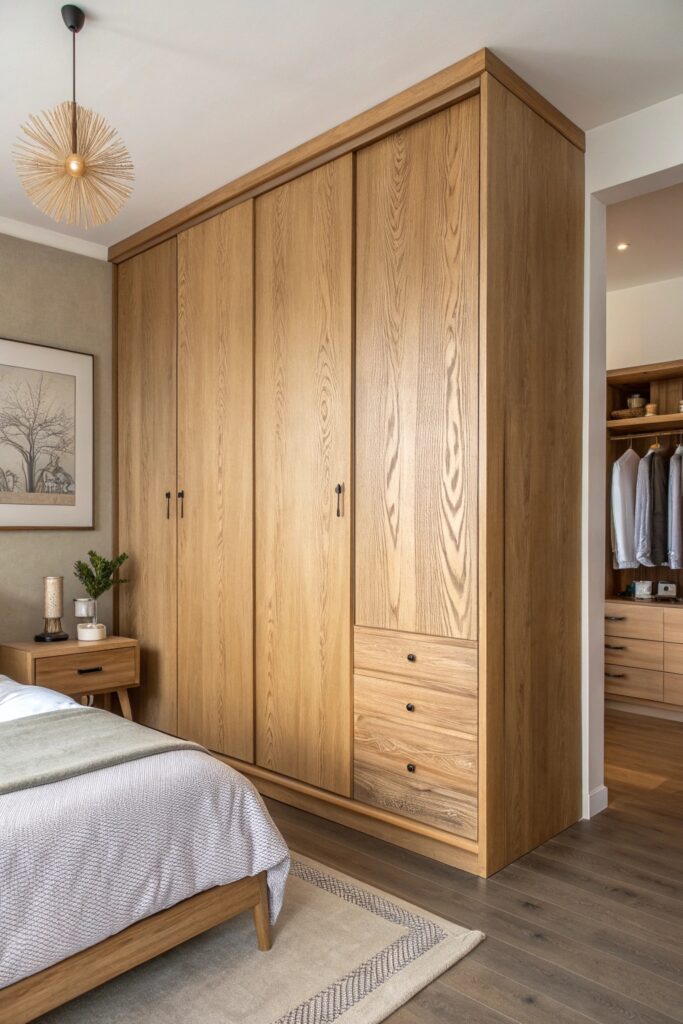
Natural wood grain brings warmth that no paint ever can. In a Japandi bedroom design, this detail matters more than fancy hardware.
I always recommend visible grain patterns because they add quiet character. The trick stays simple: let the wood speak without adding flashy finishes.
Wood types that work best:
- Oak
- Ash
- Light walnut
7. Two-Tone Japandi Wardrobe Design
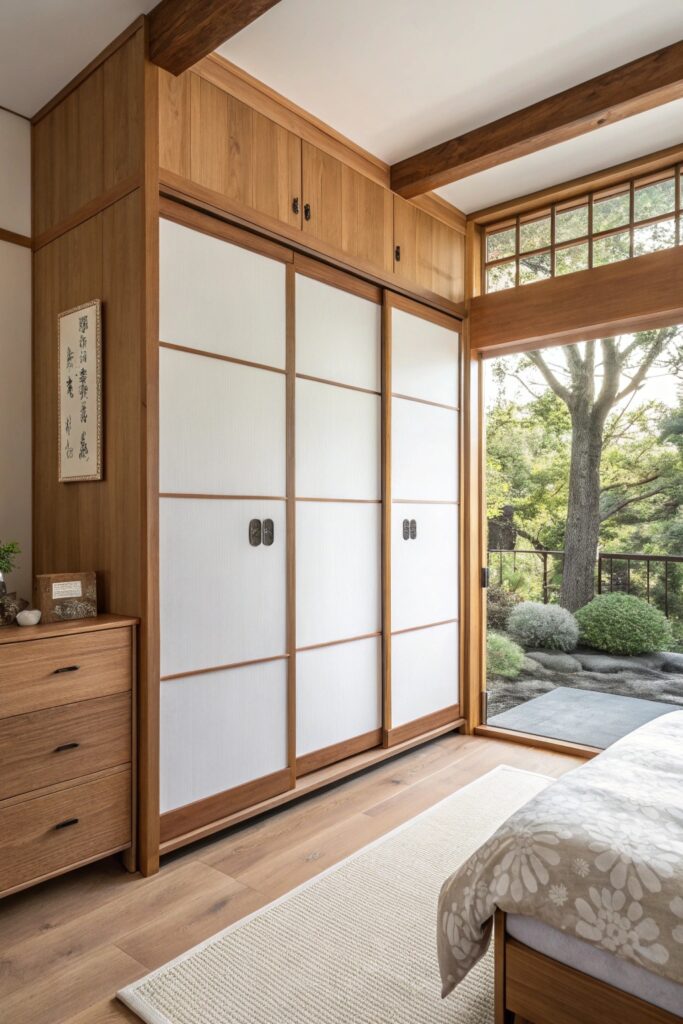
Sometimes, all-wood feels a bit heavy, especially in compact bedrooms. Two-tone wardrobes fix that balance beautifully.
I love pairing warm wood with soft white or beige panels. This combo keeps the space airy while still grounding it. Ever notice how contrast makes everything feel intentional?
Winning combinations:
- Wood + warm white
- Greige + light oak
- Beige + soft walnut
8. Japandi Wardrobe with Integrated Vanity
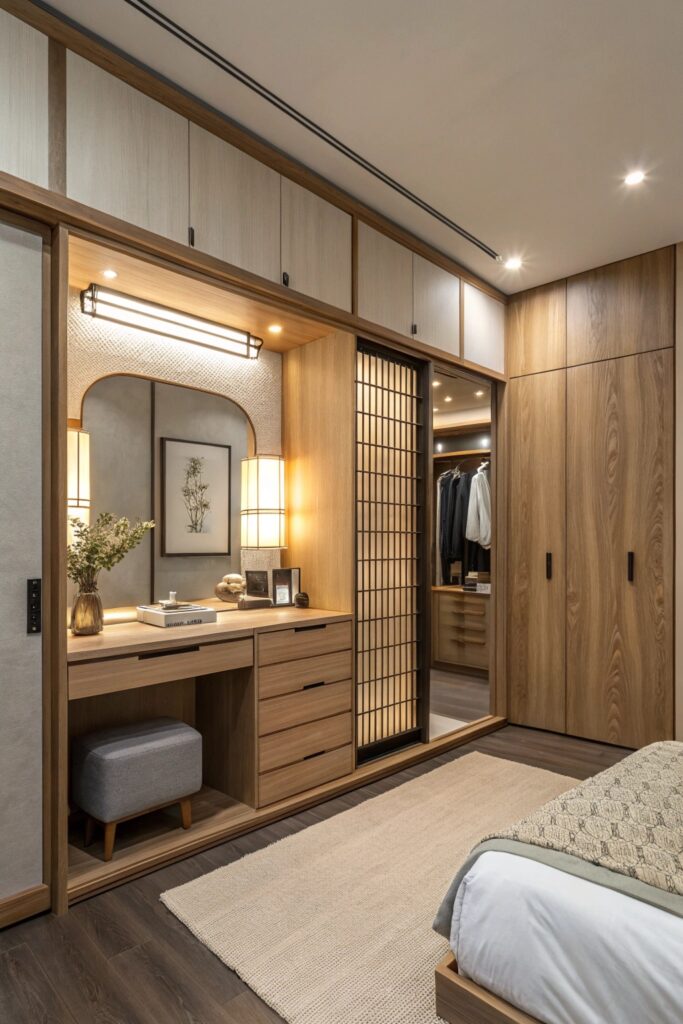
This one feels luxurious but stays practical. A wardrobe that flows into a vanity saves space and keeps your routine smooth.
I installed this setup in my own bedroom, and mornings feel less chaotic now. Everything sits where it should, without adding extra furniture clutter.
Key features:
- Built-in mirror panel
- Soft drawer lighting
- Minimal floating shelves
9. Japandi Wardrobe with Black Accents

Before you panic, I don’t mean heavy black doors. Japandi uses black sparingly, and that’s what makes it elegant.
Thin black trims or shadow gaps add definition without overpowering the room. I’ve seen this work beautifully in modern Japandi bedroom interior design layouts.
Where to add black:
- Door edges
- Slim handles
- Internal wardrobe frames
10. Corner Japandi Wardrobe Design
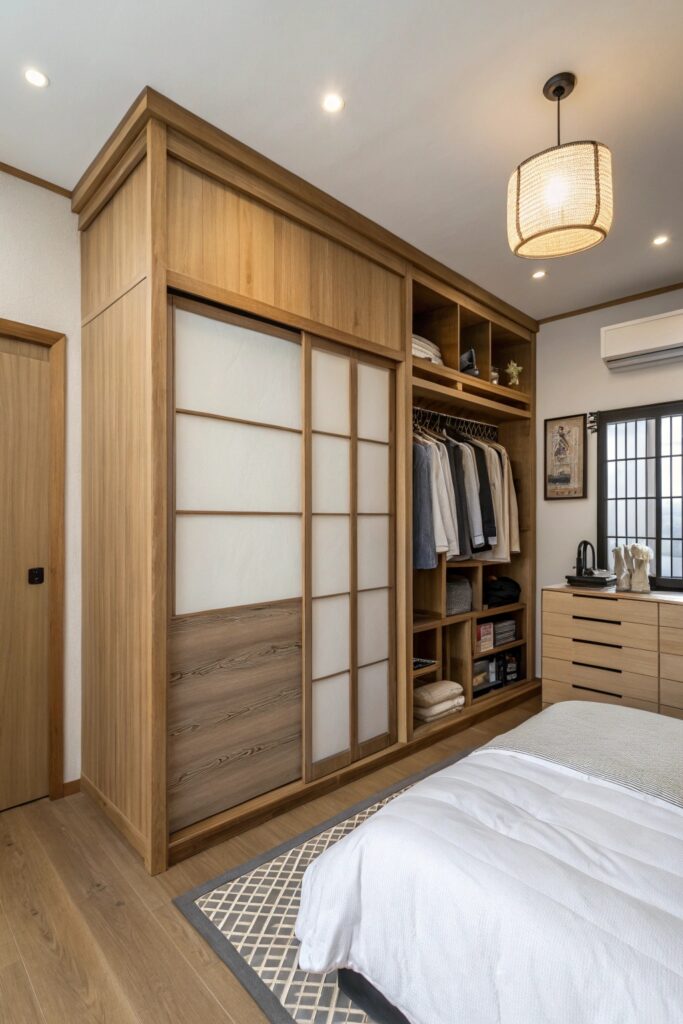
Corners usually get ignored, which feels like a missed opportunity. A well-designed corner wardrobe uses awkward space smartly.
I once converted a dead corner into a Japandi wardrobe, and it changed the entire room layout. Why waste space when clean design solves the problem?
Corner wardrobe tips:
- Use L-shaped layouts
- Add internal lighting
- Keep doors simple
11. Japandi Wardrobe with Soft Lighting
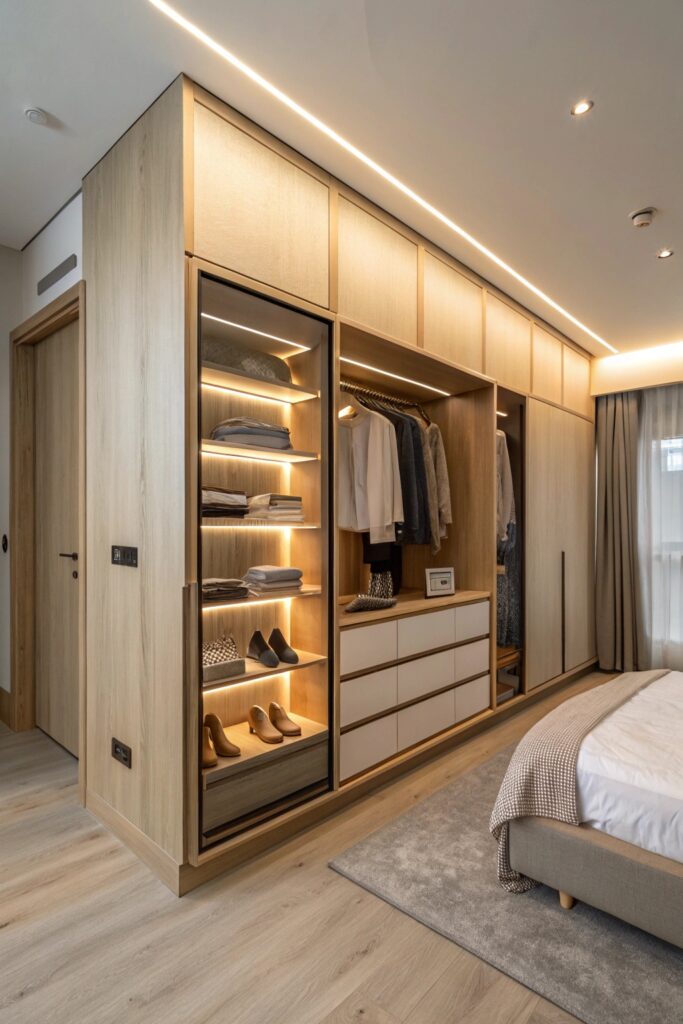
Lighting transforms wardrobes from boring storage into something almost calming. I didn’t expect that until I tried it.
Warm LED strips inside or around the wardrobe create a soft glow that fits perfectly with bedroom Japandi aesthetics. Bright white lights feel harsh, so skip them.
Lighting ideas:
- Warm white LEDs (3000K)
- Motion-sensor lighting
- Concealed strip placement
12. Compact Japandi Wardrobe for Small Bedrooms
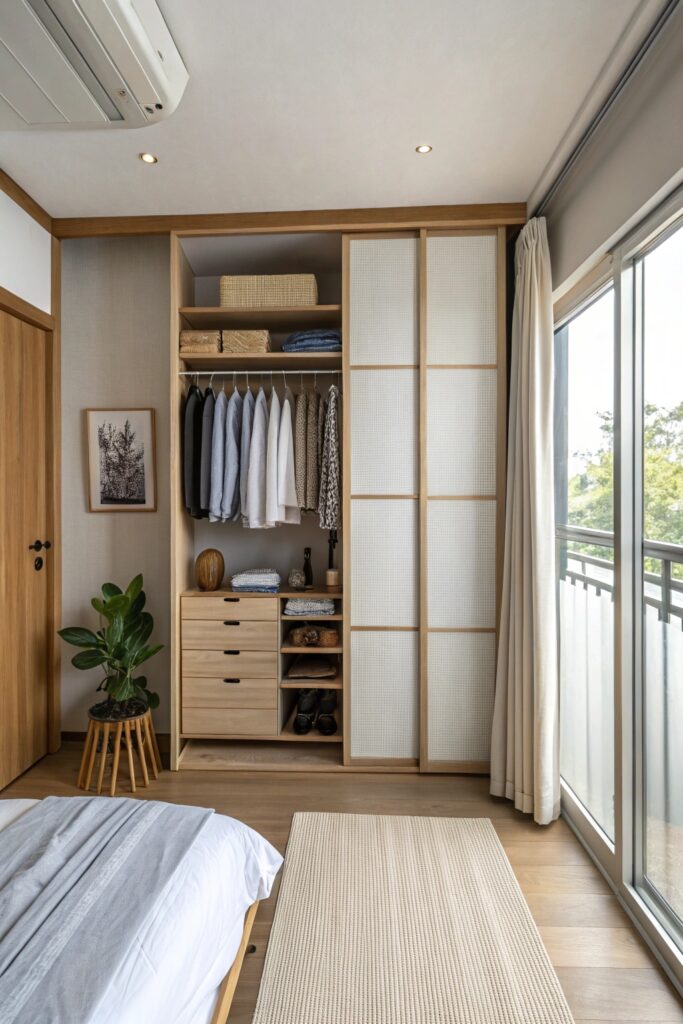
Not everyone has a massive bedroom, and that’s okay. Japandi actually shines in smaller spaces.
I’ve seen compact wardrobes with smart internal layouts outperform larger ones. The focus stays on function, not size. Isn’t that refreshing?
Space-saving features:
- Sliding or pocket doors
- Vertical storage sections
- Multi-use internal drawers
Final Thoughts
Choosing the right Japandi wardrobe design bedroom setup isn’t about trends or showing off. It’s about creating a space that feels calm, organized, and genuinely livable. I’ve tested these ideas in real bedrooms, not showroom displays, and they work.
If your wardrobe currently stresses you out, maybe it’s time for a quieter design approach. Japandi wardrobes bring balance, warmth, and sanity back into the bedroom. And honestly, who doesn’t want their mornings to start with a little more calm and a lot less mess?