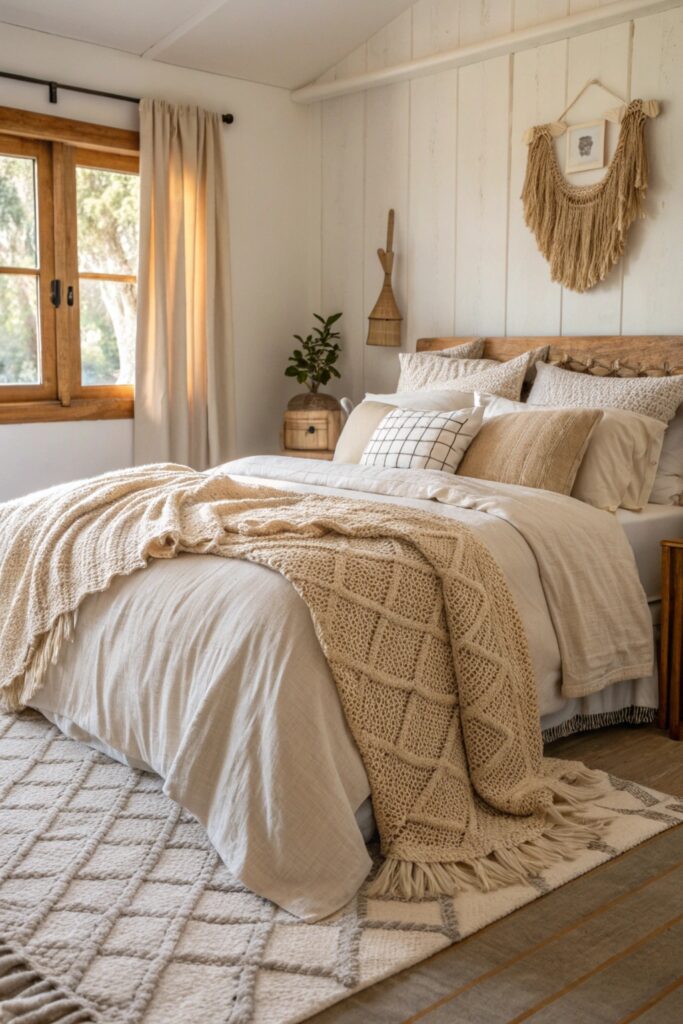
Ever walked into a bedroom and felt your shoulders drop instantly? That’s exactly what a Japandi minimalist bedroom does when it’s done right. I still remember the first time I stripped my bedroom back to basics—no extra chairs, no random decor, no “I might need this someday” clutter. The calm felt almost suspicious, like my room knew something I didn’t.
If you crave a bedroom that feels warm, simple, and quietly stylish, you’re in the right place. Let’s talk Japandi—without the pretension and without the Pinterest fantasy rooms that nobody actually lives in.
1. Start with a Calm, Neutral Color Palette
Color sets the mood faster than furniture ever will. Japandi interiors bedroom designs thrive on soft neutrals that don’t scream for attention.
I always lean toward:
- Warm whites instead of stark white
- Beige, sand, or soft taupe walls
- Muted grays with warm undertones
Ever notice how bright white walls feel cold at night? These warmer neutrals fix that problem without trying too hard.
2. Choose Low-Profile Furniture That Grounds the Space
Japandi style bedroom layouts love furniture that stays close to the floor. Low beds make the room feel larger and more relaxed.
I swapped my tall bed frame for a platform bed, and the difference shocked me. The room felt calmer instantly, like it could finally breathe.
Look for:
- Platform or futon-style beds
- Low nightstands with clean lines
- Simple benches instead of bulky chairs
Why fight gravity when you can work with it?
3. Embrace Natural Wood Tones (But Don’t Overdo It)
Wood anchors every modern Japandi bedroom. The trick involves restraint, not turning your room into a log cabin.
I prefer:
- Oak, ash, or walnut finishes
- Matte or lightly oiled surfaces
- Consistent wood tones throughout
Mixing too many woods feels chaotic fast. Have you ever walked into a room that felt busy but couldn’t explain why? Yeah, that’s usually the wood clash.
4. Keep Decor Minimal but Meaningful
Japandi minimalism doesn’t ban decor. It just demands intention.
I keep a few pieces I actually love:
- A ceramic vase from a local market
- One framed print with soft lines
- A small handmade bowl on my nightstand
Ask yourself a simple question: Does this item calm me or distract me? The answer makes decluttering surprisingly easy.
5. Focus on Soft, Layered Textiles
Minimal doesn’t mean uncomfortable. Japandi interiors bedroom designs rely on cozy textures to balance all that simplicity.
I always layer:
- Linen or cotton bedding
- A wool or knit throw
- A neutral area rug under the bed
Ever climbed into a bed that looks great but feels cold? Japandi fixes that with texture, not clutter.
6. Let Natural Light Do the Heavy Lifting
Lighting shapes the mood more than most people realize. Japandi bedrooms love sunlight like plants love water.
I keep my windows simple with:
- Sheer curtains or linen drapes
- No heavy blinds unless privacy demands it
- Clear window areas with no furniture blocking light
Why hide natural light when it’s free and flattering?
7. Use Soft, Warm Artificial Lighting
When the sun disappears, lightning takes over. A Japandi minimalist bedroom avoids harsh overhead lights like the plague.
I rely on:
- Paper lanterns or fabric shades
- Warm LED bulbs
- Table lamps instead of ceiling lights
Harsh lighting ruins even the prettiest room. Nobody wants their bedroom to feel like a hospital hallway, right?
8. Prioritize Function Over Decoration
Every piece in a Japandi bedroom earns its place. If it doesn’t serve a purpose, it probably doesn’t belong there.
I ask myself:
- Do I use this weekly?
- Does it make my routine easier?
- Does it calm the room visually?
Minimalism feels less painful when everything works hard for you.
9. Keep Storage Hidden and Simple
Clutter kills the Japandi vibe faster than anything else. Smart storage keeps the calm intact.
I swear by:
- Beds with hidden drawers
- Minimal wardrobes with flat fronts
- Storage baskets in natural fibers
Open shelves look cute online, but dust doesn’t care about aesthetics. Trust me on this one.
10. Add One Organic Statement Piece
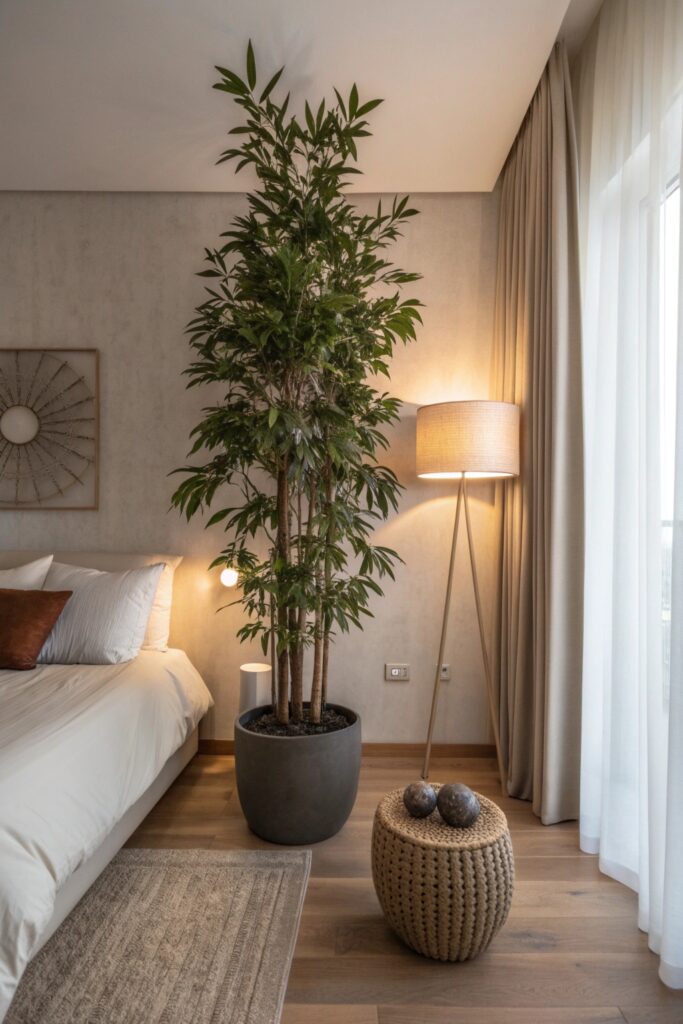
Japandi interiors bedroom designs shine when you add one subtle focal point. I stress one because restraint matters.
Good options include:
- A sculptural floor lamp
- A tall indoor plant
- A textured wall hanging
Ever notice how one beautiful piece feels stronger than ten mediocre ones? That’s Japandi logic in action.
11. Keep Walls Calm and Mostly Bare
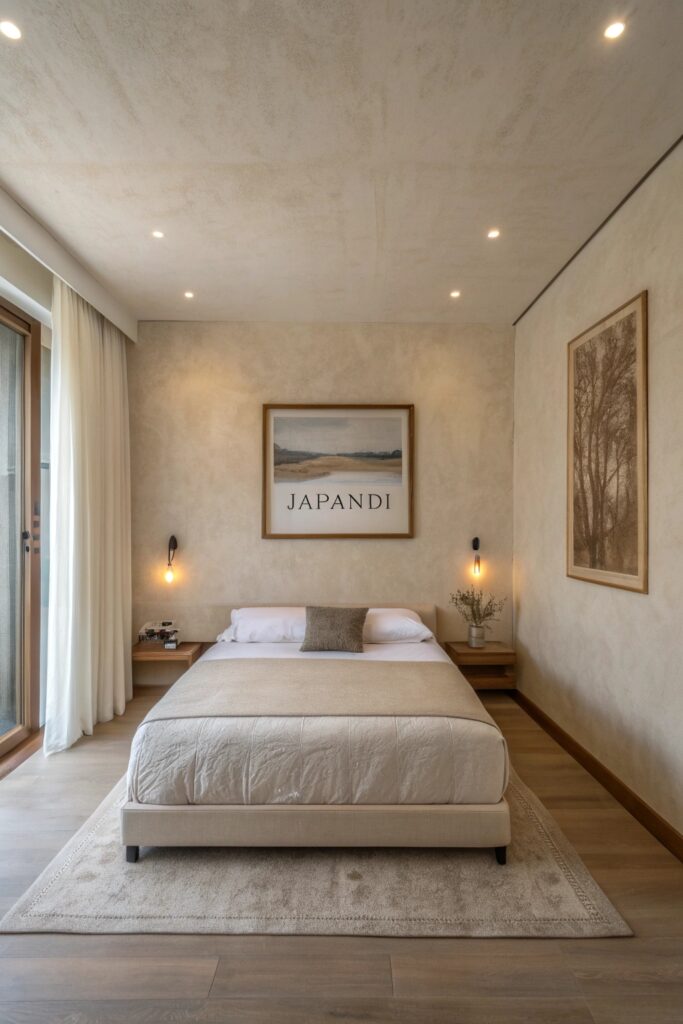
Walls don’t need constant attention. Japandi bedrooms treat walls like background music, not a headline act.
I usually stick to:
- One large artwork or print
- Simple wooden frames
- Plenty of empty wall space
Empty walls give your eyes a place to rest. And honestly, your brain needs that at night.
12. Design the Bedroom for Real Life, Not Photos
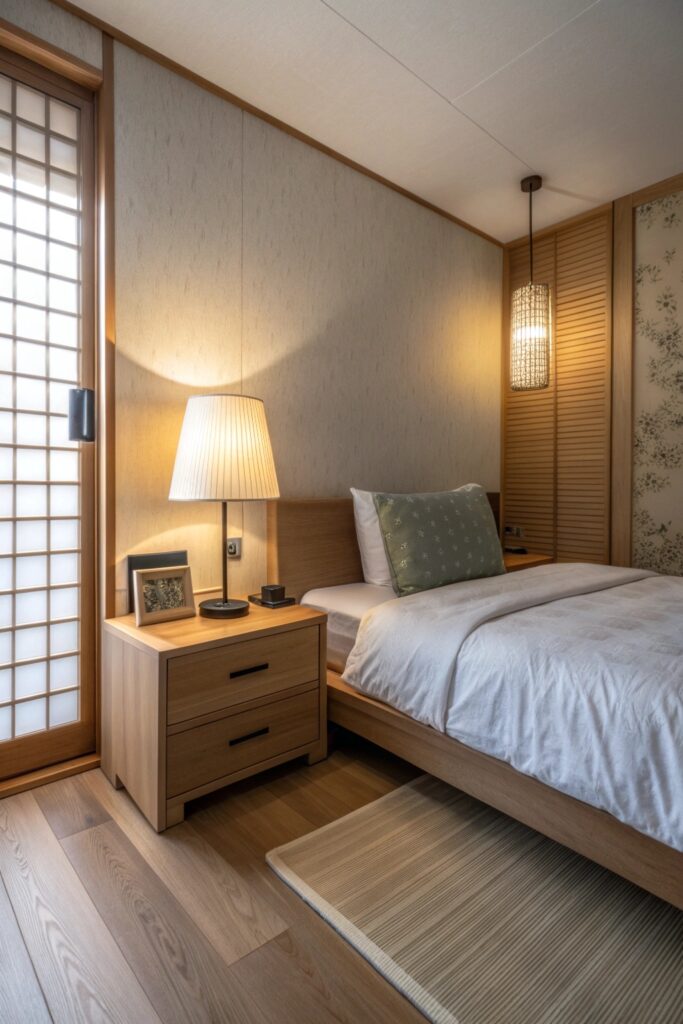
This idea matters most. A modern Japandi bedroom should support how you actually live.
I made changes that worked for me:
- A nightstand big enough for books and tea
- Soft lighting for late-night reading
- Clear pathways so nothing feels cramped
If your bedroom looks great but annoys you daily, what’s the point?
How Japandi Compares to Other Minimalist Styles
People often confuse Japandi with plain minimalism. The difference shows up in how the room feels.
Here’s a quick breakdown:
- Scandinavian minimalism: bright, airy, sometimes cold
- Japanese minimalism: serene, sparse, deeply intentional
- Japandi style bedroom: warm, balanced, and livable
Japandi wins because it blends comfort with calm. You get simplicity without sacrificing warmth.
Common Japandi Bedroom Mistakes to Avoid
I’ve made a few of these mistakes myself, so learn from my stubbornness.
Avoid:
- Over-decorating with “minimal” objects
- Choosing furniture that feels too bulky
- Mixing too many colors or materials
Japandi rewards restraint. When in doubt, remove something and see how the room feels.
Why Japandi Works So Well for Better Sleep
A Japandi minimalist bedroom naturally supports rest. The calm colors, soft textures, and lack of visual noise help your brain slow down.
I fall asleep faster in my Japandi-inspired space, and I don’t think that’s a coincidence. Have you ever tried sleeping in a cluttered room? Exactly.
Final Thoughts
A Japandi minimalist bedroom isn’t about perfection or expensive furniture. It’s about creating a space that feels calm, warm, and genuinely livable. Start small, remove what doesn’t serve you, and add only what brings comfort or function.
If your bedroom feels like a place you actually want to slow down in, you’re doing Japandi right. Now go look around your room—what’s the first thing you’d remove today?