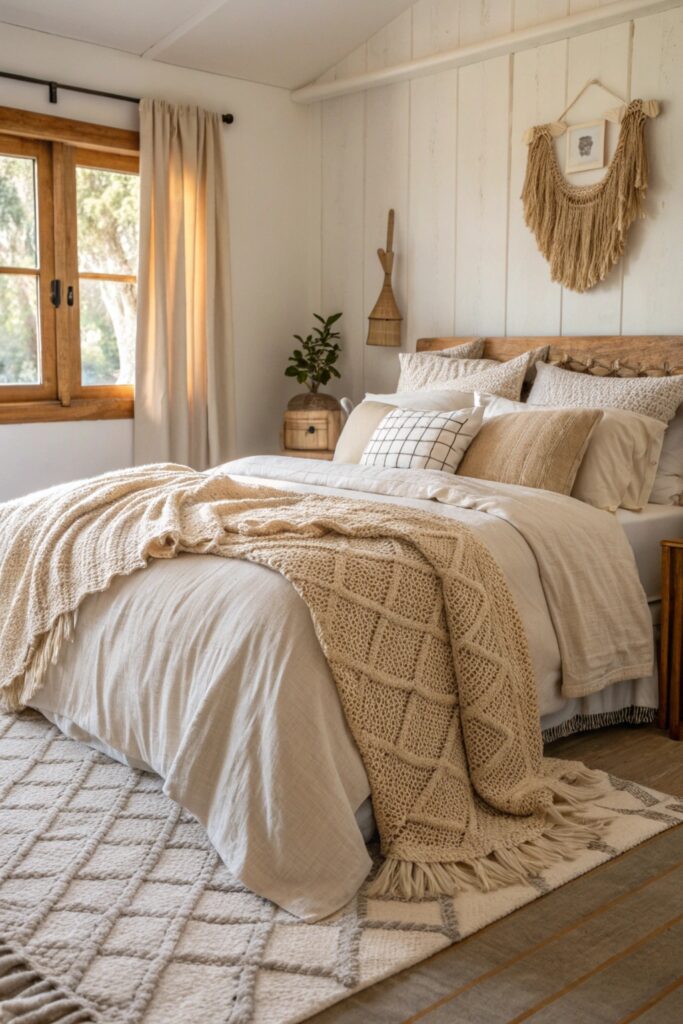
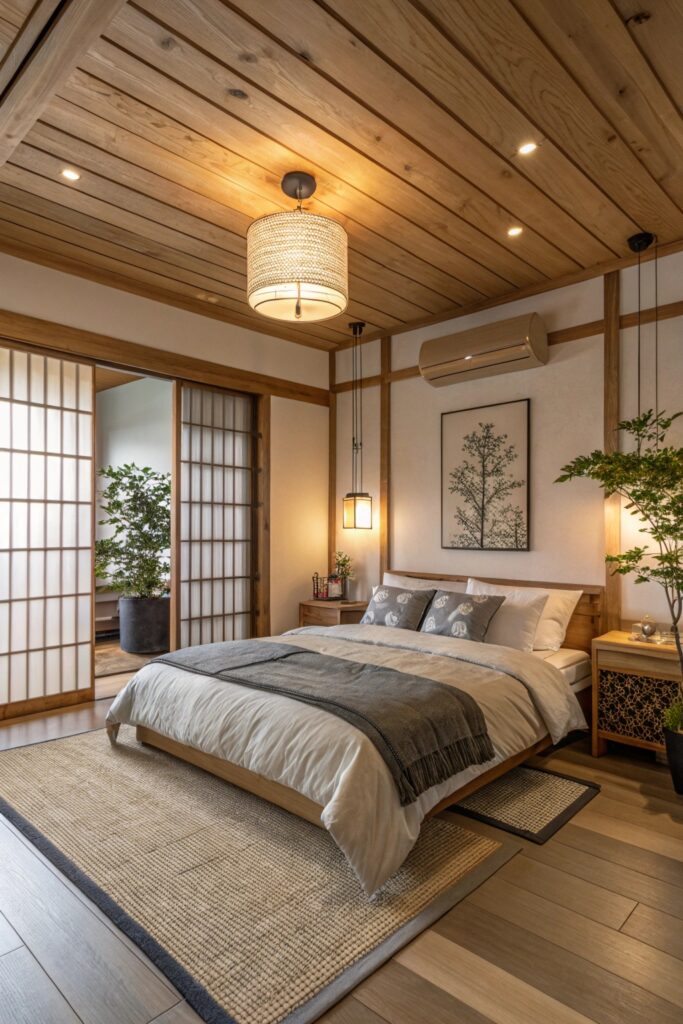
If your bedroom feels chaotic, cluttered, or just a little too loud, a Japandi-style bedroom might be exactly what you need. I fell in love with Japandi design when I realized my brain relaxes faster in calm spaces—wild, right? This style blends Japanese minimalism with Scandinavian warmth, and yes, it actually works in real homes, not just Pinterest fantasy rooms.
Let’s talk about Japandi bedroom decor ideas you can genuinely use this year. No museum vibes. No impossible layouts. Just smart, cozy, stylish choices that make your bedroom feel like a deep breath.
1. Start With a Calm, Neutral Color Palette
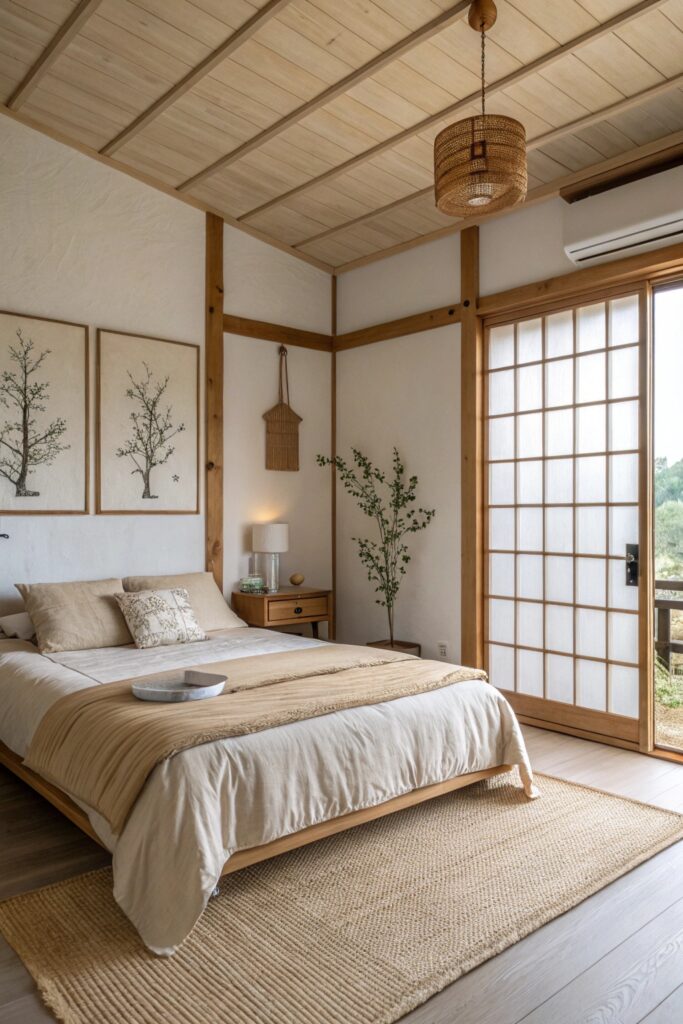
Color sets the mood before anything else even matters. Japandi interiors bedroom designs thrive on soft, muted tones that never shout for attention.
I always lean toward warm whites, beige, soft taupe, and gentle gray. Ever noticed how your shoulders drop when you walk into a neutral room? That reaction never lies.
Neutral tones calm the nervous system and make your bedroom feel intentional instead of busy. That feels like a win.
2. Choose a Low-Profile Bed Frame
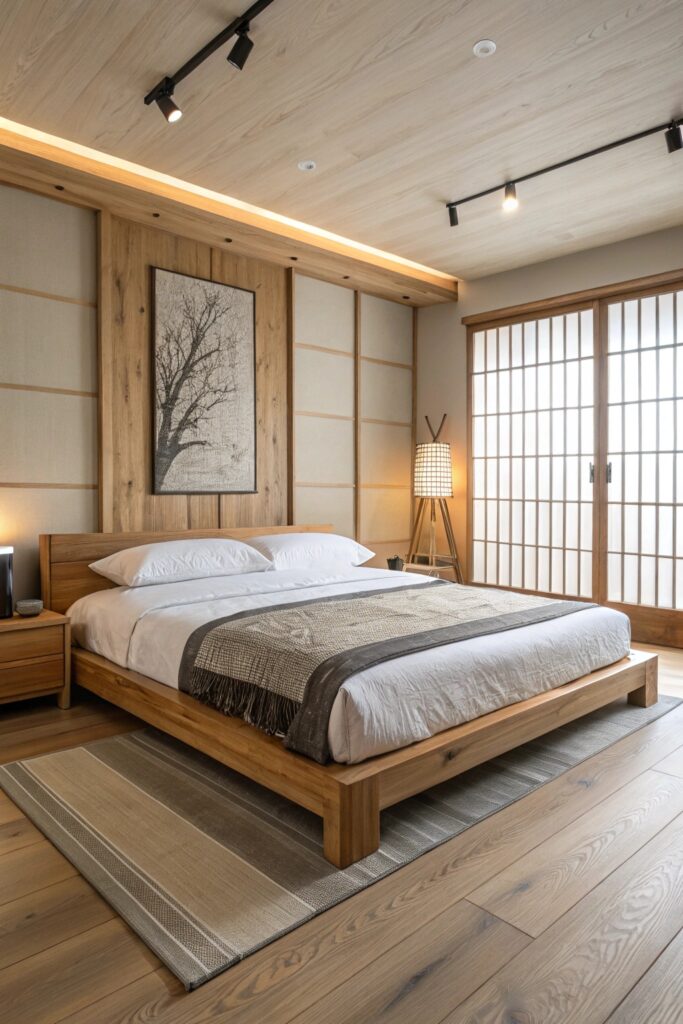
Japandi design loves staying close to the ground. Low-profile beds feel grounded, calm, and surprisingly cozy.
I replaced a tall bed with a simple wooden platform once, and the room instantly felt larger. No renovation required. Just better proportions.
Look for solid wood frames, clean lines, and natural finishes like oak or walnut.
3. Embrace Natural Wood Everywhere
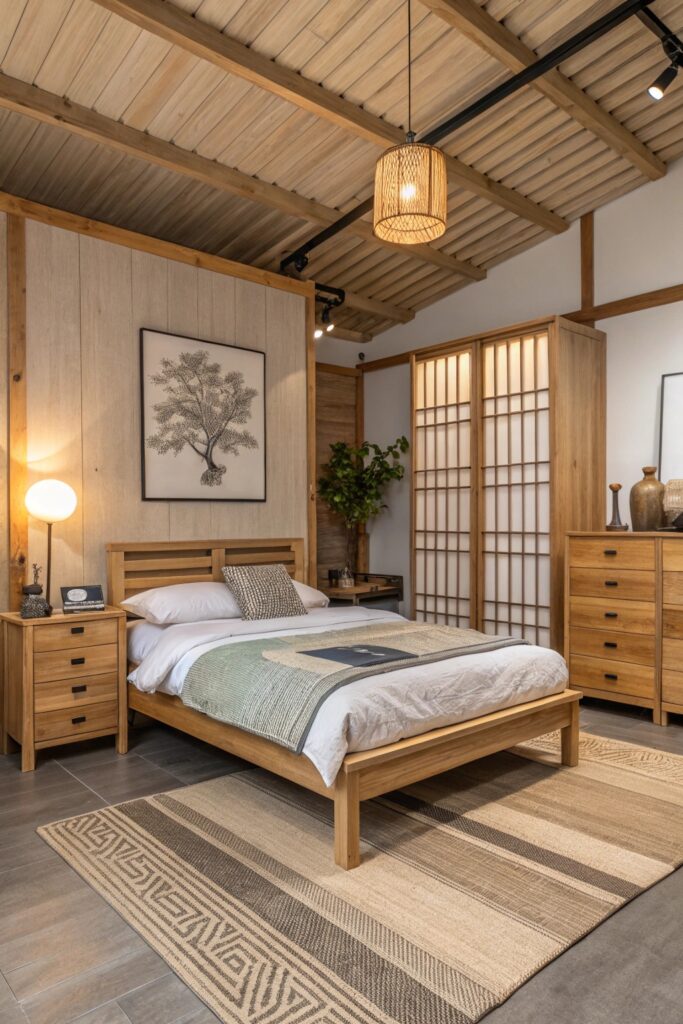
Wood acts like the backbone of any bedroom Japandi setup. Japandi style avoids glossy finishes and fake-looking materials at all costs.
Mix light and medium woods with matte finishes. Perfect matching feels boring anyway.
A slight variation keeps the space warm and collected rather than staged.
4. Keep Furniture Minimal but Functional

Japandi doesn’t mean empty. It means every piece earns its place.
Focus on slim nightstands, simple benches, and wall-mounted shelves. Ask yourself if each item serves a real purpose.
Do you actually need that extra chair, or has it just been hanging around?
5. Layer Soft, Textured Bedding

A Japandi-style bedroom never looks flat, even with neutral colors. Texture does all the heavy lifting.
Layer linen sheets, cotton duvets, and soft throws. The bed should invite you in, not look untouchable.
If you wouldn’t collapse onto it after a long day, something needs adjusting.
6. Use Shoji-Inspired or Slatted Headboards
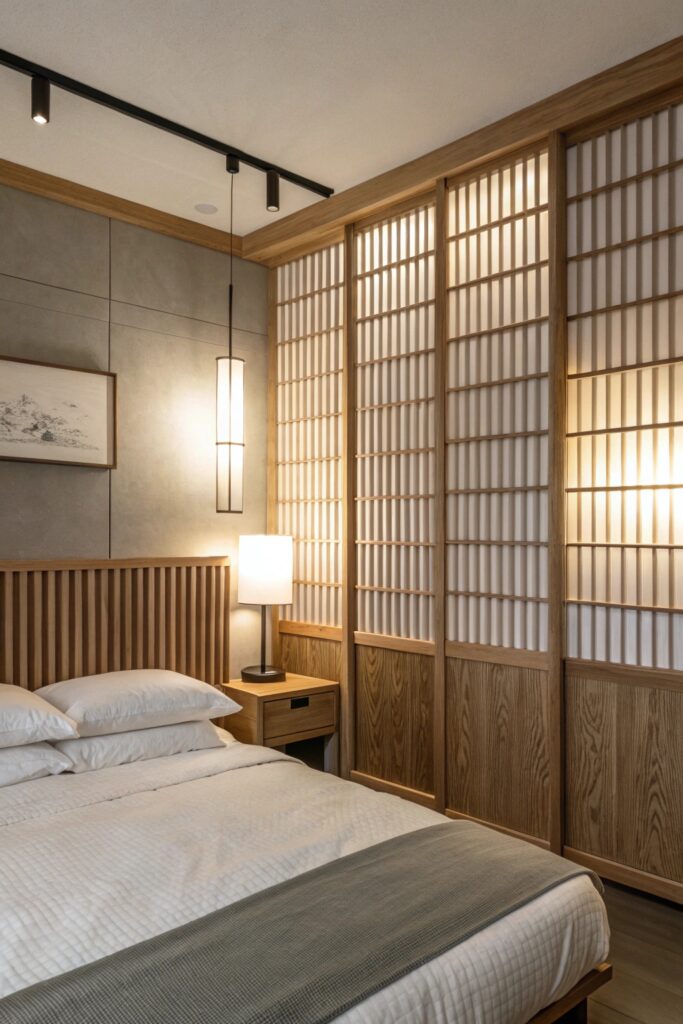
Headboards often get overlooked, but Japandi design treats them as subtle statement pieces.
Shoji-inspired or slatted wood headboards add structure without visual noise. They feel architectural yet calm.
I built a simple slatted headboard once, and yes, it took effort. Totally worth it.
7. Choose Soft, Ambient Lighting
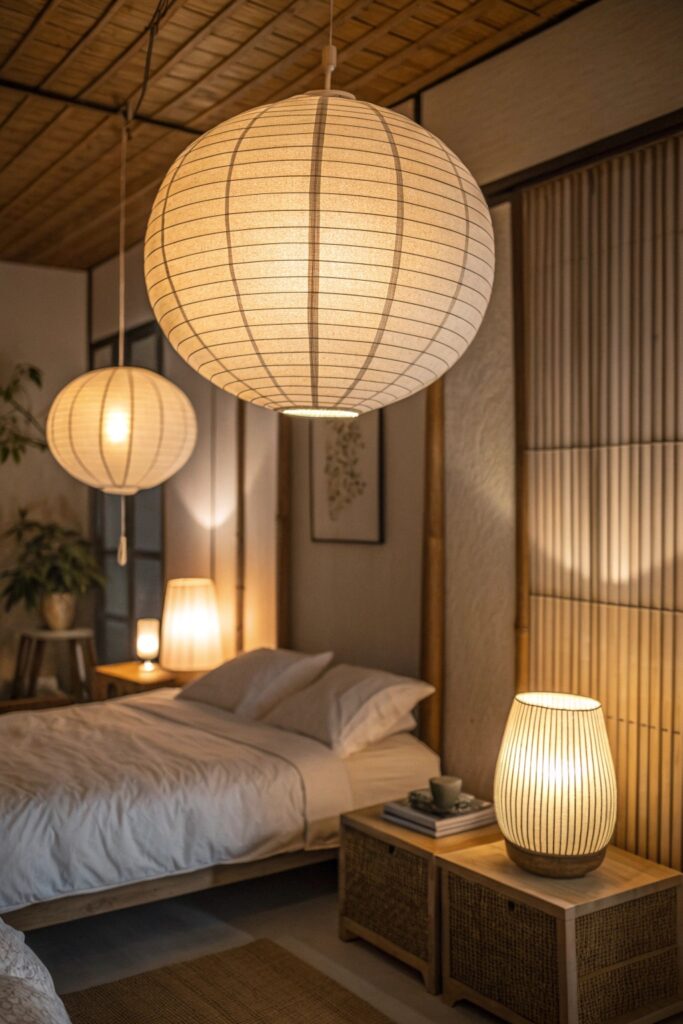
Harsh lighting ruins the calm faster than clutter. Japandi bedrooms glow instead of glare.
Use warm bulbs, paper lantern pendants, and fabric-shaded lamps. Lighting should feel gentle at all hours.
Ever tried relaxing under cold white light? Exactly. Don’t do that to yourself.
8. Add Subtle Japanese-Inspired Decor
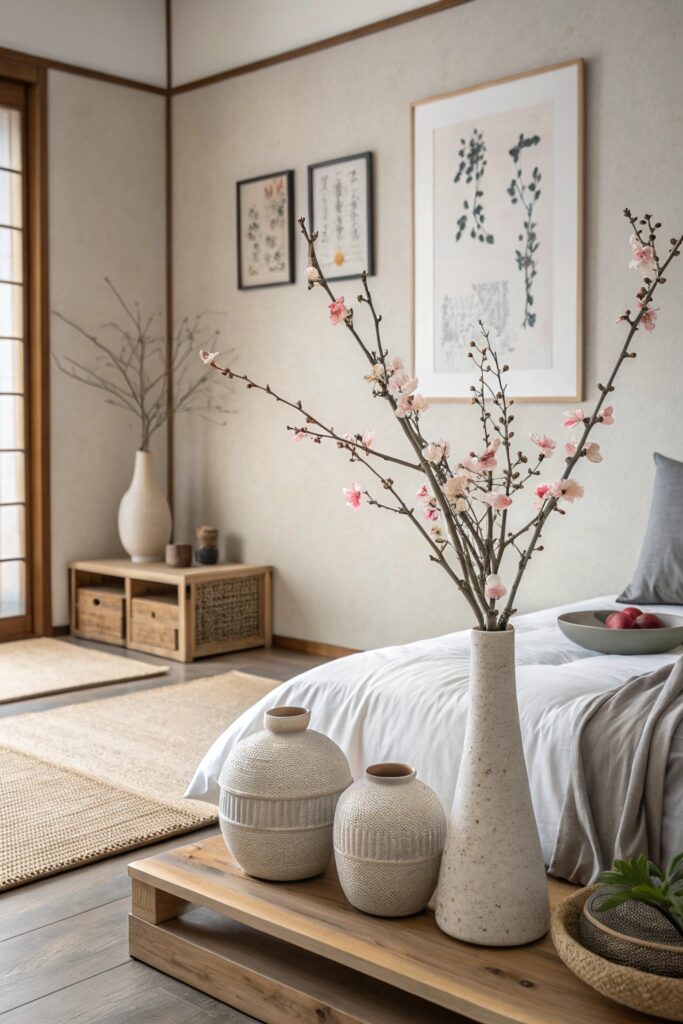
Decor stays minimal, but every piece matters. Japandi style values quality over quantity.
Stick to ceramic vases, simple artwork, and ikebana-style floral arrangements. One thoughtful piece beats ten random ones.
Less decor actually makes each item feel more special.
9. Bring Nature Inside With Plants
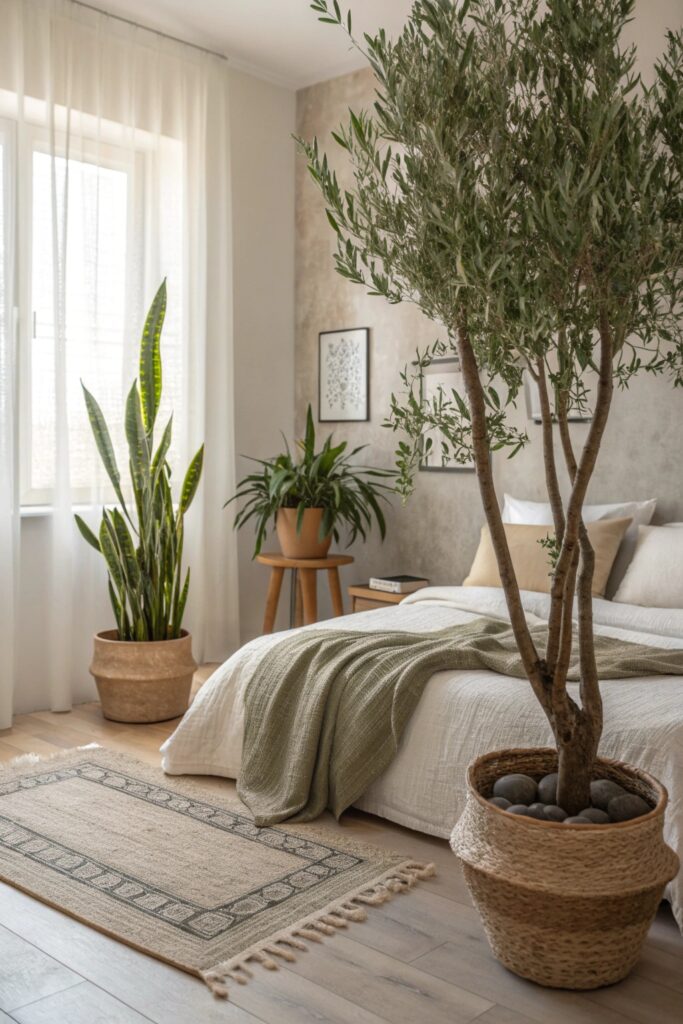
Japandi interiors bedroom designs almost always include greenery. Plants soften clean lines and add life.
Snake plants, olive trees, and fiddle leaf figs work beautifully. I choose low-maintenance plants because realism matters.
Dead plants ruin the vibe faster than bad lighting.
10. Keep Storage Hidden and Clean
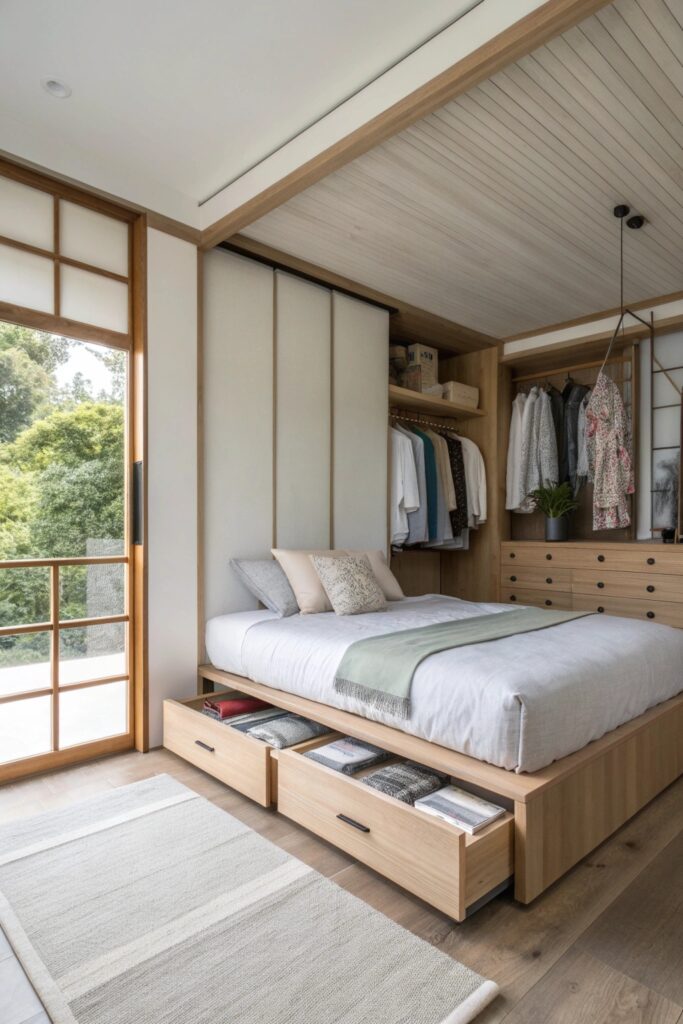
Clutter instantly breaks the Japandi feel. Smart storage protects the calm.
Use under-bed drawers, built-in wardrobes, or minimal closet systems. Everything should have a home.
Ask yourself if each item deserves visual space in your bedroom.
11. Use Handmade or Organic Accessories
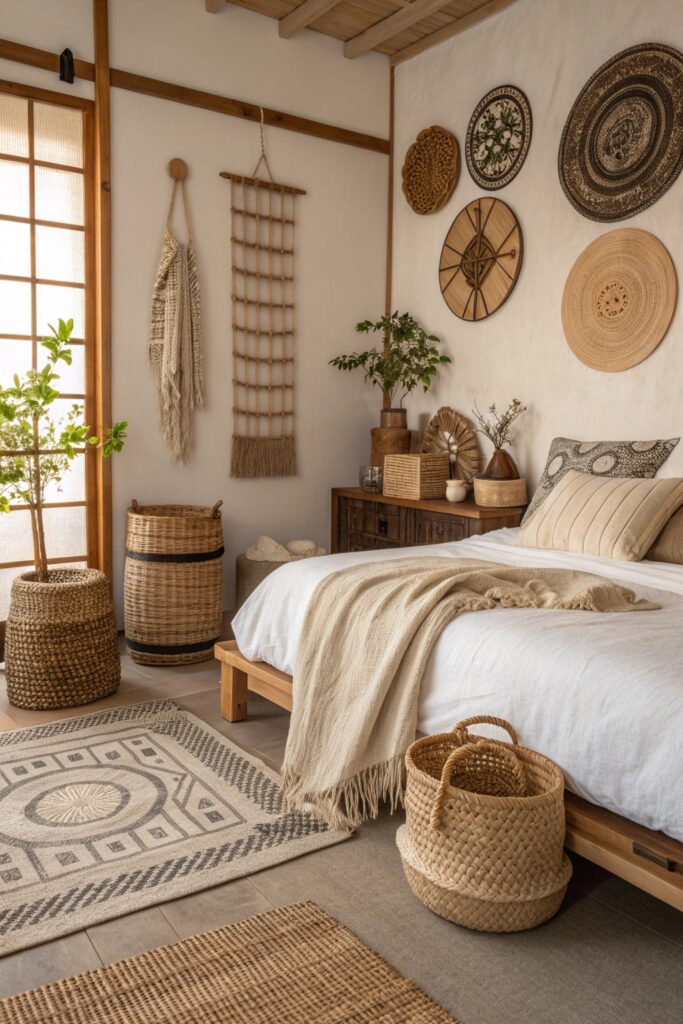
Japandi design embraces imperfection. Handmade pieces add warmth and soul.
Look for woven baskets, hand-thrown pottery, and textured textiles. These details feel human and lived-in.
Perfect symmetry feels cold. Character always wins.
12. Stick to a Muted Accent Color
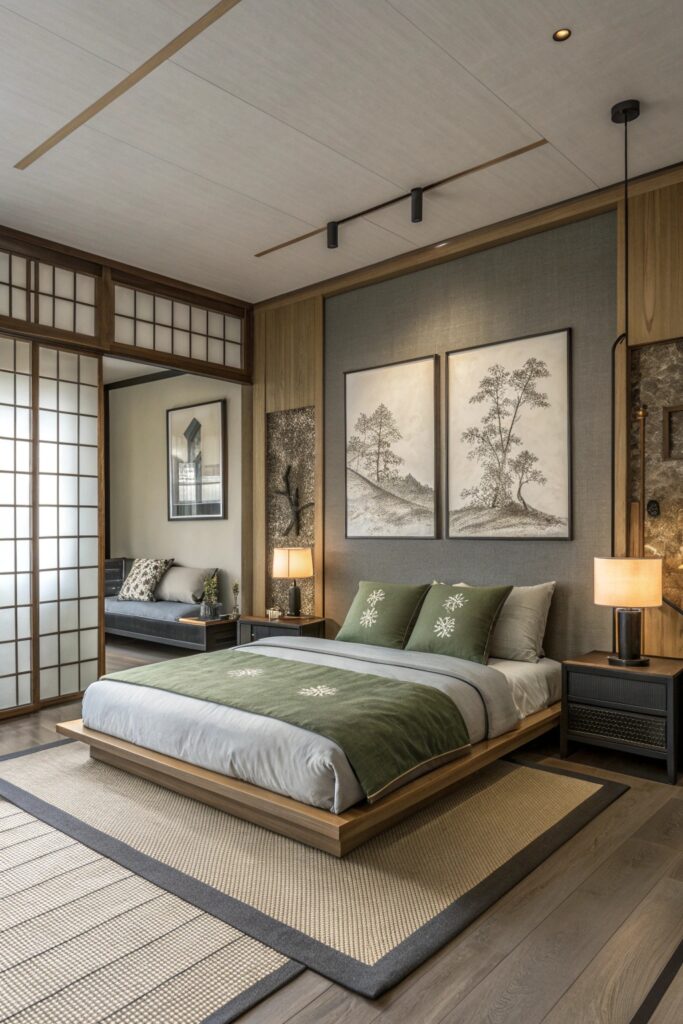
Accent colors still exist in Japandi bedroom decor, but they stay quiet.
Charcoal, rust, olive, and soft black work beautifully. I keep accent colors limited to pillows or artwork.
Too much contrast ruins the calm.
13. Let Negative Space Do the Work
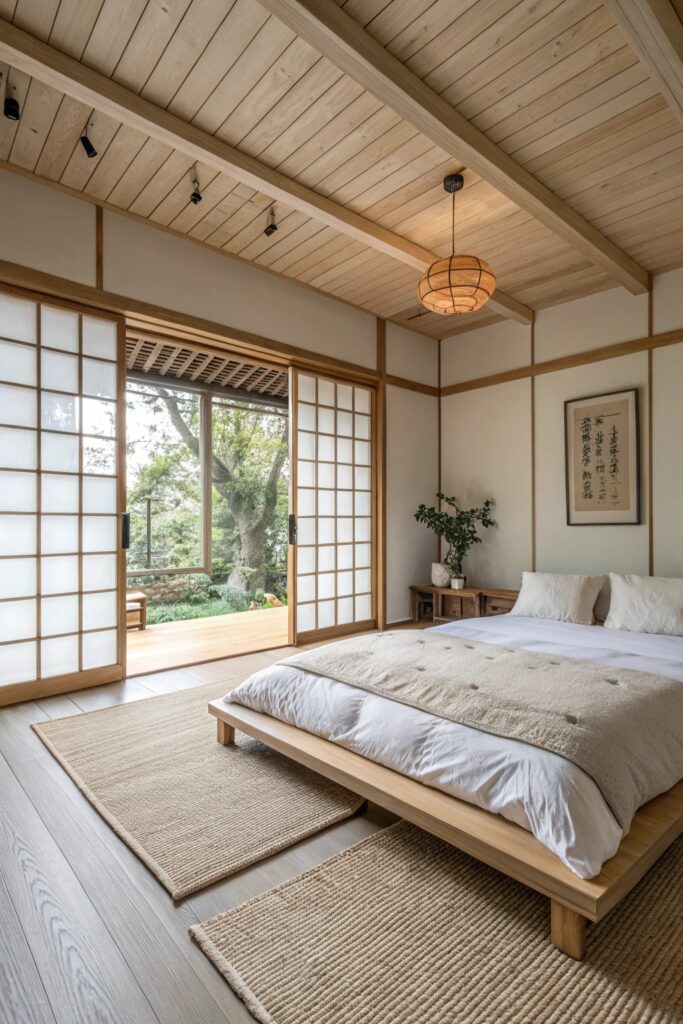
Space plays a huge role in the Japandi style. It gives your eyes room to rest.
Avoid filling every corner or surface. Resist the urge to over-style.
That calm feeling you notice in great rooms? Negative space creates it.
14. Prioritize Comfort Over Trends
Trends fade fast. Comfort sticks around.
Before adding anything, ask if it helps you relax and if you’ll still love it next year. Japandi design focuses on how a space feels, not how it photographs.
Your bedroom should support your life, not compete for attention.
Final Thoughts
A Japandi-style bedroom blends simplicity, warmth, and purpose in a way few styles manage. You don’t need a massive budget or a designer address to pull it off.
Start small, stay intentional, and trust calm design choices. Before long, your bedroom will feel like a retreat instead of a storage unit with a mattress.
Now be honest—what’s the first thing you’d change in your bedroom tonight?