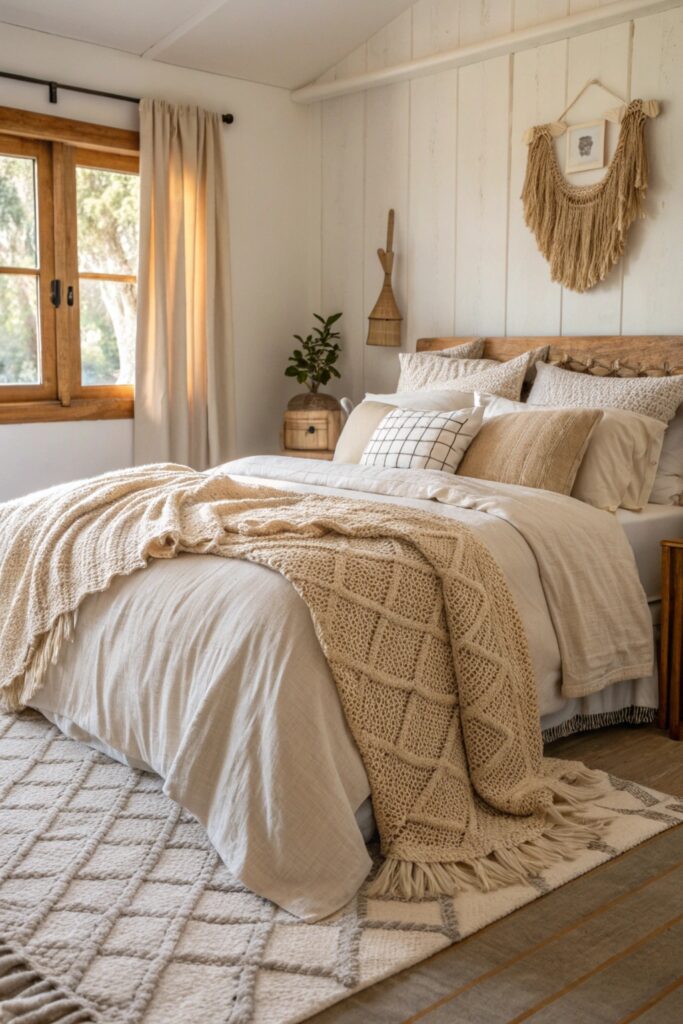
I fell in love with the Japandi small bedroom style while trying to fix a cramped bedroom that felt more stressful than restful. You know that feeling when your room looks clean, yet somehow still feels crowded? That was my daily reality. Japandi changed everything by focusing on calm, function, and smart space use—without killing the cozy vibe.
If your bedroom feels small but your to-do list feels big, these ideas will help you breathe easier. Let’s talk realistic, livable ideas that work in actual homes, not just perfectly staged photos.
1. Choose a Low-Profile Bed That Keeps Things Open
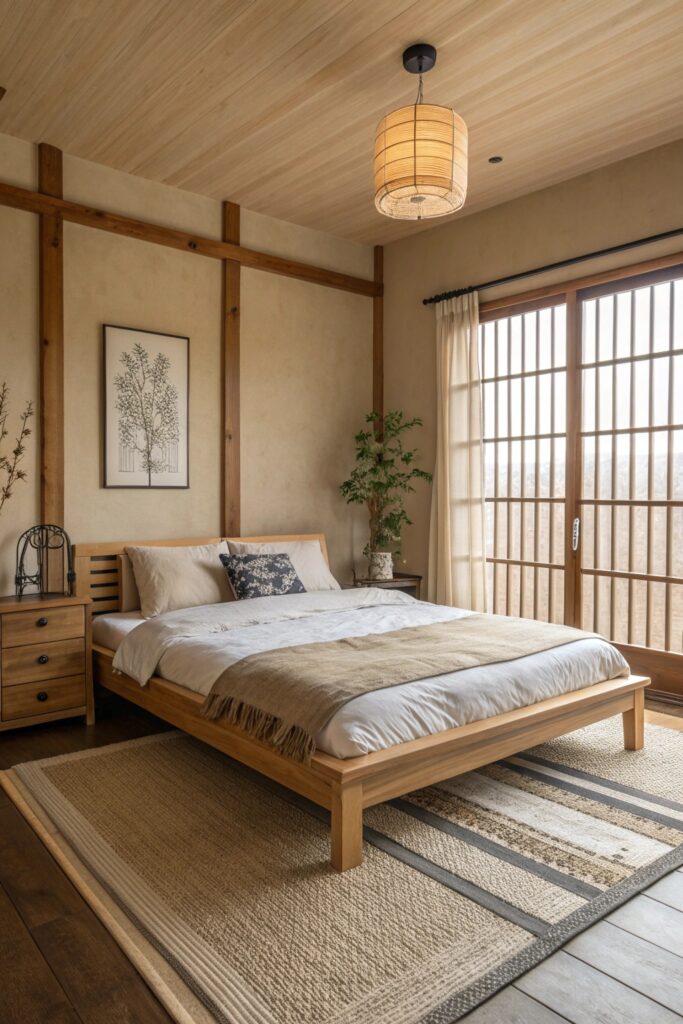
A tall bed frame can dominate a small room faster than you expect. I switched to a low-profile bed, and the room instantly felt lighter. Japandi bedrooms love low beds because they visually expand the space.
A lower bed also creates a grounded, relaxed feeling that works beautifully for sleep.
Why this saves space:
- Makes ceilings feel higher
- Reduces visual clutter
- Matches minimalist Japandi bedroom aesthetics
Ever notice how Japanese interiors feel bigger than they really are?
2. Stick to Soft, Neutral Colors
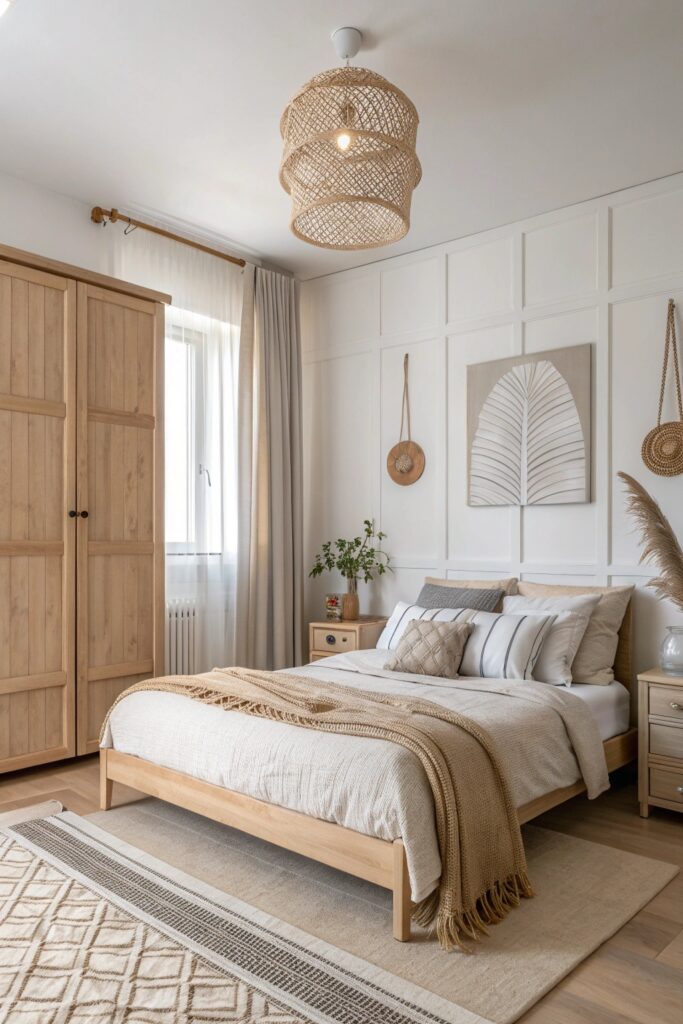
Loud colors demand attention, and small rooms already feel demanding enough. Japandi favors warm whites, soft beiges, and muted earth tones. I once painted a tiny bedroom a bold color and instantly regretted it.
Neutral colors calm the eye and make walls visually recede.
Japandi-friendly color choices:
- Warm white instead of bright white
- Light gray mixed with wood tones
- Soft beige or sand colors
Doesn’t a calm color palette already feel more relaxing?
3. Use Built-In Storage to Reduce Furniture Bulk
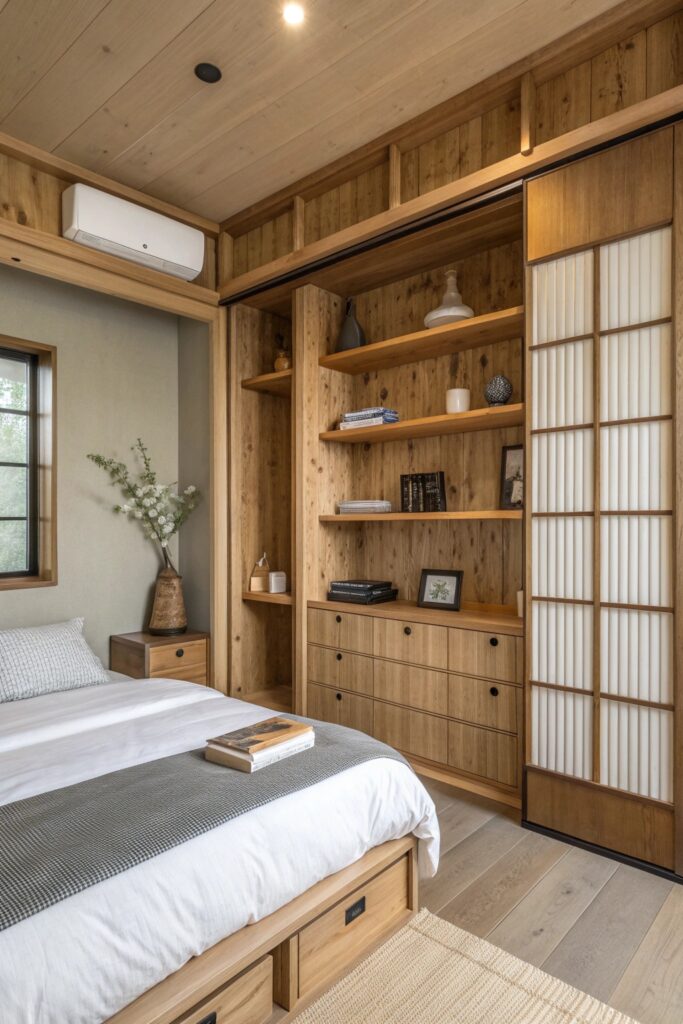
Free-standing furniture eats floor space quickly. Built-in storage keeps things streamlined and intentional. I added wall shelves above my bed, and suddenly the room felt organized without feeling stuffed.
Japandi design loves storage that blends in quietly.
Smart built-in options:
- Wall-mounted shelves
- Built-in wardrobes with flat doors
- Storage benches built into walls
Why let your walls go to waste?
4. Swap Bulky Nightstands for Floating Ones
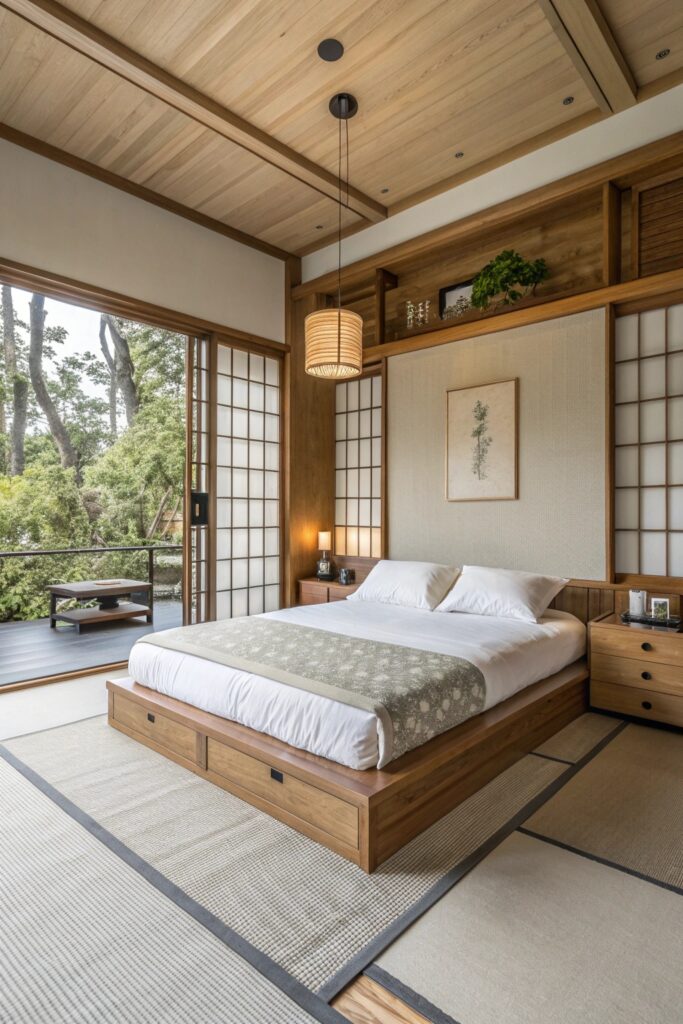
Traditional nightstands feel heavy in a small bedroom Japandi layout. Floating shelves or wall-mounted night tables keep the floor open. I made this swap, and vacuuming even became easier.
You still get the function without visual weight.
Floating alternatives:
- Slim wooden shelves
- Wall-mounted cube tables
- Minimal metal brackets
Who decided nightstands needed to be massive?
5. Keep Decor Minimal but Meaningful
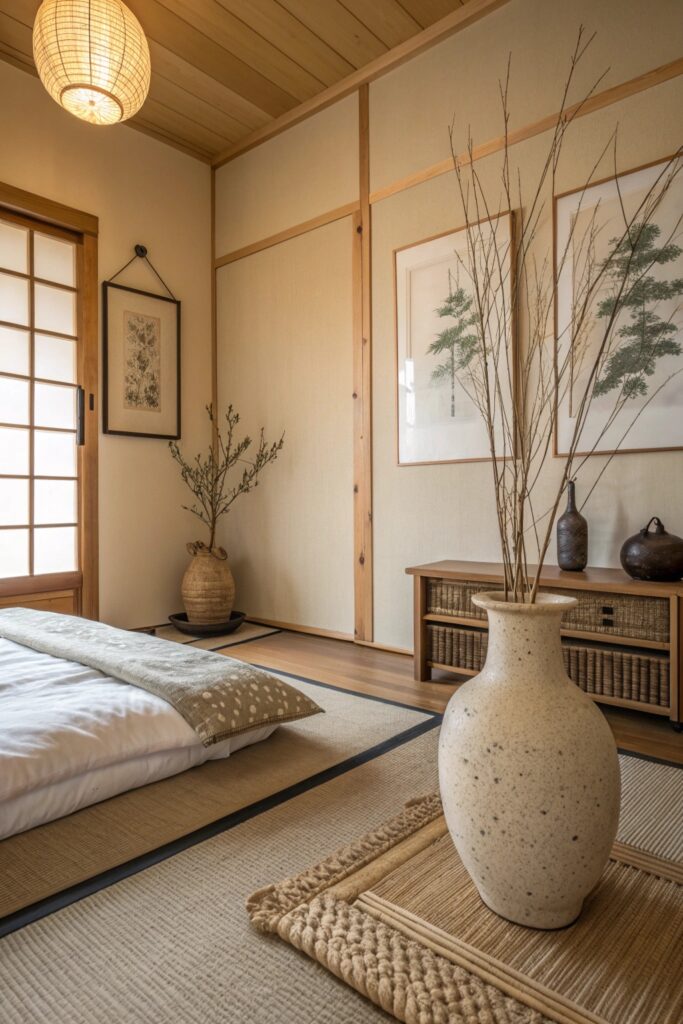
Japandi doesn’t ban decor; it just demands intention. Every item should serve a purpose or bring joy. I keep one ceramic vase and one framed print, and the room feels calm instead of cluttered.
Less decor gives each piece room to shine.
Decor that works:
- Handmade ceramics
- Simple line art
- Natural textures like linen or clay
Doesn’t it feel better when your eyes can rest?
6. Choose Sliding Doors to Save Floor Space
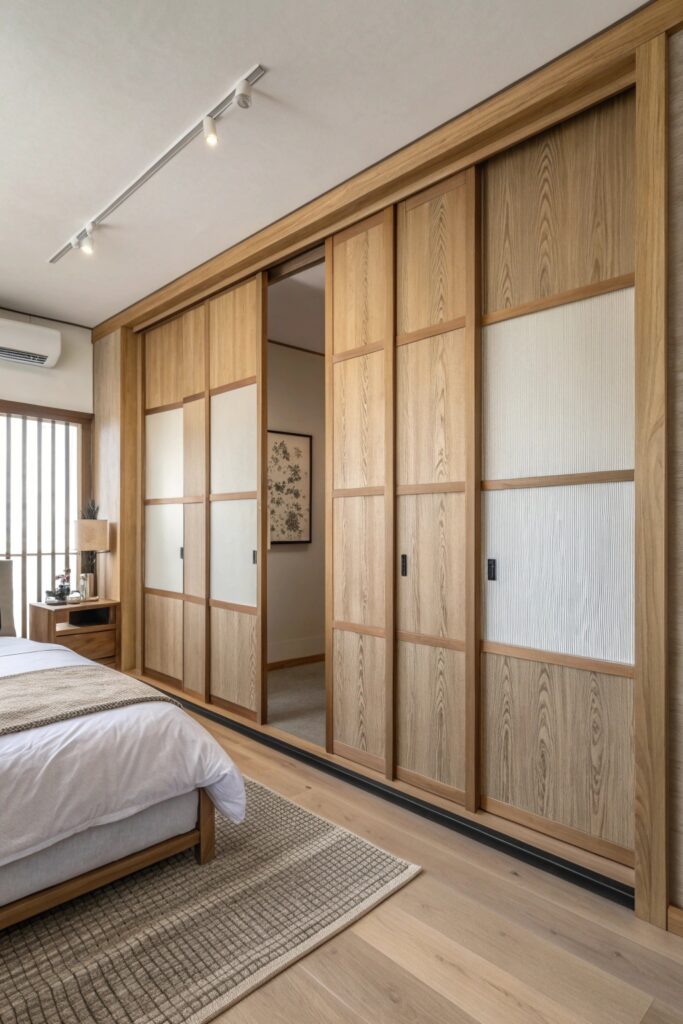
Swing doors steal valuable space in small bedrooms. Sliding doors give it back. I replaced my wardrobe doors with sliding ones, and the room immediately felt larger.
Japandi interiors borrow heavily from traditional Japanese homes for a reason.
Sliding door ideas:
- Wooden wardrobe sliders
- Shoji-style closet panels
- Pocket doors for bathrooms
Why let a door dictate your layout?
7. Let Natural Materials Do the Work
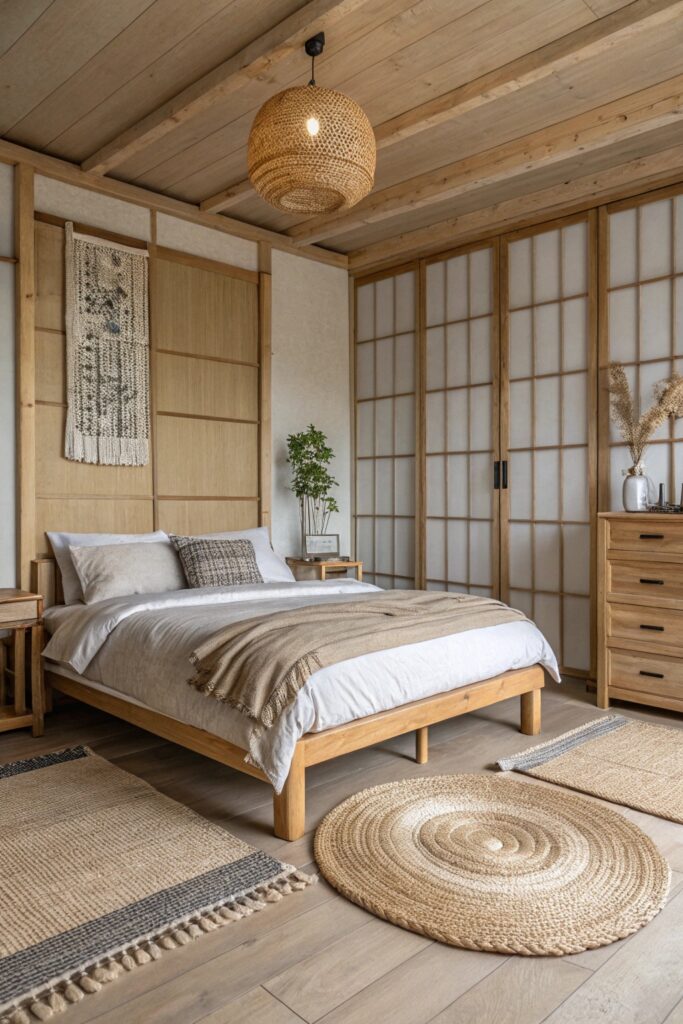
Japandi design thrives on natural materials. Wood, cotton, and linen add warmth without clutter. I swapped glossy furniture for light wood, and the room felt calmer overnight.
Natural textures add depth without visual noise.
Best materials to use:
- Light or medium wood tones
- Linen bedding
- Woven rugs
Doesn’t natural texture just feel nicer to live with?
8. Use Multipurpose Furniture Smartly
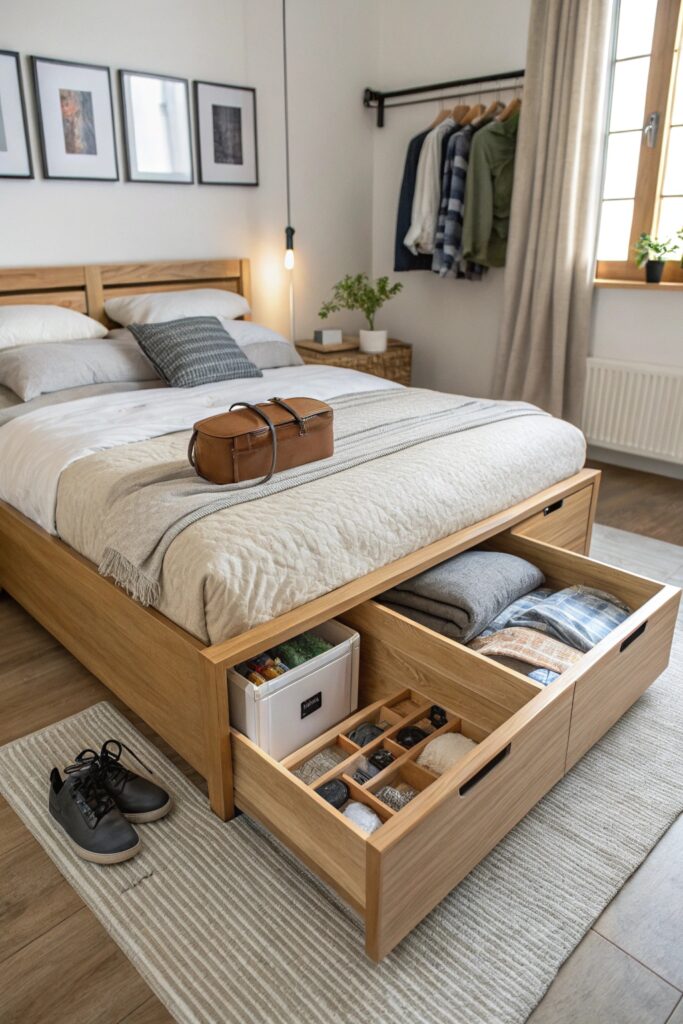
In a small bedroom, furniture needs to earn its place. Japandi furniture often serves more than one purpose. My storage bench works as seating, storage, and a visual anchor.
That kind of efficiency feels satisfying.
Multipurpose ideas:
- Storage beds
- Benches with hidden storage
- Desks that double as vanities
Why buy more when one piece can do more?
9. Layer Soft Lighting Instead of One Harsh Source
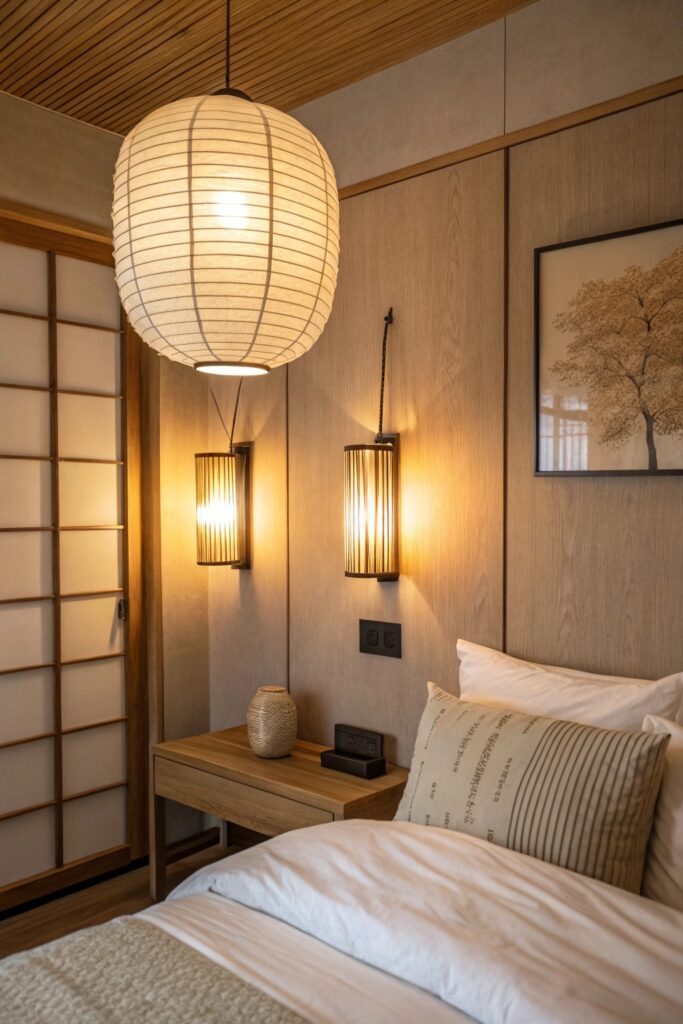
Bright overhead lights ruin the calm vibe instantly. Japandi bedrooms rely on layered, soft lighting. I use wall sconces and table lamps, and evenings feel instantly cozier.
Soft lighting also keeps visual clutter low.
Lighting tips:
- Warm LED bulbs
- Wall-mounted sconces
- Fabric or paper shades
Who enjoys harsh lighting before bed anyway?
10. Leave Negative Space on Purpose
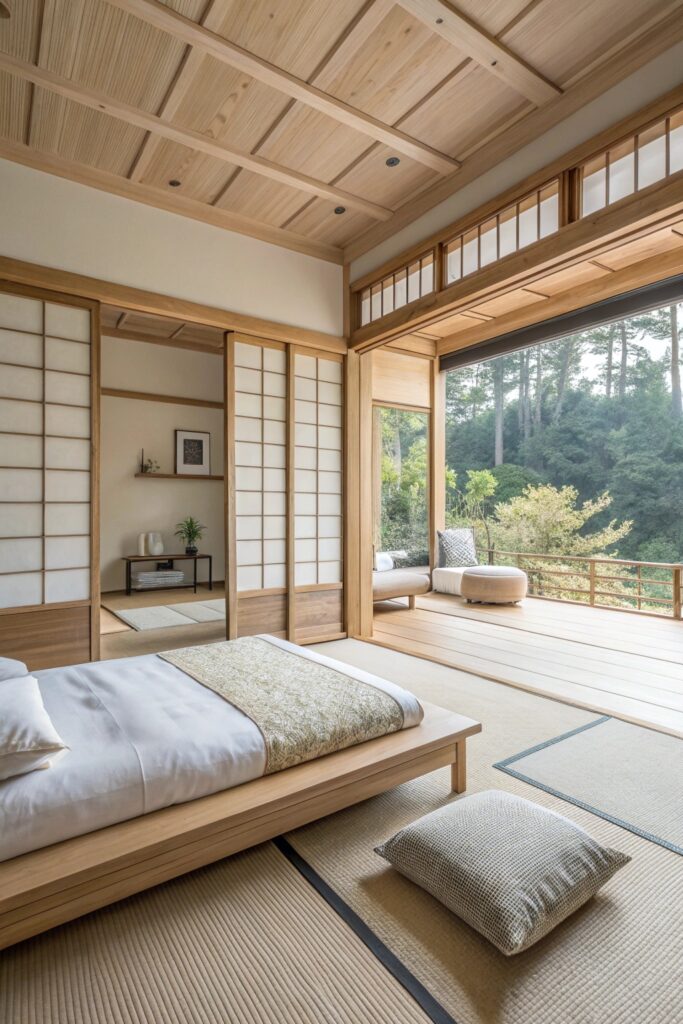
Space feels uncomfortable at first, especially if you love decorating. Japandi treats negative space as part of the design. I stopped filling every corner, and my room finally felt peaceful.
Space helps everything else breathe.
How to use negative space:
- Leave one wall mostly bare
- Avoid filling every shelf
- Space furniture is slightly apart
Doesn’t the room feel calmer already?
Why Japandi Works So Well in Small Bedrooms
Japandi blends Japanese simplicity with Scandinavian warmth. That balance creates calm without feeling cold. You don’t need a massive budget or custom furniture to make it work.
This style rewards thoughtful choices and punishes clutter—in the best way possible.
Why it works:
- Prioritizes function
- Reduces visual noise
- Creates emotional calm
Sounds like something your bedroom needs, right?
Common Japandi Bedroom Mistakes to Avoid
I’ve made every mistake here, so learn from me. Japandi looks effortless, but it demands restraint.
Avoid these pitfalls:
- Overdecorating with “minimal” objects
- Mixing too many wood tones
- Choosing bulky furniture
Simple always wins here.
Conclusion
A Japandi small bedroom doesn’t require magic or expensive renovations. It relies on smart decisions, natural materials, and leaving space where it matters. These ideas help you save space while creating a bedroom that actually feels restful.
Start with one change. Clear one corner. Swap one piece. Your bedroom doesn’t need more stuff—it needs better balance. And honestly, waking up without visual chaos feels like a luxury you deserve.