A modern Japandi bedroom feels like a deep breath at the end of a long day. You walk in, drop your bag, and suddenly the noise of life fades into the background. I chased this feeling after realizing my bedroom stressed me out more than my work calendar. Too much stuff, too many colors, and zero calm. Japandi changed that fast, and honestly, I wish I had found it sooner.
If you want a bedroom that looks clean, feels warm, and actually works for real life, let’s talk. No museum setups here. Just practical ideas you can steal without renovating your entire house.
1. Start With a Soft, Neutral Color Palette
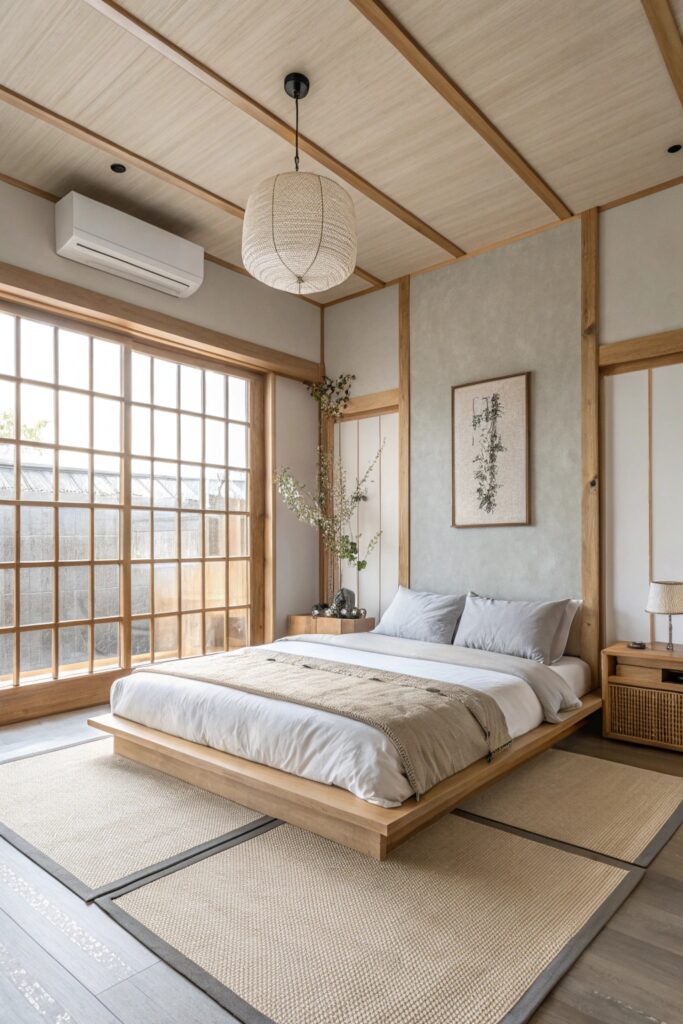
Japandi bedrooms thrive on calm colors that don’t fight for attention. I stick to warm whites, beige, and soft greys because they relax the eye instantly. These shades create the base that makes everything else feel intentional.
Neutral doesn’t mean boring, though, and this is where people panic. Add depth with contrast, not chaos. Ever notice how one darker accent makes a room feel grounded?
Try using:
- Warm white or off-white walls
- Light wood tones like oak or ash
- Small accents in charcoal or muted brown
This approach defines a Japandi-style bedroom without turning it into a bland box.
2. Choose Low Furniture for a Grounded Feel
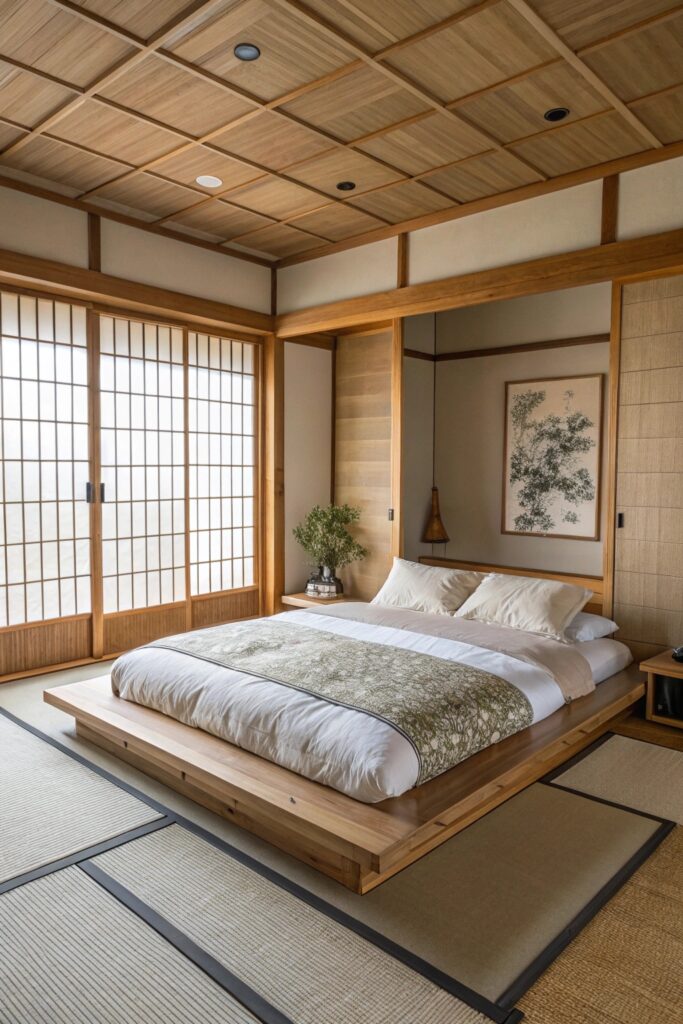
Japandi furniture sits low, and there’s a reason for that. Low-profile beds and tables make a room feel calm and balanced. When I switched to a platform bed, my bedroom instantly felt more relaxed.
Lower furniture also makes ceilings feel taller. That’s a sneaky design win nobody complains about.
Focus on:
- Platform or low-frame beds
- Short nightstands
- Simple benches instead of bulky storage
Doesn’t a grounded space just feel easier to rest in?
3. Stick to Natural Wood Tones
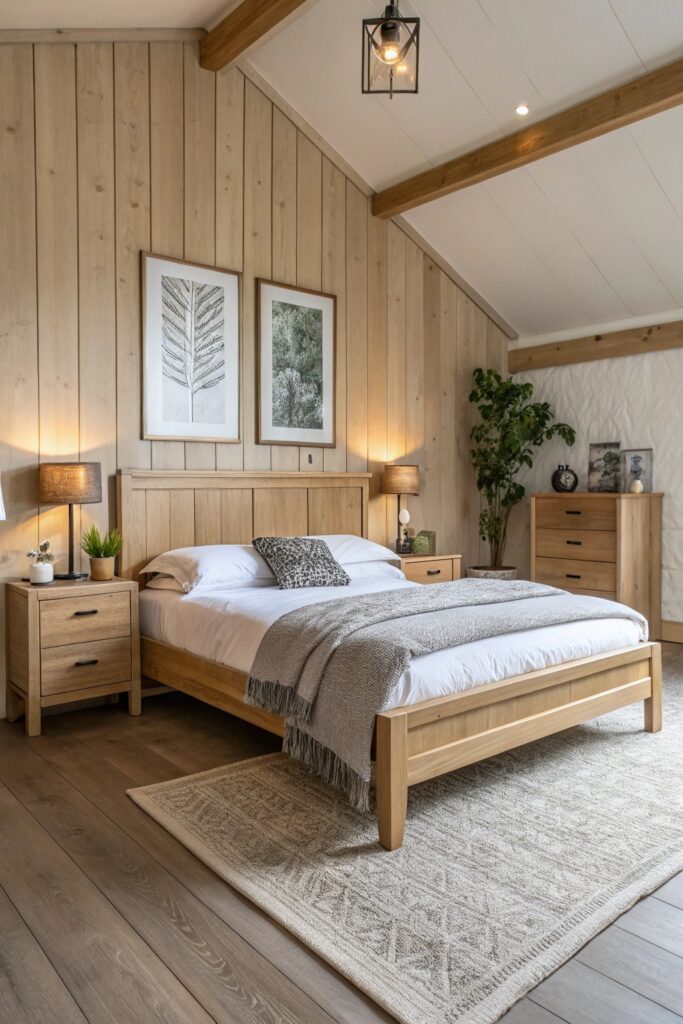
Wood brings warmth into a modern Japandi bedroom, but moderation matters. I once mixed too many wood finishes and accidentally created visual chaos. Lesson learned.
Choose one main wood tone and maybe one supporting tone. Keep everything else neutral so the wood stands out naturally.
Best places to use wood:
- Bed frames
- Nightstands
- Shelving or benches
Natural wood instantly softens the minimalist look and makes it livable.
4. Practice Intentional Minimalism
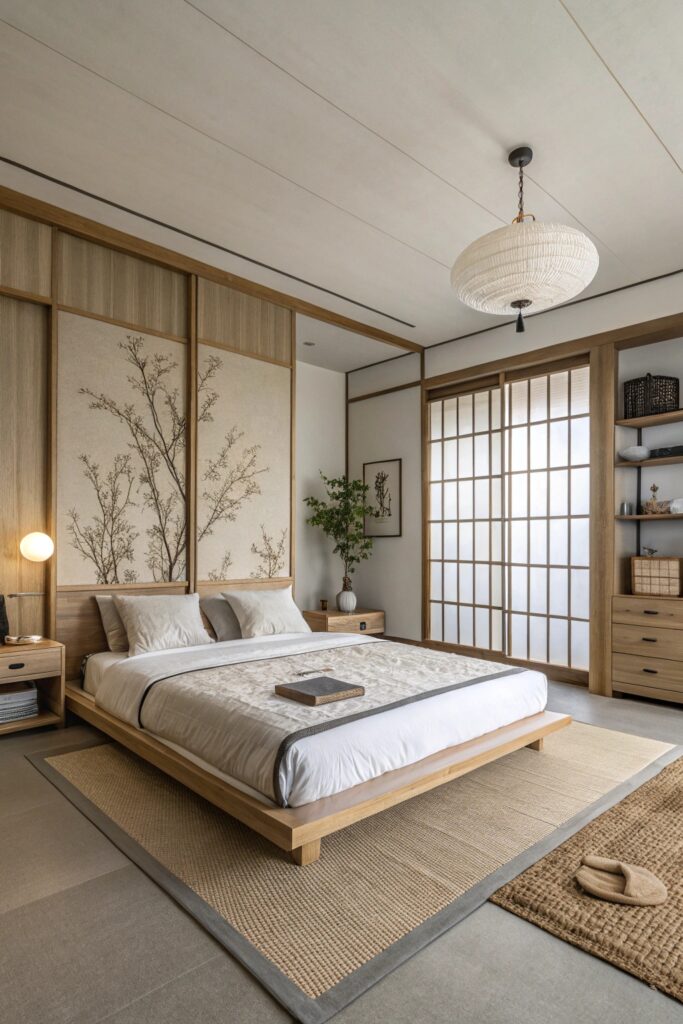
Japandi minimalism feels thoughtful, not empty. I always ask myself one question when styling a bedroom: “Does this earn its spot?”
If something doesn’t serve a purpose or bring calm, it goes. Brutal honesty helps here.
Key habits to adopt:
- Clear nightstand surfaces
- Hidden storage for clutter
- Fewer decor items with a stronger presence
A Japandi minimalist bedroom works because every piece has a reason to exist.
5. Add Texture Through Soft Textiles
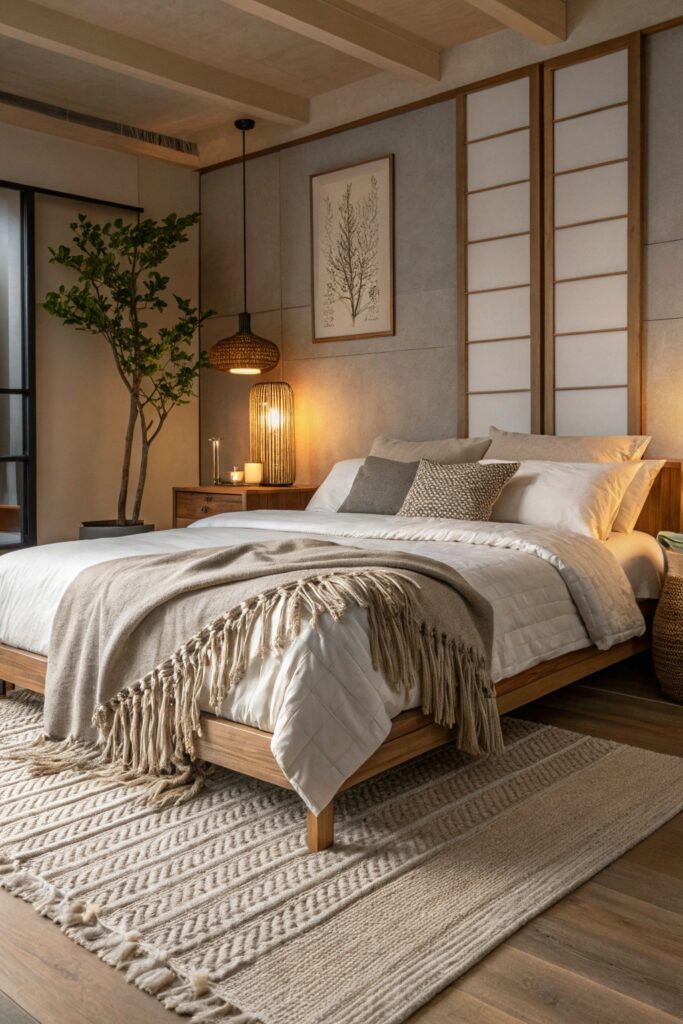
Clean lines dominate Japandi design, so textiles keep the space from feeling cold. I layer textures carefully because they add comfort without visual noise.
Think breathable and natural. Ever crawl into linen sheets and instantly relax?
Great textile choices include:
- Linen or cotton bedding
- Light wool throws
- Neutral rugs with subtle texture
Texture keeps the bedroom ideas Japandi-inspired yet welcoming.
6. Choose One Statement Piece Only
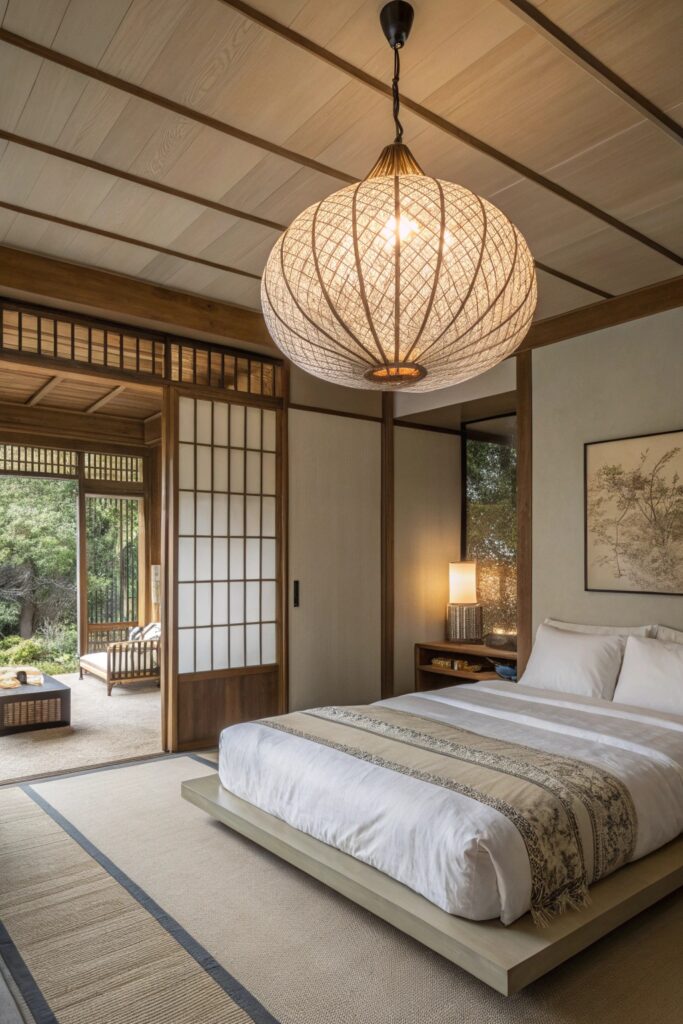
Japandi doesn’t like competition. I always pick one statement piece and let it shine on its own.
This could be:
- A sculptural pendant light
- A handmade wooden headboard
- A single large piece of wall art
Why overwhelm the room when one thoughtful piece sets the mood perfectly?
7. Use Asymmetry to Keep Things Relaxed
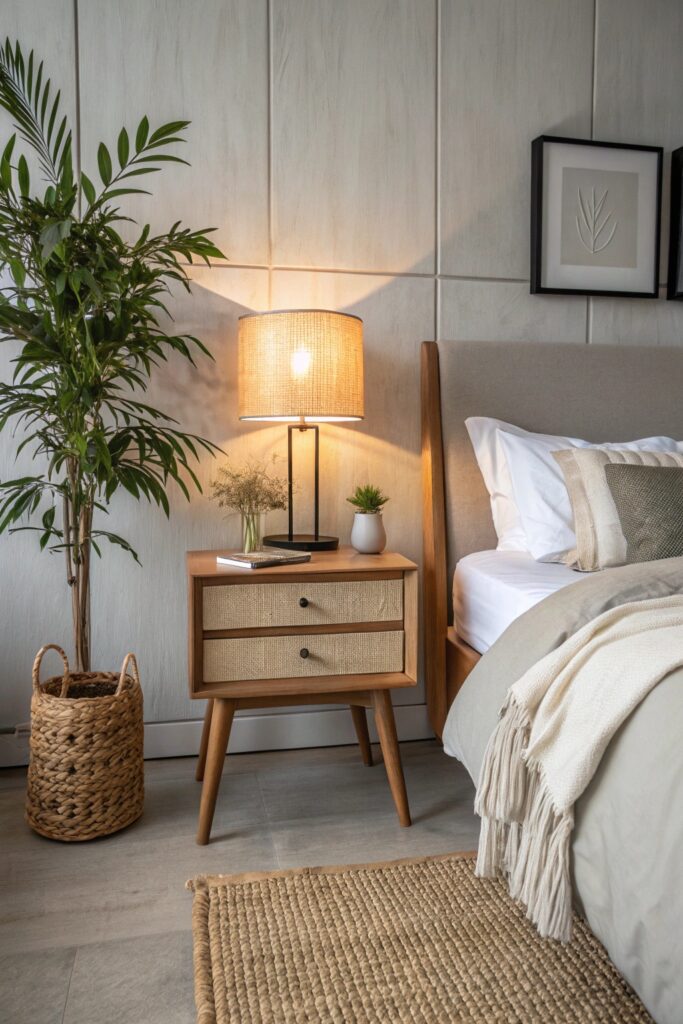
Perfect symmetry feels stiff, and Japandi prefers balance over perfection. I love using subtle asymmetry because it feels natural and lived-in.
Try:
- A lamp on one side of the bed
- A plant on the other side
- Different pillow sizes instead of matching sets
The room feels calm without looking staged, which honestly feels like a dream.
8. Let Natural Light Do Its Thing
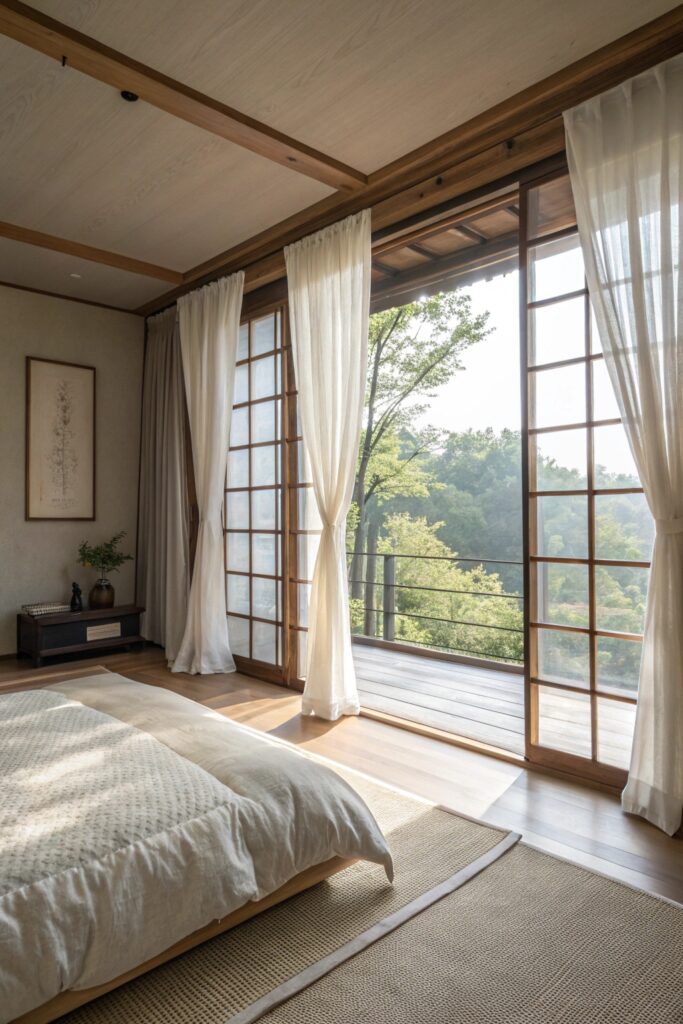
Natural light plays a huge role in Japandi bedrooms. I avoid heavy curtains because they kill the peaceful vibe instantly.
Light-filtering options work best and keep the room feeling open.
Consider using:
- Sheer linen curtains
- Bamboo or wooden blinds
- Minimal window treatments
Why block sunlight when it boosts mood and makes everything look better?
9. Bring Nature Indoors With Plants
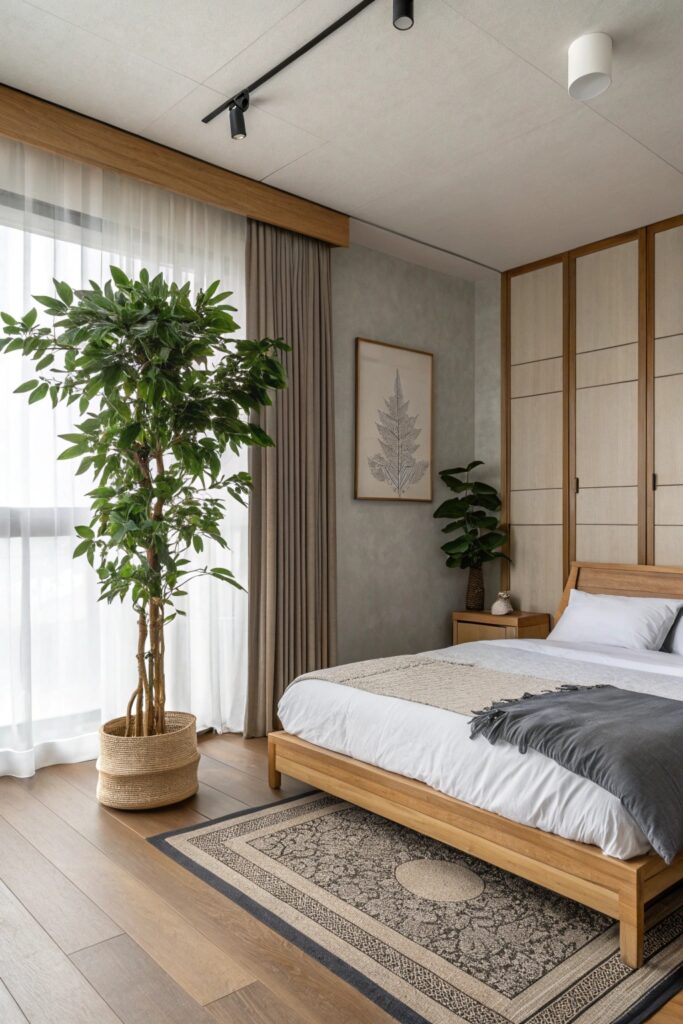
Plants add life without adding clutter, which makes them perfect for Japandi spaces. I stick to one or two plants because restraint matters here.
Low-maintenance options I love:
- Snake plants
- Olive trees
- Fiddle-leaf figs
Plants soften the clean lines and reinforce Japandi’s connection to nature.
10. Invest in Quality Over Quantity
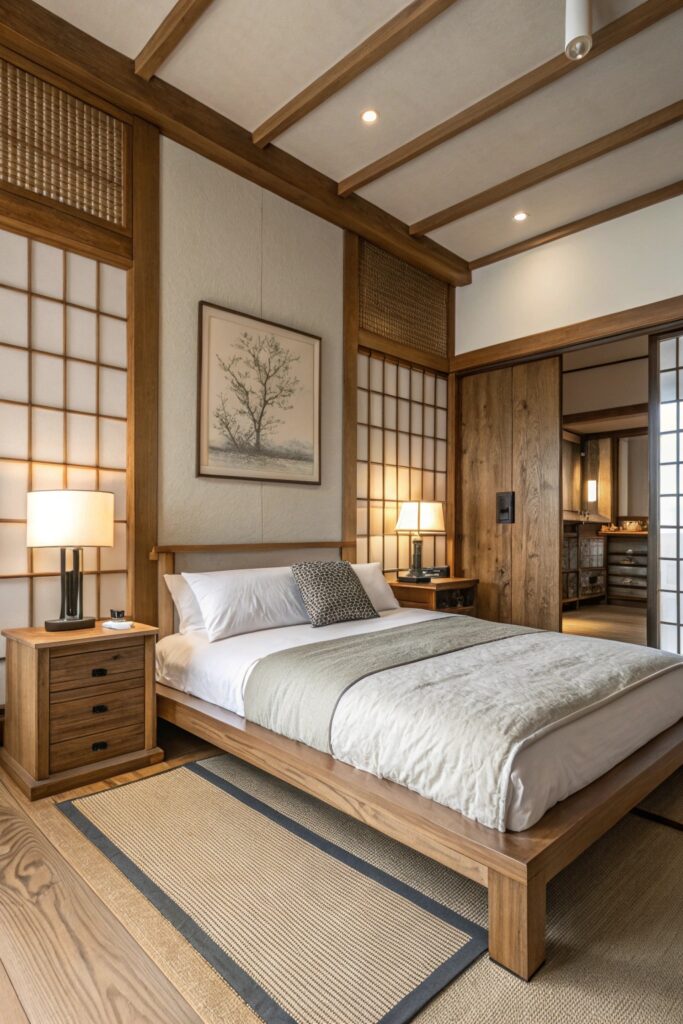
Japandi values craftsmanship, and I fully support that mindset. One solid, well-made piece beats several cheap ones every time.
I prioritize:
- Solid wood furniture
- High-quality bedding
- Handmade ceramic decor
Cheap items age poorly, and nothing ruins a calm bedroom faster than peeling finishes.
11. Make Decor Functional and Beautiful
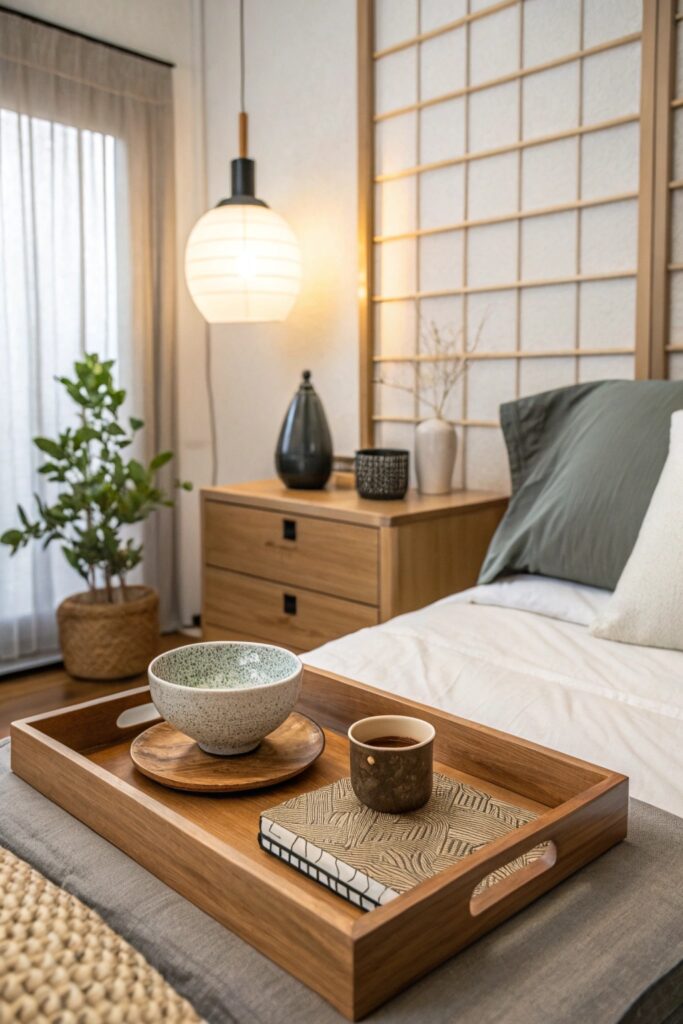
Japandi decor always serves a purpose. I avoid decorative clutter and choose items that work hard.
Functional decor ideas include:
- Wooden trays for bedside items
- Ceramic bowls for jewelry
- Wall hooks that double as art
Why choose between beauty and usefulness when you can have both?
12. Keep Materials Consistent for Visual Flow

Consistency pulls a Japandi bedroom together. I repeat materials across the space to create harmony.
For example:
- Wood appears in furniture and accessories
- Linen shows up in bedding and curtains
- Ceramics repeat across surfaces
This consistency keeps a Japandi minimalist bedroom calm and cohesive.
Japandi vs Other Bedroom Styles
People often ask how Japandi compares to Scandinavian or Japanese design. The differences feel subtle but important.
Here’s how I see it:
- Scandinavian style leans bright and cozy
- Japanese style feels darker and meditative
- Japandi blends warmth with restraint
Japandi hits the sweet spot without leaning too far in either direction.
Mistakes That Can Ruin the Japandi Look
I’ve made these mistakes myself, so trust me here. Avoiding them saves time and money.
Watch out for:
- Too many decor pieces
- Mixing too many wood tones
- Trendy items that clash with timeless design
Japandi rewards patience, not impulse buys.
Why Japandi Bedrooms Work for Real Life
This style adapts beautifully to everyday living. I love that it doesn’t demand perfection.
Japandi bedrooms:
- Hide clutter easily
- Age gracefully
- Feel calm without constant effort
Who wants a bedroom that feels like another task?
Final Thoughts
A modern Japandi bedroom creates calm without sacrificing warmth or personality. It supports better sleep, slower mornings, and quieter evenings. That alone makes it worth the effort.
Start small if you need to. Swap one piece of furniture, simplify one surface, or soften your lighting. Over time, your bedroom will feel less like a storage space and more like a retreat. And honestly, once you experience that calm, you won’t want to go back.