
Let’s be real for a second—kids don’t need more toys. They need better spaces to actually enjoy the toys they already ignore after five minutes. I’ve seen it happen way too often: a playroom stuffed with stuff, yet somehow still boring. Sound familiar?
A great playroom doesn’t scream “Pinterest perfection.” It quietly whispers, “Hey, come play here for hours.” It supports creativity, chaos, learning, and yes, the occasional Lego ambush under your foot. IMO, that’s the sweet spot.
Below, I’m sharing genius playroom ideas kids will love—ideas that feel fun, practical, and realistic for actual homes. No museum rules. No white rugs begging for disaster. Just smart setups that work.
1. Zoned Playroom Layouts That Actually Make Sense
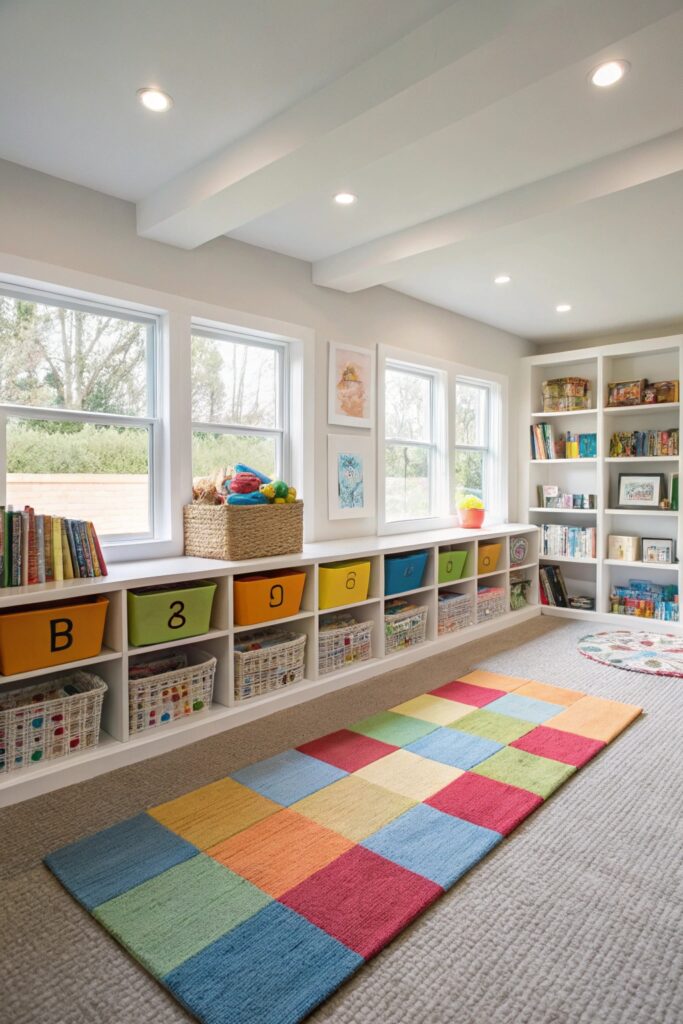
Ever noticed how kids jump between activities every ten minutes? That’s normal. A zoned playroom supports that energy instead of fighting it.
I always recommend dividing the playroom into clear zones. You don’t need walls—just visual cues.
Smart zones to include:
- A creative zone for art and crafts
- A reading or quiet corner
- An open floor area for building and movement
- A pretend play or dress-up spot
Rugs, shelves, or low furniture help define each space. Kids instantly understand where things belong, which magically reduces mess (not eliminates—let’s not get delusional). Why does this work so well? Kids love structure, even when they act like they don’t.
2. Open Storage That Encourages Independence
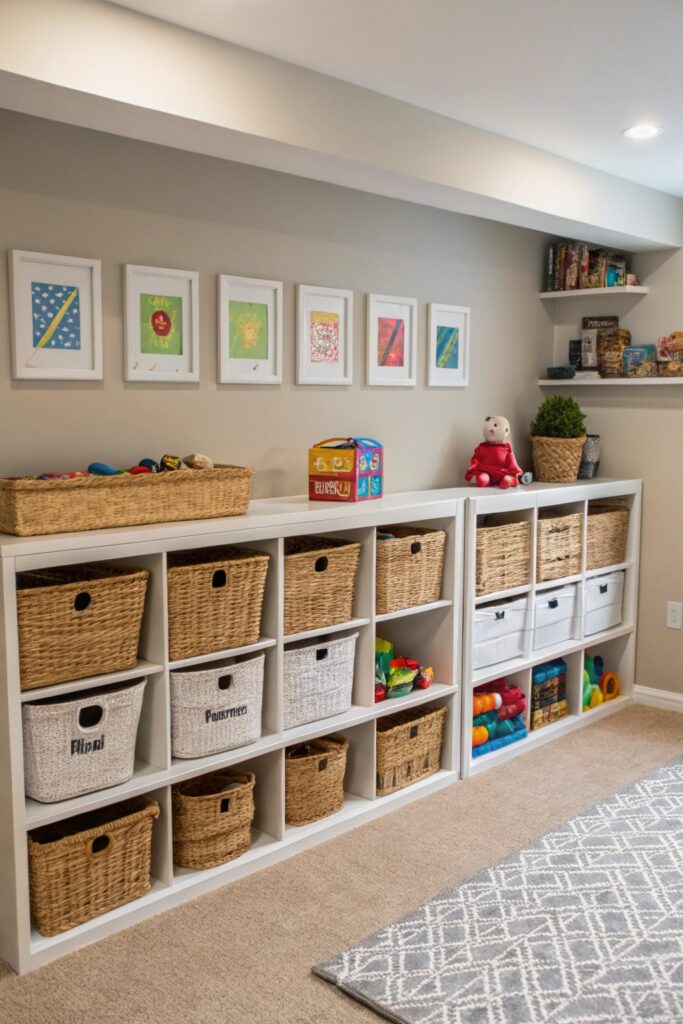
Closed bins look tidy, sure. But kids forget what’s inside them five seconds later. Open storage changes everything.
When kids can see their toys, they actually play with them. Revolutionary, right? I swear by low shelves with labeled baskets. I’ve watched kids clean up faster when they don’t need help opening lids or decoding mystery boxes.
Go for storage that:
- Sits at kid height
- Uses clear bins or open baskets
- Groups toys by category
FYI, this setup also saves your sanity during cleanup time. Kids feel capable. You feel less like a broken record. Win-win.
3. A Cozy Reading Nook Kids Gravitate Toward
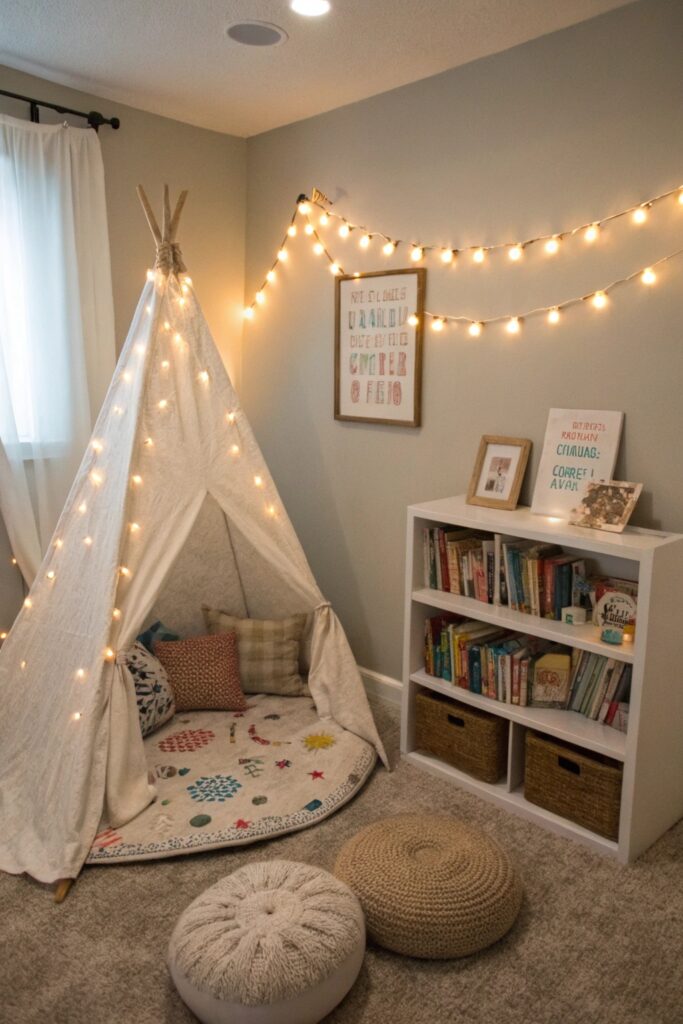
If you want kids to read more, make reading feel special. A reading nook does exactly that.
I love floor cushions, bean bags, or even a tiny tent with soft lighting. Add a small bookshelf with covers facing forward, not spines. Kids choose books the same way adults choose snacks—visually and emotionally.
Must-haves for a great reading nook:
- Soft seating
- Warm, gentle lighting
- Easy-access books
Ever wonder why kids love forts so much? They crave cozy, enclosed spaces. A reading nook taps into that instinct and turns books into an experience, not a chore.
4. Art Stations That Embrace the Mess (Within Reason)
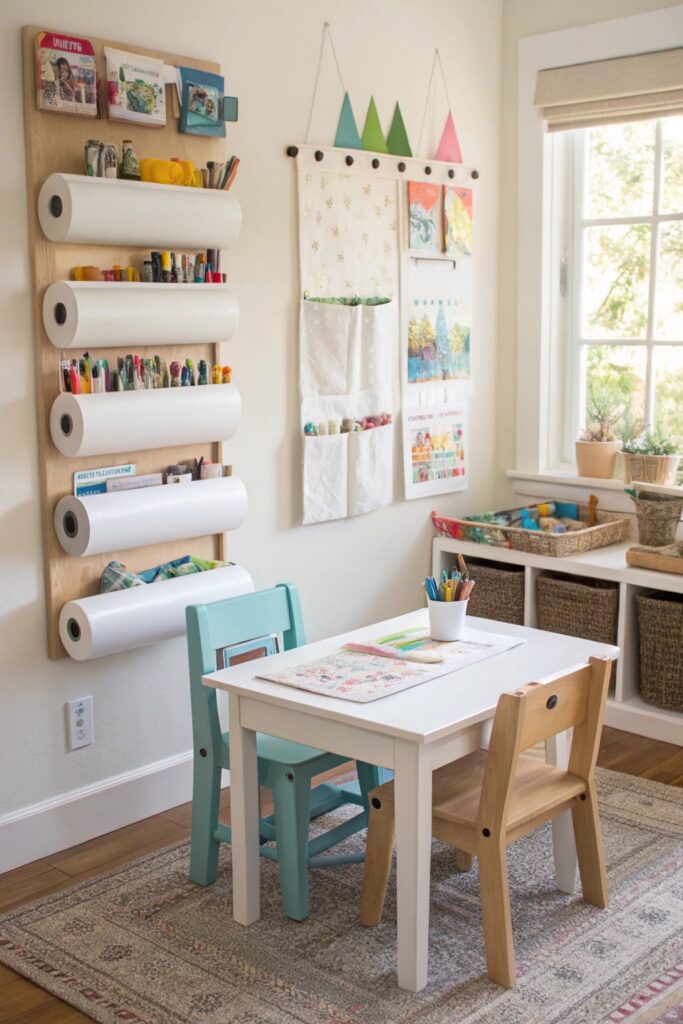
Art stations scare parents because… mess. I get it. But kids need creative chaos.
A dedicated art station contains the mess instead of spreading it across your house. I suggest a small table, washable supplies, and wall-mounted organizers.
Make it functional with:
- Washable paints and markers
- Aprons or old shirts nearby
- Paper rolls or reusable art boards
When kids know they can create freely without getting yelled at, they create more. And honestly? Watching them proudly explain a scribble masterpiece feels worth the cleanup.
5. Imaginative Play Corners That Spark Storytelling
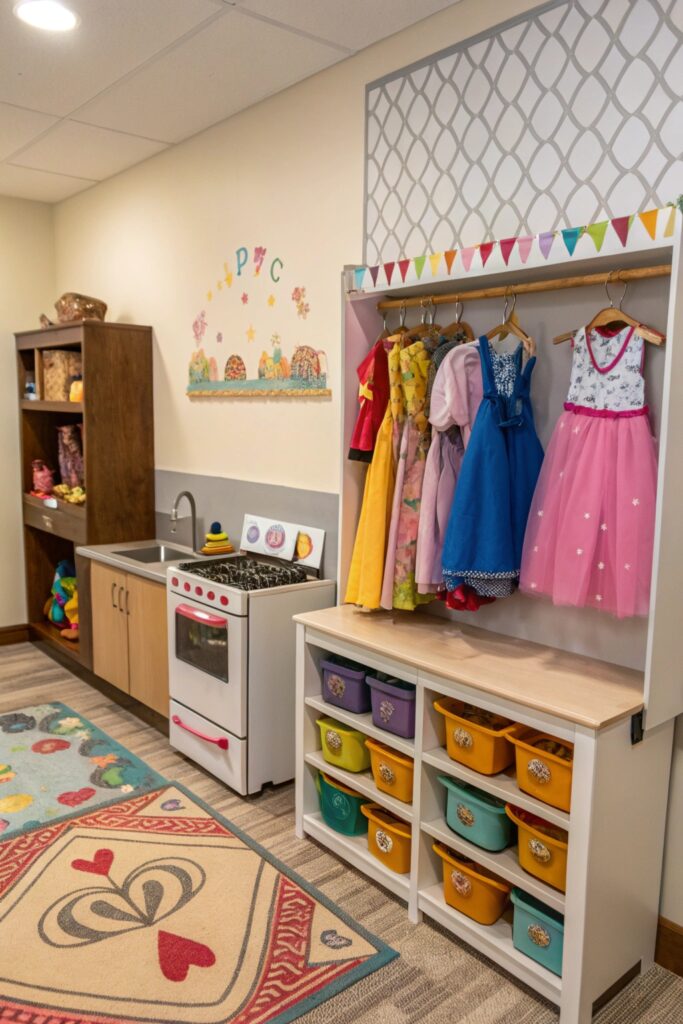
Pretend play builds social and emotional skills faster than flashcards ever could. A simple imaginative play corner opens endless possibilities.
I’ve seen kids turn a basic setup into a grocery store, spaceship, or veterinary clinic—sometimes all in one afternoon.
Popular pretend play ideas:
- Play kitchens or tool benches
- Dress-up racks with costumes
- Dollhouses or action figure worlds
Why does this matter? Kids process real-life experiences through pretend play. They act out emotions, roles, and ideas safely. Plus, it keeps them entertained without a screen begging for attention.
6. Flexible Furniture That Grows With Your Child
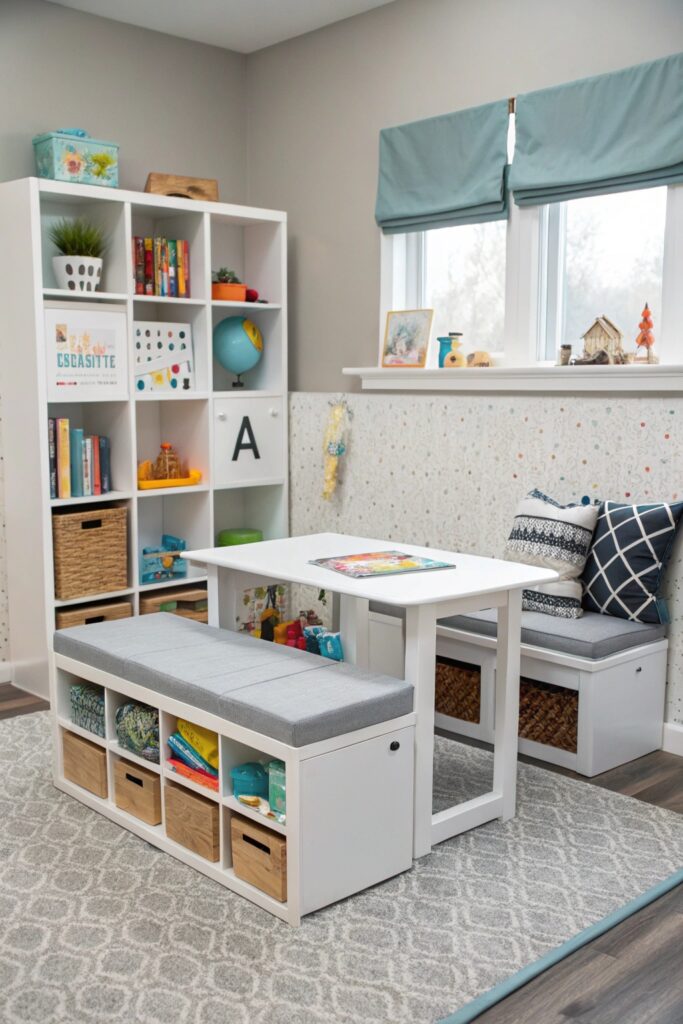
Kids grow fast. Their interests change even faster. Flexible furniture saves money and frustration.
I always choose pieces that serve more than one purpose. A table that adjusts in height. Storage benches that double as seating. Modular shelves that rearrange easily.
Look for furniture that:
- Adapts to different ages
- Moves without heavy lifting
- Supports multiple activities
Ever bought something your kid outgrew in six months? Yeah, same. Flexible furniture avoids that heartbreak and keeps the playroom relevant year after year.
7. Sensory Play Areas for Calm and Focus
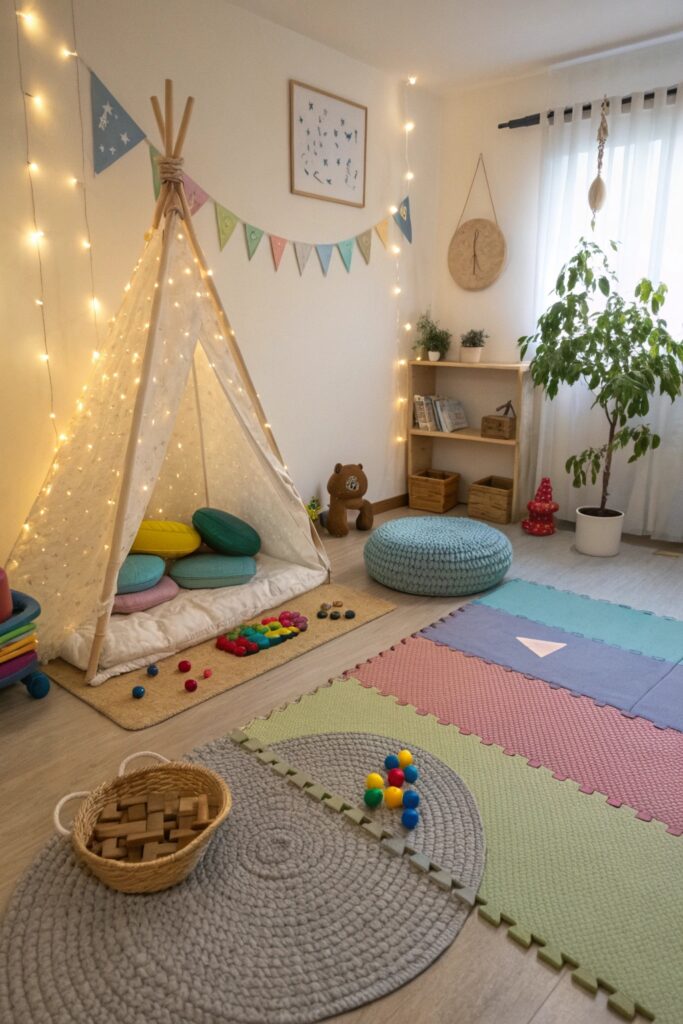
Some kids need movement. Others need calming input. Sensory playrooms help both.
I’ve seen sensory corners work wonders, especially for kids who feel overwhelmed easily. You don’t need fancy equipment either.
Simple sensory elements include:
- Textured rugs or mats
- Soft lighting or bubble lamps
- Fidget toys and balance boards
These spaces help kids regulate emotions and energy. When kids feel calm, they play better. They also argue less, which feels like a miracle some days.
8. Wall Features That Do More Than Look Cute
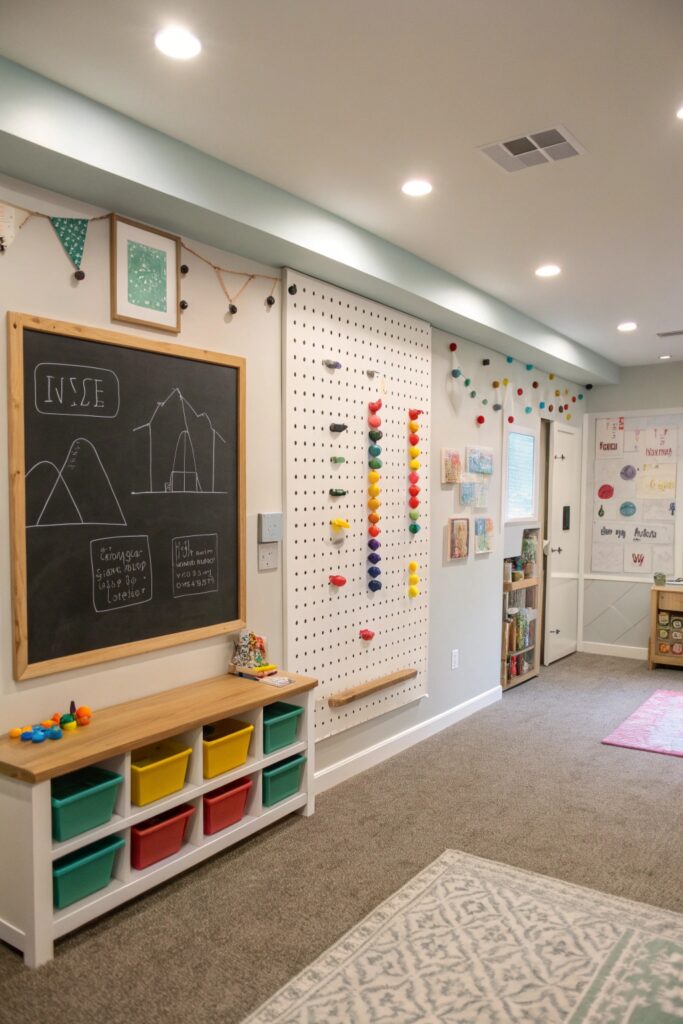
Walls often go unused in playrooms, and that’s a missed opportunity. Functional wall features add play value without eating floor space.
I love chalkboard walls, magnetic boards, or climbing grips. Kids interact with them constantly.
Wall ideas kids adore:
- Chalkboard or whiteboard sections
- Pegboards for rotating activities
- Small indoor climbing elements
Ever noticed how kids draw on walls anyway? Might as well give them a wall that says “Yes, please.”
9. Toy Rotation Systems That Prevent Overwhelm
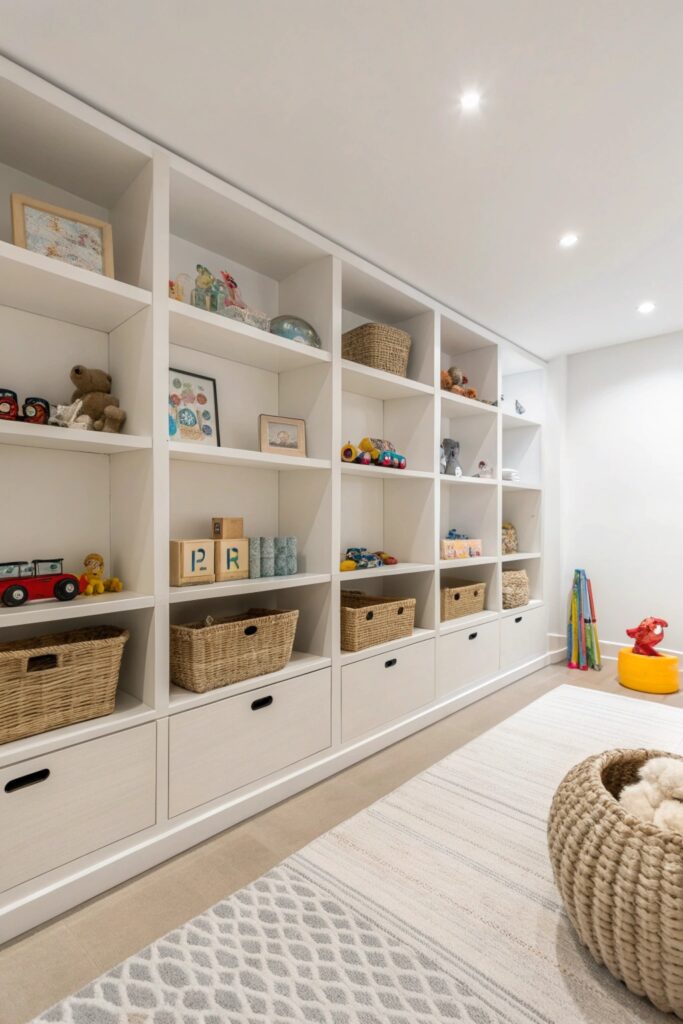
Too many toys overwhelm kids. I know that sounds backwards, but it’s true.
Toy rotation keeps the playroom fresh. I store half the toys away and swap them every few weeks. Kids react like it’s Christmas morning—every time.
Toy rotation works because:
- Fewer choices boost focus
- Old toys feel new again
- Cleanup stays manageable
This strategy also reveals which toys kids actually love. Spoiler: it’s usually fewer than you think.
10. Movement-Friendly Playrooms for Active Kids
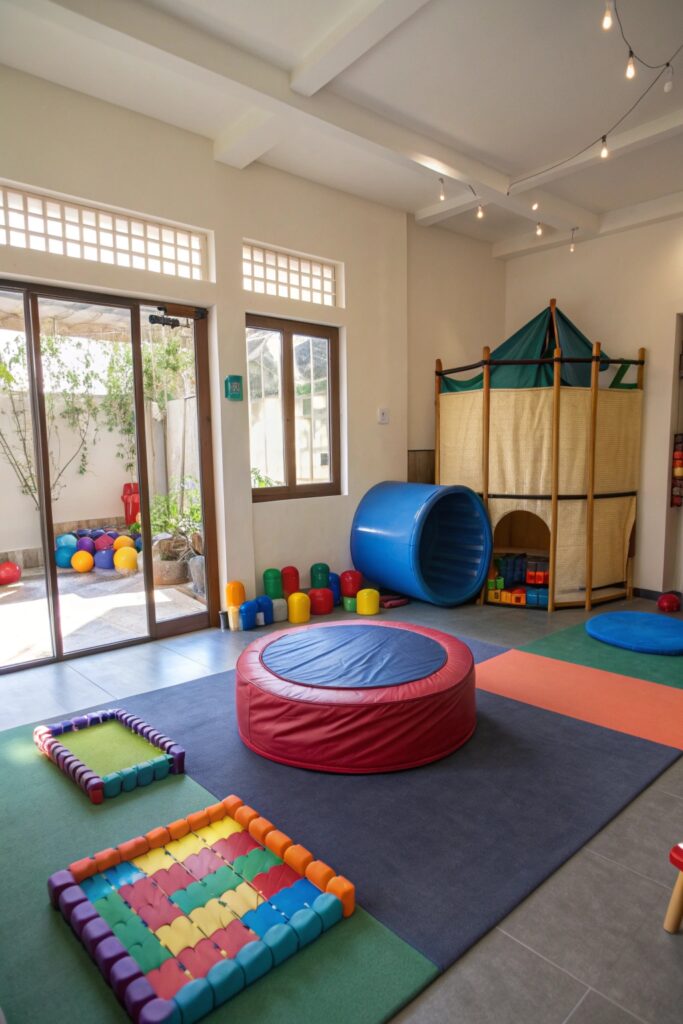
Some kids need to move constantly. A movement-friendly playroom supports that without destroying your furniture.
I always suggest adding safe movement options indoors, especially for rainy days.
Movement ideas include:
- Mini trampolines
- Soft climbing blocks
- Balance beams or tunnels
When kids burn energy safely, they behave better later. Coincidence? I don’t think so.
11. Personalized Touches That Make Kids Feel Seen
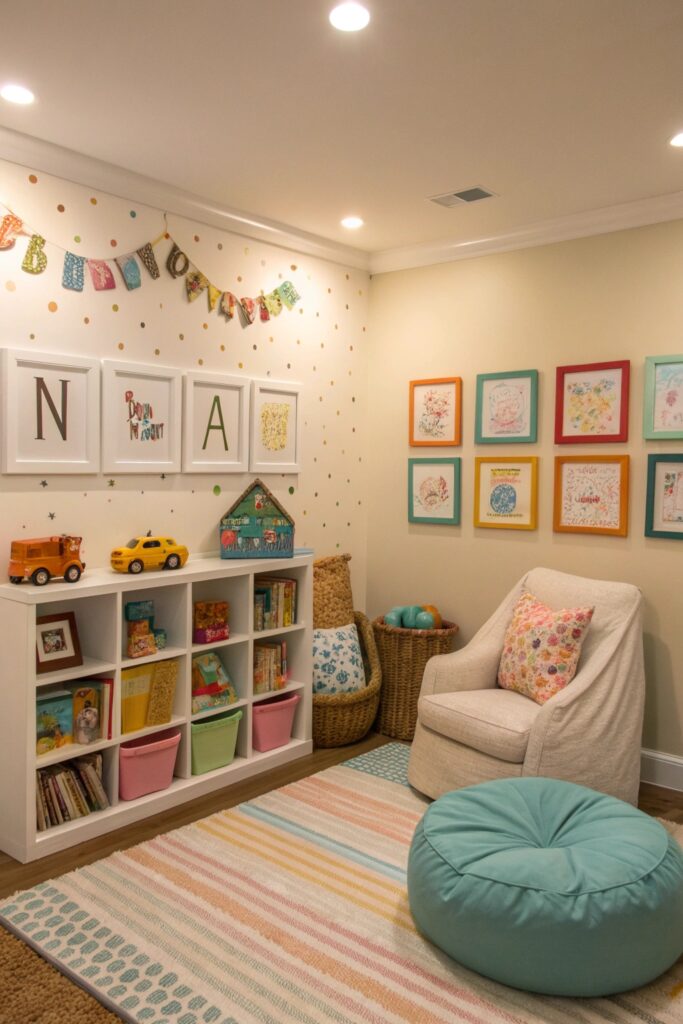
The best playrooms reflect the kids who use them. Personal touches make the space feel special.
I love adding name signs, framed artwork, or displays for favorite creations. Kids light up when they see their personality on the walls.
Easy personalization ideas:
- Name decals or banners
- Rotating art displays
- Favorite color accents
Why does this matter? Kids take pride in spaces that feel like theirs. That pride often leads to better care and more meaningful play.
Conclusion
A great playroom doesn’t chase trends—it supports how kids actually play. The best playroom ideas kids will love combine creativity, structure, and flexibility without trying too hard. You don’t need perfection. You need intention.
Start small. Pick one or two ideas that fit your space and your child’s personality. Adjust as you go. Playrooms should evolve, just like kids do.
And remember, the real goal isn’t a picture-perfect room. It’s laughter, imagination, and moments that make you pause and smile—even when you step on a Lego.
