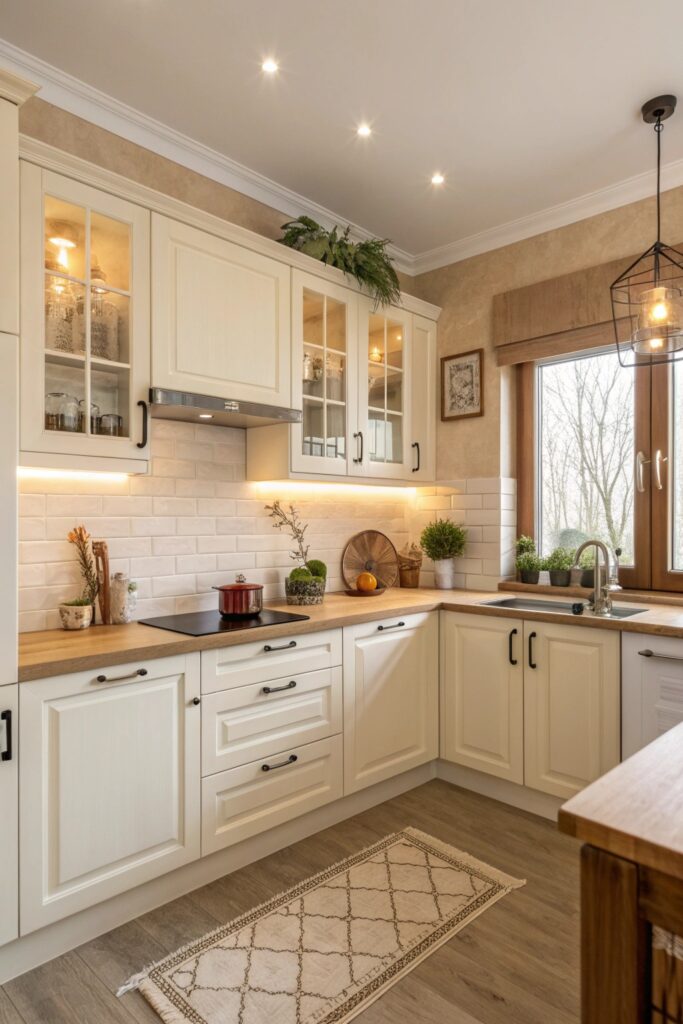
If you’ve ever looked at a mid-century modern kitchen and thought, “Yeah, this just feels right,” you’re not alone. I felt the same way the first time I saw warm wood cabinets paired with sleek hardware and bold pops of color. It felt nostalgic without feeling dusty, stylish without trying too hard—basically, kitchen goals.
Mid-century modern kitchen design strikes that perfect balance between form and function. It looks cool, it works hard, and it somehow never feels outdated. Ever wondered why kitchens from the 1950s still inspire designers today?
Grab a coffee, pull up a chair, and let’s talk about 12 mid-century modern kitchen design ideas you can actually use right now—no time machine required.
1. Flat-Panel Wood Cabinets That Do the Heavy Lifting
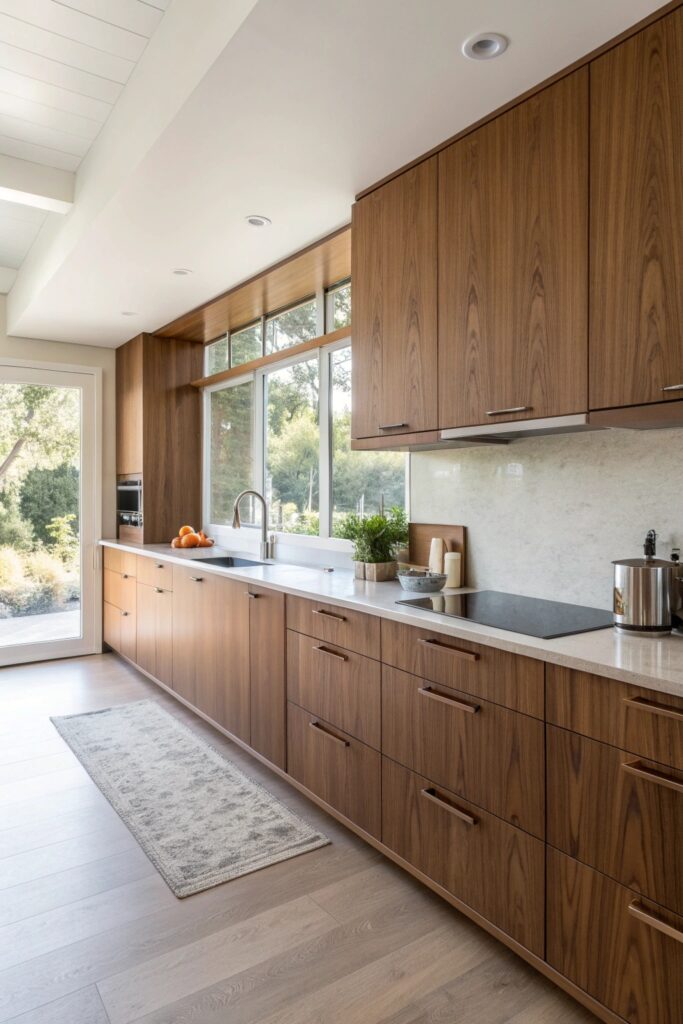
Flat-panel cabinets define mid-century modern kitchens, and for good reason. They look clean, intentional, and effortlessly stylish. I love how they let the wood grain shine without extra trim screaming for attention.
These cabinets usually feature teak, walnut, or oak finishes. They warm up the kitchen instantly and balance modern appliances beautifully. You don’t need ornate details when the material already looks this good, right?
If you want authenticity, skip high-gloss finishes. Stick to matte or satin finishes instead. Your kitchen will feel calm, grounded, and very mid-century modern without trying too hard.
2. Pops of Color That Feel Bold but Not Chaotic
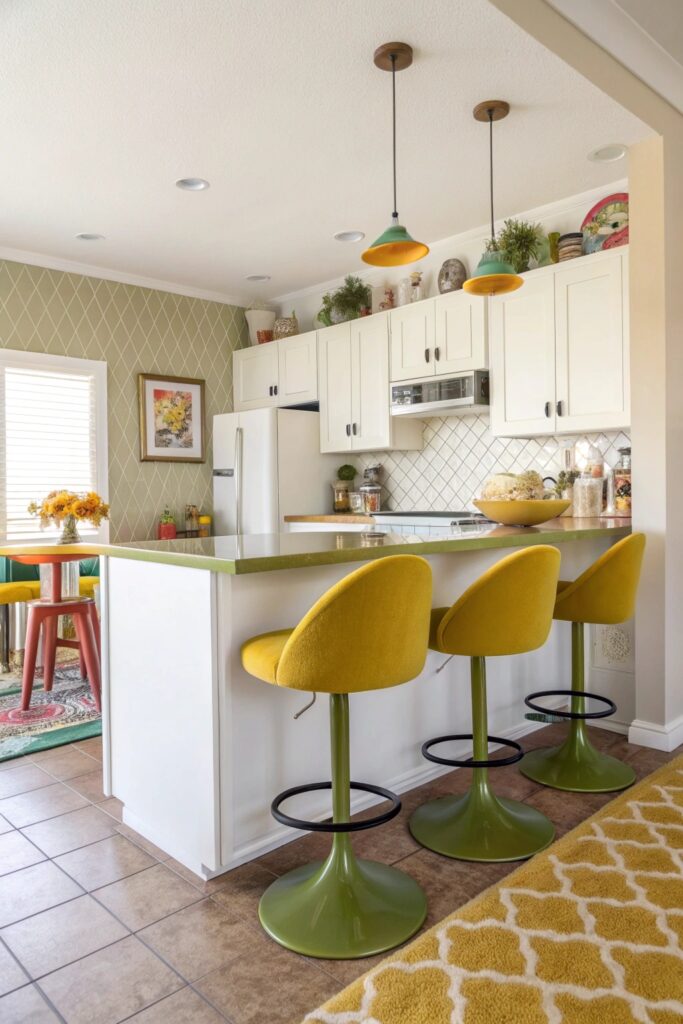
Mid-century modern kitchens never shy away from color, and honestly, I respect that confidence. Think mustard yellow, olive green, burnt orange, or even turquoise. These colors add personality without turning the kitchen into a circus.
I once painted a kitchen accent wall olive green, and it instantly felt warmer and more inviting. Ever notice how these colors feel retro but still fresh?
Use color strategically:
- Bar stools
- Tile backsplashes
- Small appliances
- Cabinet accents
IMO, a little color goes a long way here. You want playful, not overwhelming.
3. Statement Lighting That Deserves Attention
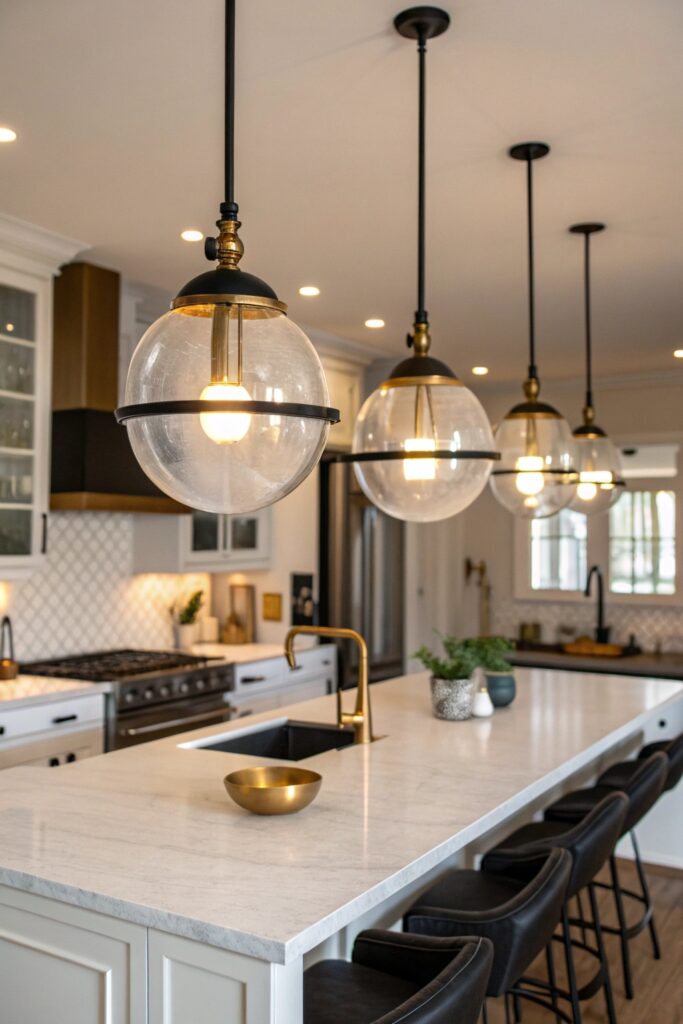
Lighting in a mid-century modern kitchen doesn’t whisper—it speaks clearly. Pendant lights with globe shapes or angular designs instantly anchor the space. I always notice the lighting first when I walk into a kitchen. Don’t you?
Look for brass, matte black, or brushed nickel finishes. These metals pair beautifully with wood tones. The goal involves blending sculptural style with practical lighting.
Hang pendants over an island or dining nook to create a focal point. Good lighting sets the mood, and bad lighting ruins everything. No pressure, right?
4. Open Shelving That Shows Some Personality
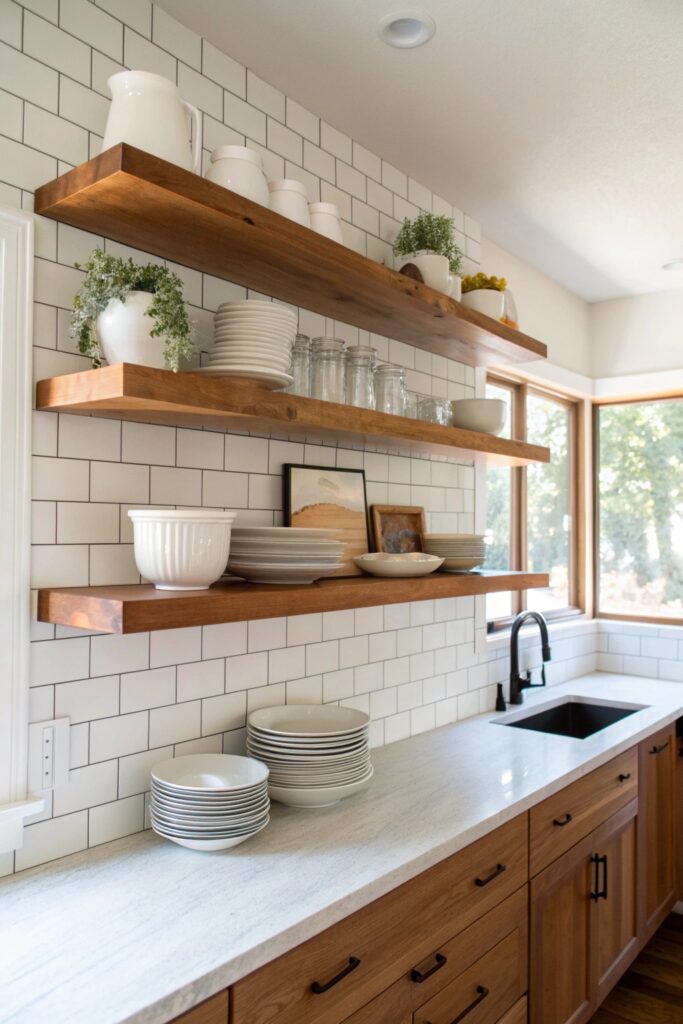
Open shelving feels risky until you try it. Mid-century modern kitchens use it to keep things light and accessible. I like how shelves break up heavy cabinetry and add breathing room.
Use wood shelves to stay on theme. Display ceramics, glassware, or vintage finds. This setup works best if you keep things tidy, so maybe hide the mismatched mugs elsewhere.
Ask yourself: do you want a kitchen that feels lived-in or showroom-perfect? Open shelving leans cozy and personal, which feels very mid-century modern at heart.
5. Geometric Tile That Adds Subtle Drama
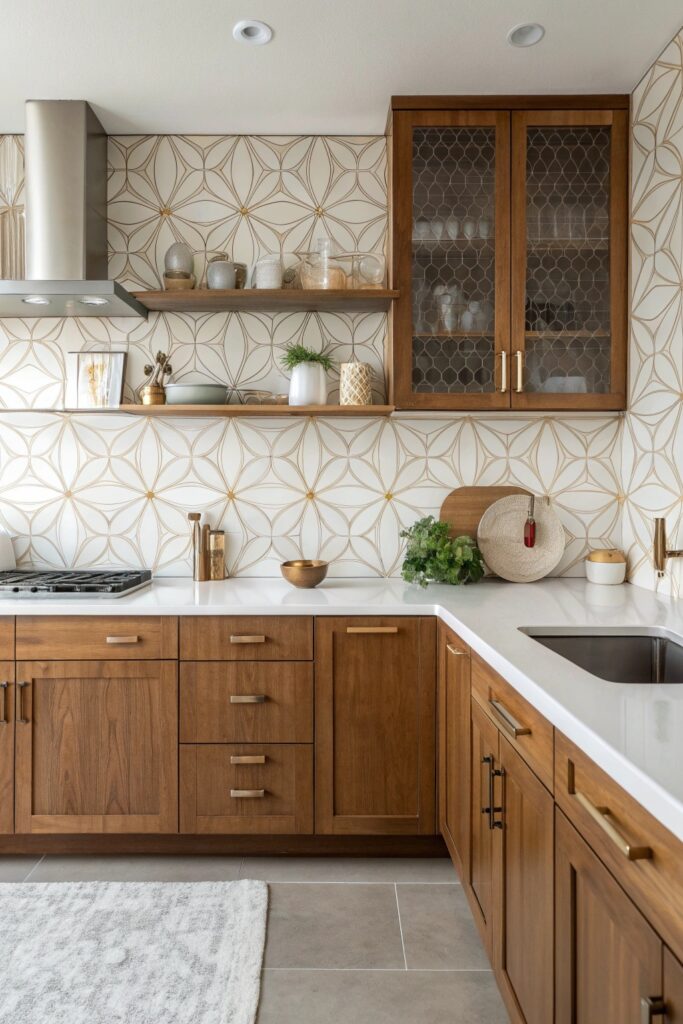
Mid-century modern design loves geometry, especially in tile. Hexagons, chevrons, and simple grid patterns work beautifully in kitchens. They add interest without stealing the spotlight.
I once installed geometric backsplash tile behind a stove, and it instantly upgraded the entire space. Ever noticed how patterns make a kitchen feel more dynamic?
Stick to neutral or muted colors if you worry about longevity. Let the pattern do the talking. This approach keeps the design playful but timeless.
6. Integrated Appliances for a Seamless Look
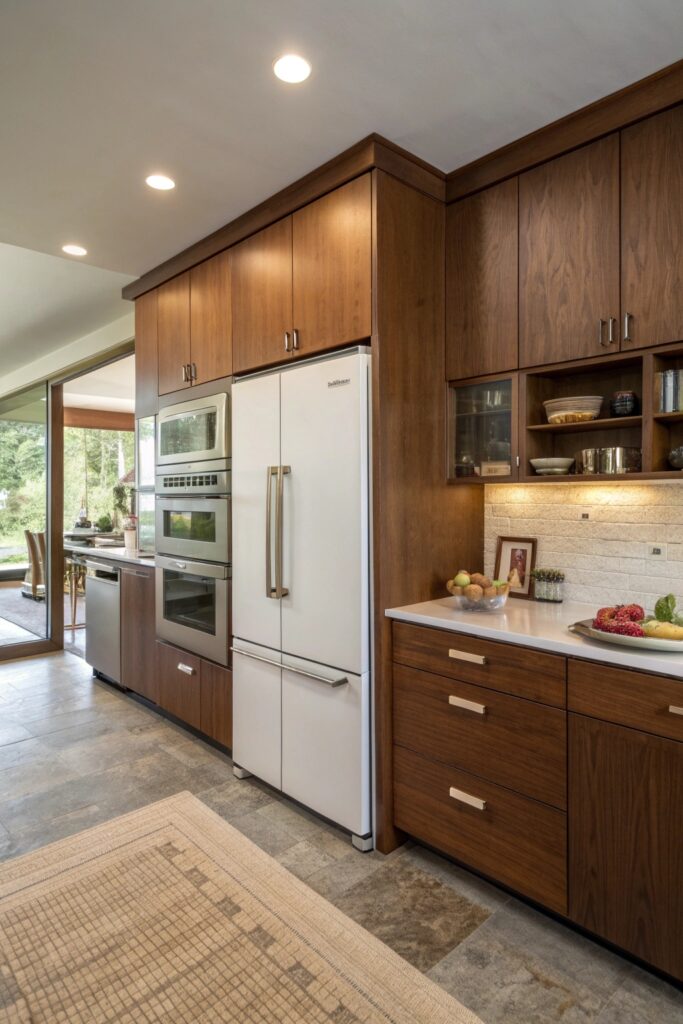
Mid-century modern kitchens prioritize clean lines, so bulky appliances feel out of place. Integrated appliances blend into cabinetry and keep the visual flow smooth.
I love how panel-ready fridges disappear into wood cabinets. The kitchen suddenly feels calmer and more intentional. Isn’t it nice when nothing interrupts the vibe?
Focus on:
- Built-in ovens
- Concealed dishwashers
- Flush-mounted ranges
FYI, this approach costs more upfront, but it delivers a polished look that feels worth it long-term.
7. Tapered Legs on Furniture and Islands
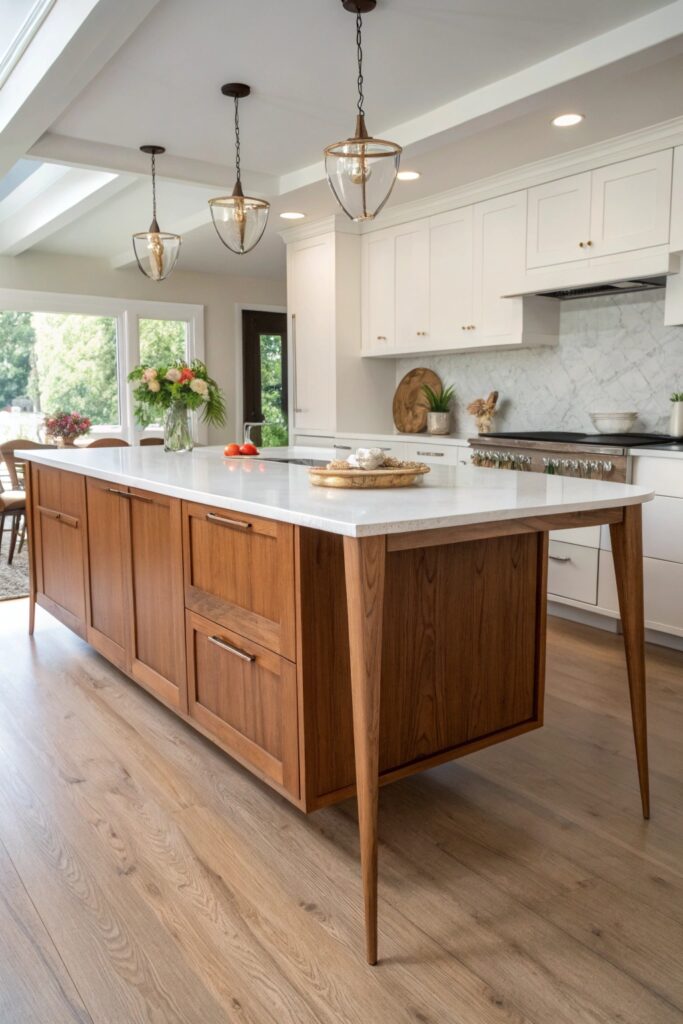
Mid-century modern design loves tapered legs, and kitchens shouldn’t miss out. I adore kitchen islands or tables that stand on slim legs instead of heavy bases.
These legs create a floating effect that keeps the space visually light. They also show off beautiful flooring, which never hurts.
You can apply this idea to:
- Kitchen islands
- Dining tables
- Bar stools
Ever notice how small details can change the whole mood? Tapered legs add elegance without shouting about it.
8. Minimal Hardware That Keeps Things Clean
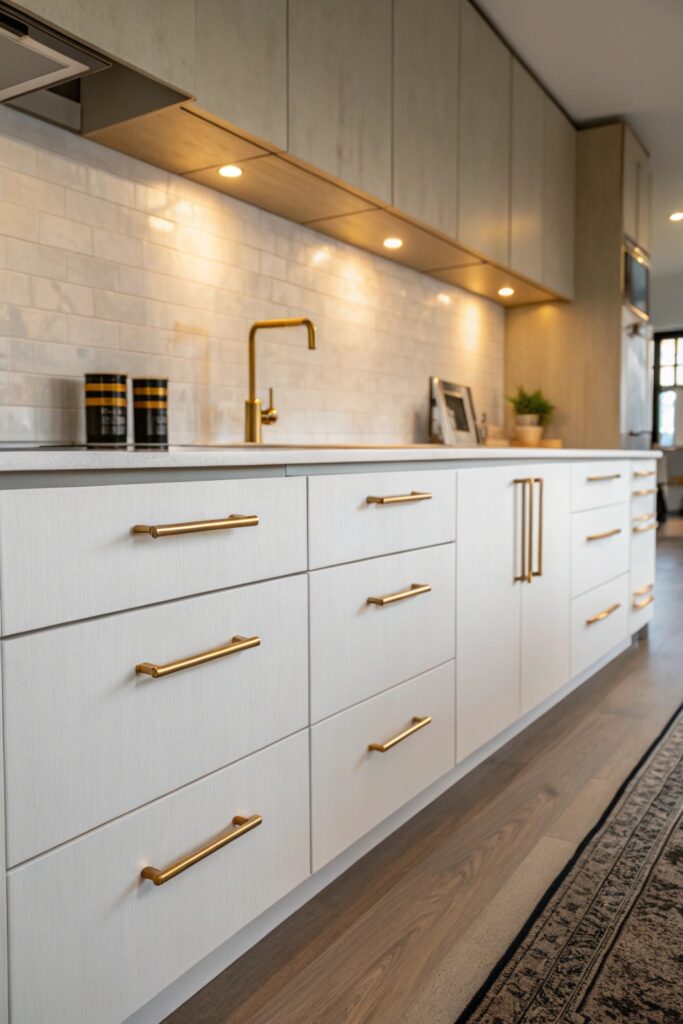
Hardware in mid century modern kitchens stays simple and functional. Think slim pulls, recessed handles, or even touch-latch cabinets. Less fuss, more function.
I swapped bulky handles for sleek brass pulls once, and the kitchen instantly felt more refined. Small change, big impact—classic design lesson.
Choose finishes like:
- Brass
- Matte black
- Brushed steel
Skip ornate designs. Mid-century modern kitchens value restraint, not decoration for decoration’s sake.
9. Warm Wood Paired with Crisp White Surfaces
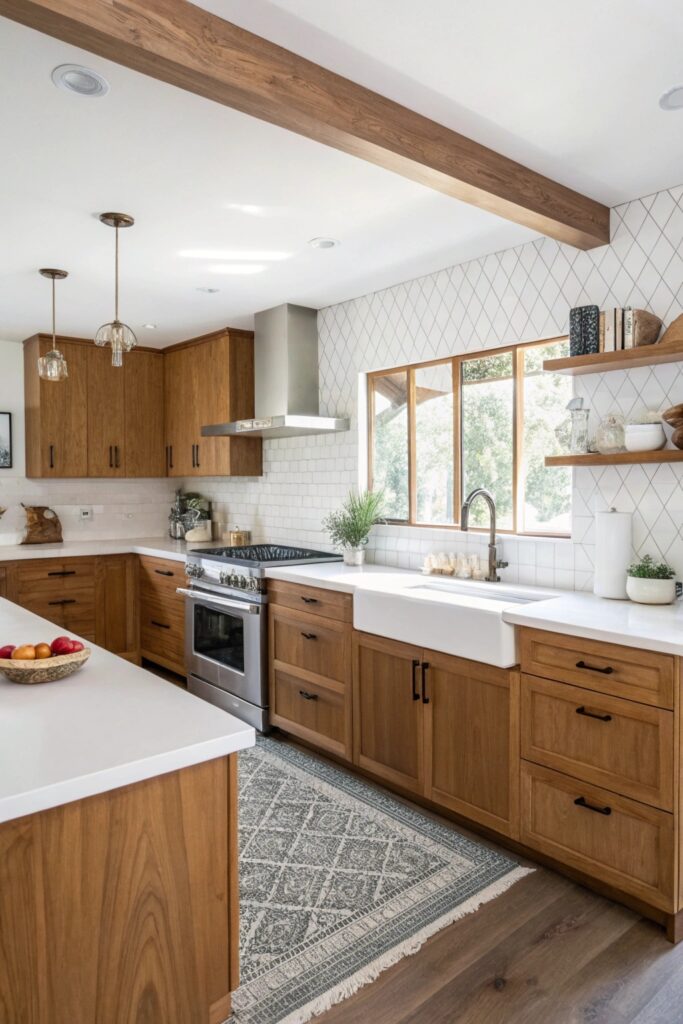
This combo never fails. Warm wood cabinets against white countertops or walls create balance. I love how this pairing feels both cozy and clean.
White surfaces reflect light and keep the kitchen bright. Wood grounds the space and adds soul. Ever walked into a kitchen that felt cold? This combo prevents that.
Quartz or solid surface countertops work well here. Keep the palette simple and let materials shine. The result feels timeless and incredibly livable.
10. Retro-Inspired Appliances with Modern Performance
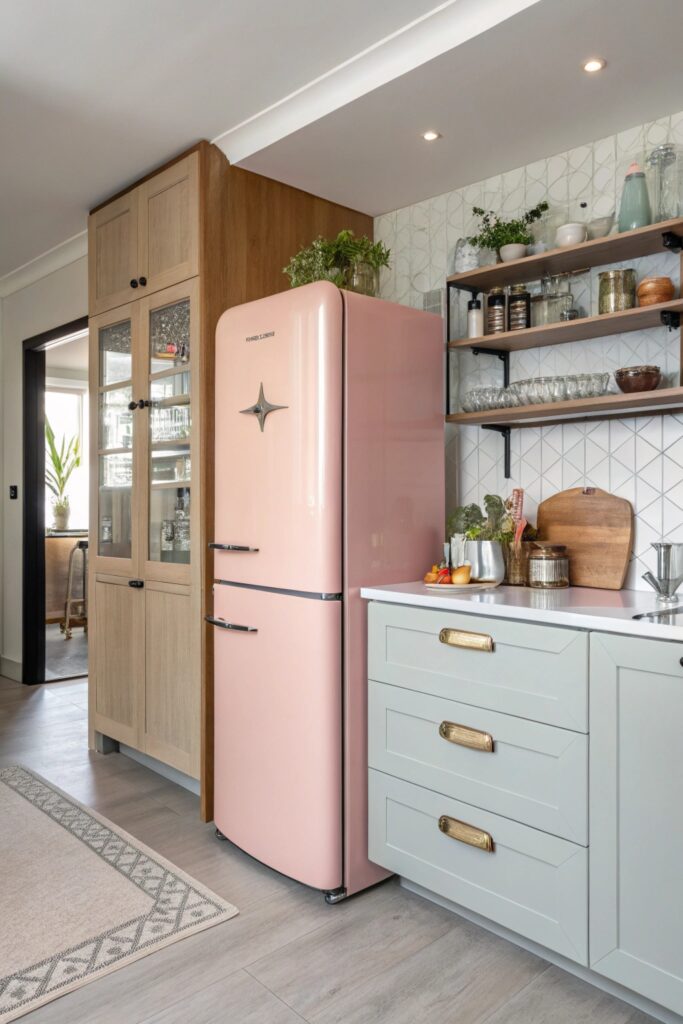
Retro-style appliances fit mid-century modern kitchens perfectly. They bring charm without sacrificing performance. I mean, who doesn’t smile at a pastel fridge?
Brands now offer modern features wrapped in vintage aesthetics. You get the look without the headaches of old tech. Sounds like a win, right?
Use retro appliances as accents, not overload. One statement piece works better than five competing ones. Balance keeps the kitchen stylish instead of gimmicky.
11. Indoor-Outdoor Flow That Feels Effortless
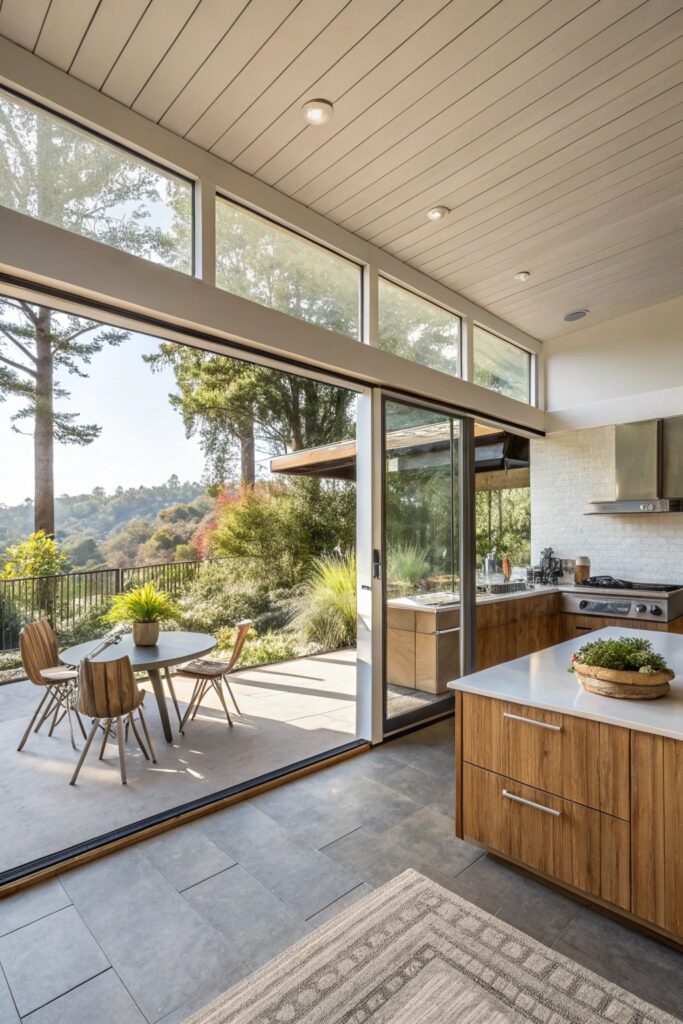
Mid-century modern homes love connecting indoor and outdoor spaces, and kitchens play a huge role. Large windows or sliding doors bring in natural light and greenery.
I once cooked in a kitchen overlooking a backyard, and it felt instantly more relaxing. Nature does that.
If possible:
- Add large windows
- Use glass doors
- Keep sightlines open
This approach makes the kitchen feel larger and more inviting, which never goes out of style.
12. Simple Layouts That Prioritize Function
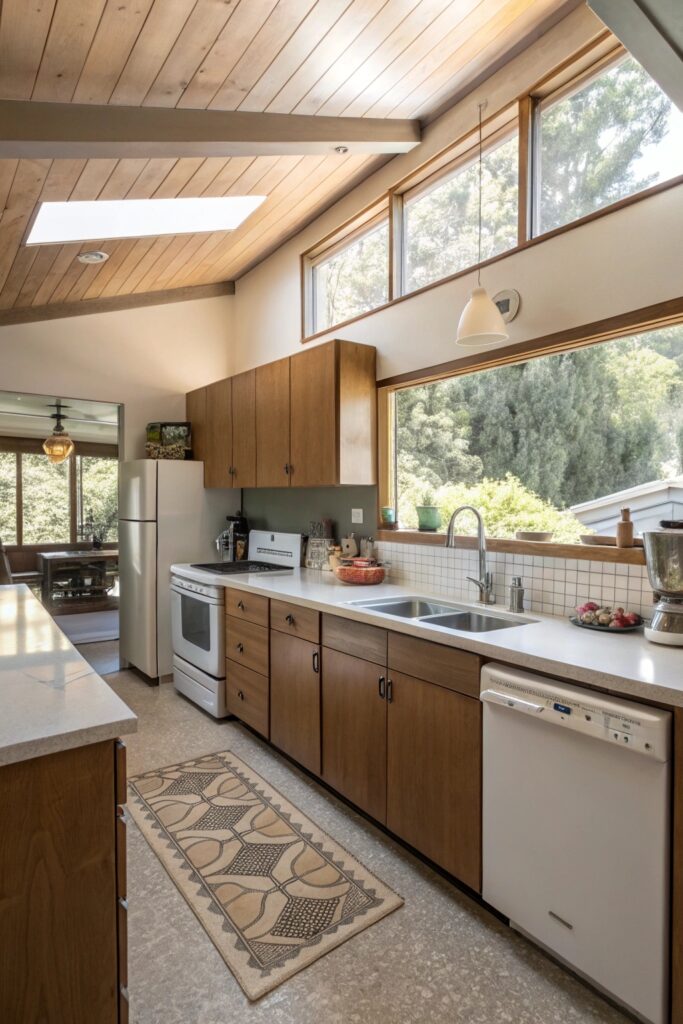
Mid-century modern kitchens don’t overcomplicate things. They favor efficient layouts that actually work. Think clear work triangles and intuitive flow.
I appreciate kitchens where everything sits exactly where I expect it. Ever fumbled around looking for basic tools? Bad layout causes that chaos.
Focus on:
- Logical appliance placement
- Ample counter space
- Easy movement
Design should support daily life, not fight it. Mid-century modern kitchens get that balance right.
Conclusion
Mid-century modern kitchen design works because it respects both style and function. It brings warmth through wood, personality through color, and clarity through clean lines. Each idea here proves you don’t need excess to create impact.
You can mix and match these elements based on your space and budget. Start small if needed. Swap lighting, update hardware, or add a pop of color. Progress beats perfection every time.
So, which idea spoke to you the most? Try one, then build from there. Your kitchen deserves a design that feels good to use and even better to look at.