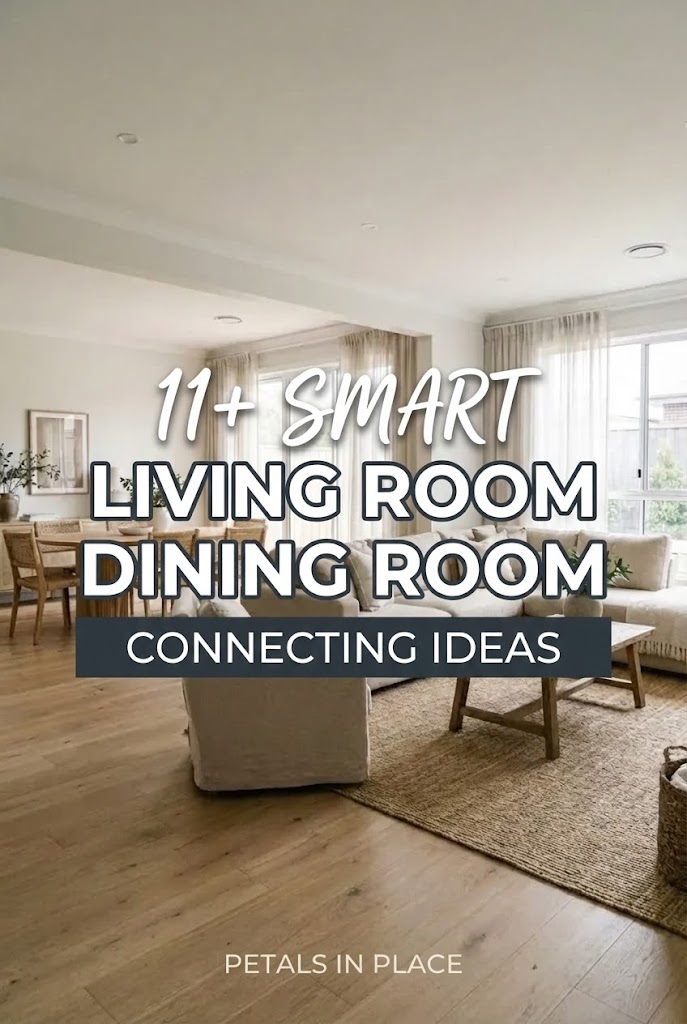
If your living room and dining room sit side by side but feel like two strangers, you’re not alone. Open layouts look great in photos, yet in real homes they often feel awkward, cluttered, or oddly split. One area shines, the other feels forgotten. Sometimes both feel off.
The good news? You don’t need to knock down walls, buy all new furniture, or follow fancy design rules. Small layout choices can change how these spaces feel and how people move through them. This guide focuses on simple, real-life ideas that help your living room and dining room feel connected, calm, and easy to live in. No fluff. Just clear tips that actually make sense for everyday homes.
Before You Start (Read This First)
Before moving furniture or buying anything new, pause for a moment. Most living room and dining room combos don’t feel right because the layout was never planned as one space. Pieces get added room by room, and the connection gets lost.
Here’s one simple rule to keep in mind: decide how the two rooms should work together before you style them separately. When the connection comes first, everything else feels easier.
A few quick things to check right now:
- Walk from the living room to the dining area. Is the path clear, or do you have to squeeze around furniture?
- Look at both rooms from one spot. Do they feel related, or like two different homes?
- Notice the middle zone. Is it empty, cluttered, or ignored?
Also, avoid this common mistake: don’t start by buying décor. Most flow problems come from placement, spacing, and balance, not from missing items. Fix the layout first. Style comes after.
Once these basics are clear, the ideas ahead will work better, look better, and feel right in real life.
1. Use One Visual Anchor to Tie Both Spaces
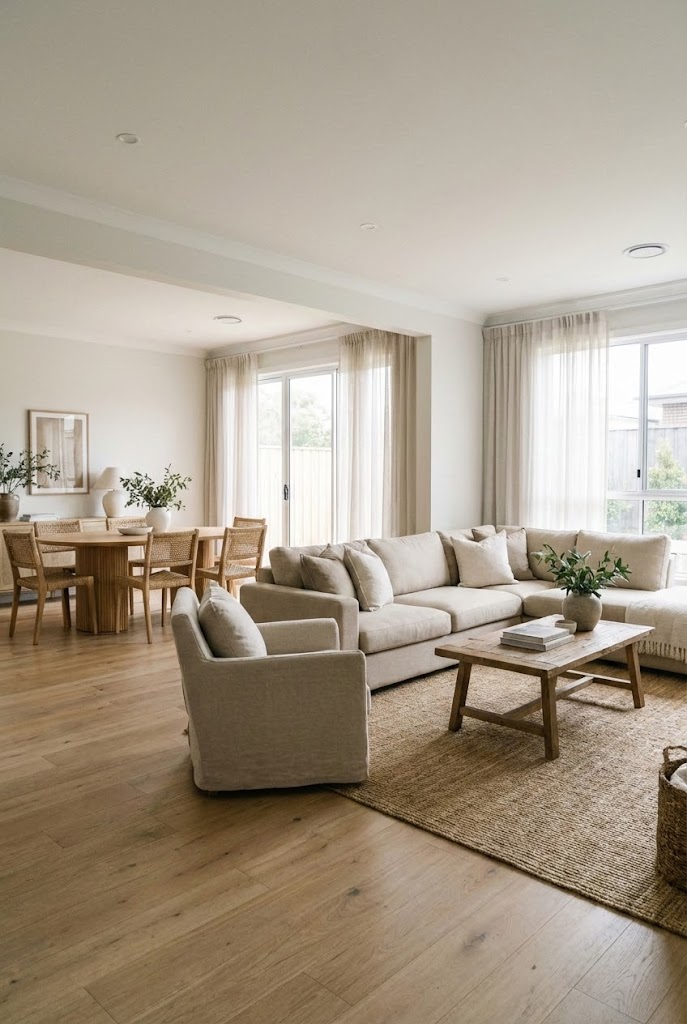
The easiest way to connect your living room and dining room is to give them one shared visual anchor. This anchor becomes the quiet thread that pulls both spaces together, even if they serve different purposes.
A visual anchor can be something simple:
- The same flooring runs through both areas
- A large area rug that visually touches both zones
- A ceiling detail, like exposed beams or matching light placement
The key is that your eye should move smoothly from one room to the other without stopping. When the anchor is missing, the rooms feel chopped up. When it’s present, everything feels calmer and more open.
This works especially well in small homes and apartments where walls are limited, but flow matters more. Just remember: you only need one anchor. Adding too many creates noise instead of a connection.
Once this foundation is set, every other design choice becomes easier and more natural.
2. Match the Mood, Not the Exact Colors
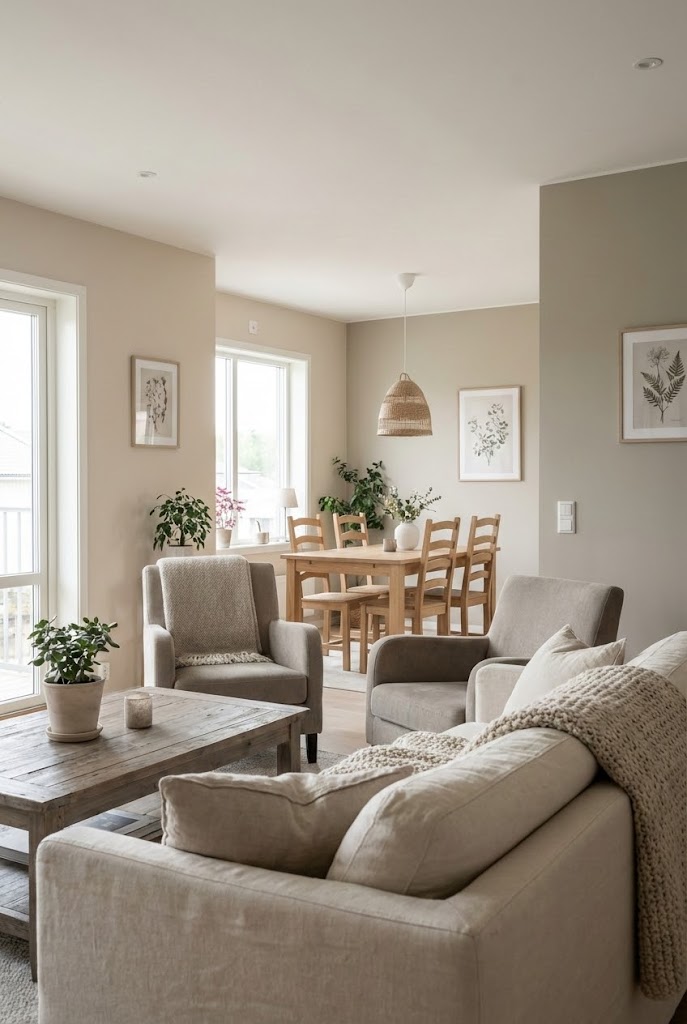
Many people try to copy the same paint color in both rooms. That often backfires. Instead of feeling connected, the space can look flat and boring.
A better approach is to match the mood. If your living room feels warm and relaxed, the dining room should carry that same feeling, even if the colors are slightly different. Soft neutrals, warm whites, gentle earth tones, or muted shades work well together without looking copied.
Here’s an easy way to check:
- If one room feels calm and cozy, the other shouldn’t feel sharp or bold
- If one room is light and airy, the other shouldn’t feel heavy or dark
When the mood matches, the rooms feel related. Your eye accepts the shift in color without feeling confused.
3. Let Lighting Guide the Space
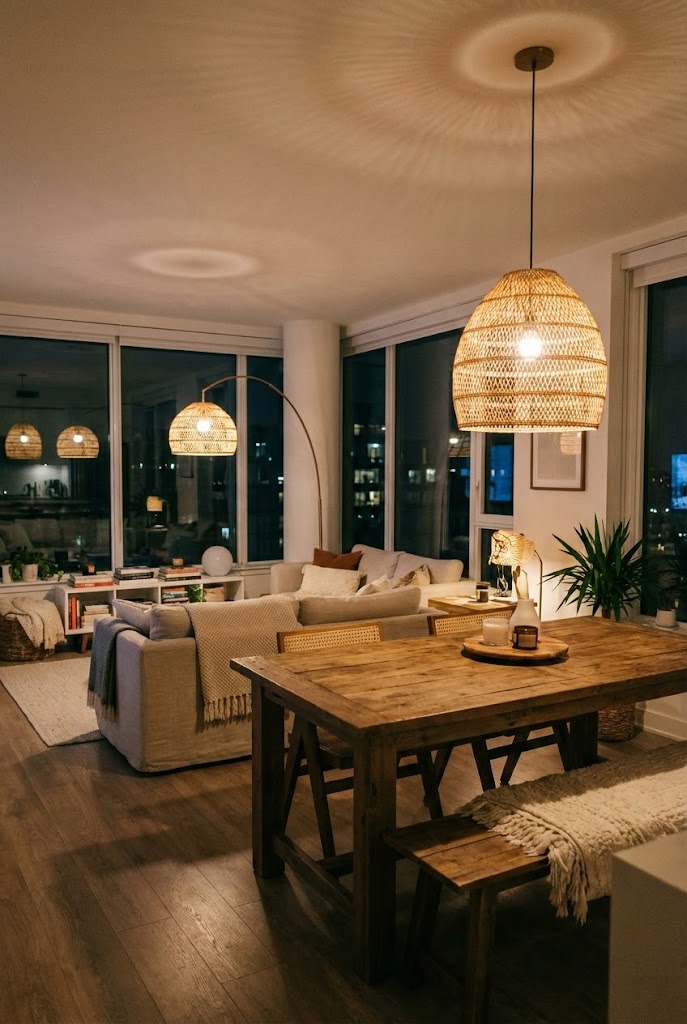
Lighting does more than brighten a room. It quietly tells your eyes how to move from one area to another.
Instead of choosing lights room by room, think of them as a set. The finishes don’t need to match exactly, but they should feel like they belong to the same family. For example, similar metal tones or similar shapes can do the job.
A simple trick that works well:
- One main light over the dining table
- Softer lighting in the living area
- Both lights placed so they feel balanced when viewed together
Avoid placing one very bold light next to a very plain one. That contrast pulls the rooms apart instead of bringing them together.
4. Create a Soft Divider Instead of a Hard Stop
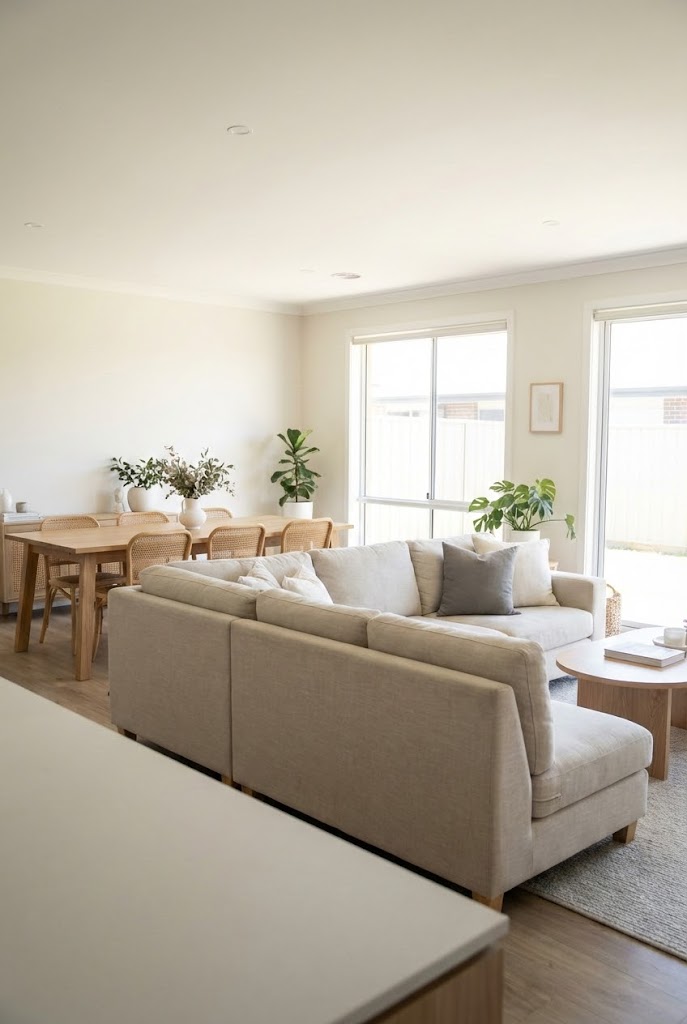
Open layouts still need a little structure. The mistake many people make is using tall or bulky dividers that block light and break the flow.
A soft divider keeps things clear without closing the space. Good options include:
- A sofa with a low back
- A narrow console table
- A short open shelf
The rule is simple: if light and sight can pass through or over it, it usually works. These pieces gently suggest where one space ends and the other begins, without making the home feel smaller.
When done right, the divider feels helpful, not heavy—and both rooms stay connected in a natural way.
5. Repeat Materials for a Natural Connection
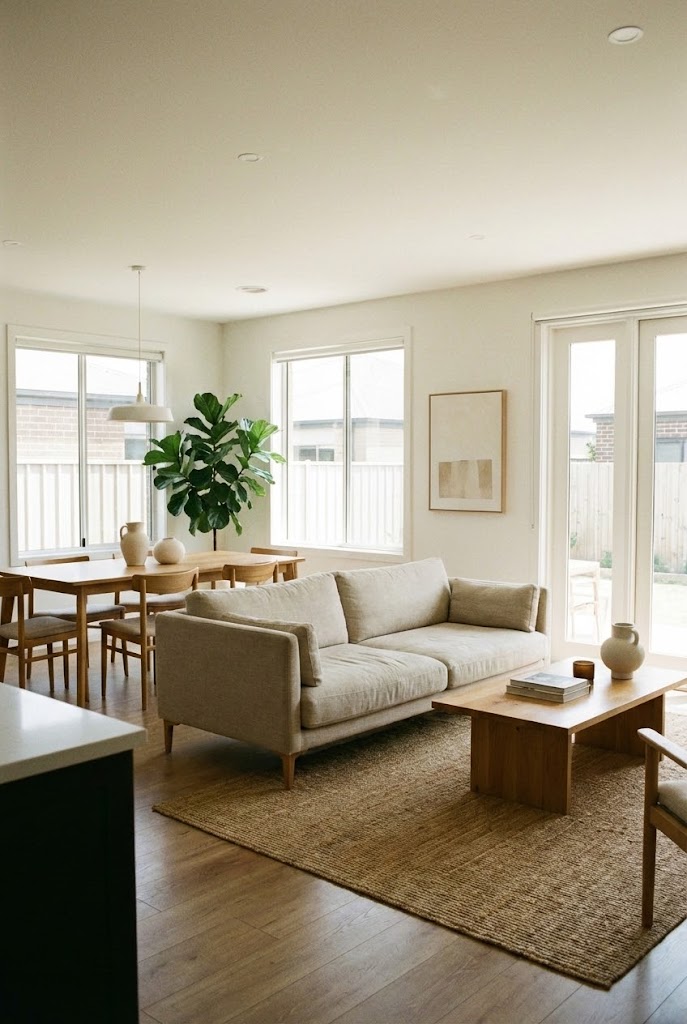
One quiet way to link your living room and dining room is by repeating the same material in both spaces. This could be wood, metal, glass, or even stone. Your brain notices these small repeats, even if you don’t do it on purpose.
For example, if you have a wood dining table, let that same wood tone appear in a coffee table, shelf, or picture frame in the living room. The rooms instantly feel related without looking matched.
Keep it simple:
- Pick one main material to repeat
- Use it two or three times across both rooms
- Avoid mixing too many finishes
Too many materials can make the space feel busy. A few thoughtful repeats create calm and flow.
6. Use Rugs the Right Way (Not the Popular Way)
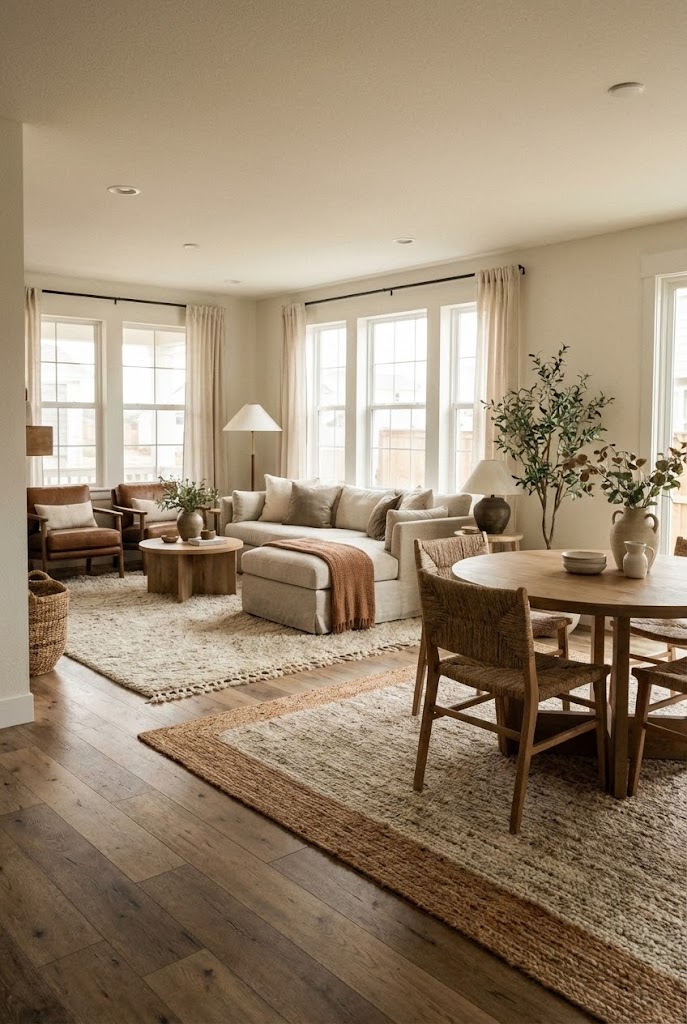
Rugs are often used to separate spaces, but when done wrong, they break the connection instead. The goal isn’t to isolate each room. It’s to help them belong together.
Here’s what works better:
- Choose rugs that relate in color or texture
- Make sure neither rug is too small
- Let the rugs visually sit close, not far apart
If one rug is bold and the other is plain, the rooms will compete. When both rugs speak the same visual language, the transition feels smooth and intentional.
7. Style the In-Between Space on Purpose
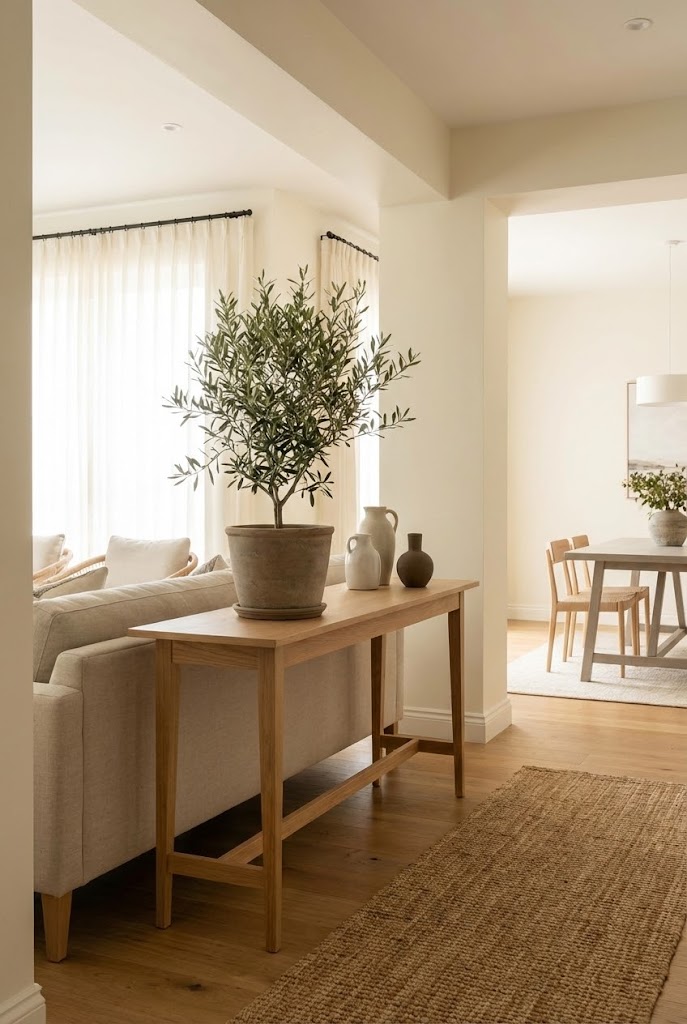
The space between your living room and dining room is not empty space. It’s a transition zone, and ignoring it is a common reason layouts feel unfinished.
This area works best with light, simple items:
- A slim console
- A plant with soft shape
- A small bench or low table
Avoid clutter here. One or two pieces are enough. When the middle zone feels planned, the rooms on either side automatically feel more connected.
Think of it as the handshake between the two spaces. When it feels right, everything else falls into place.
8. Keep Furniture Heights Working Together
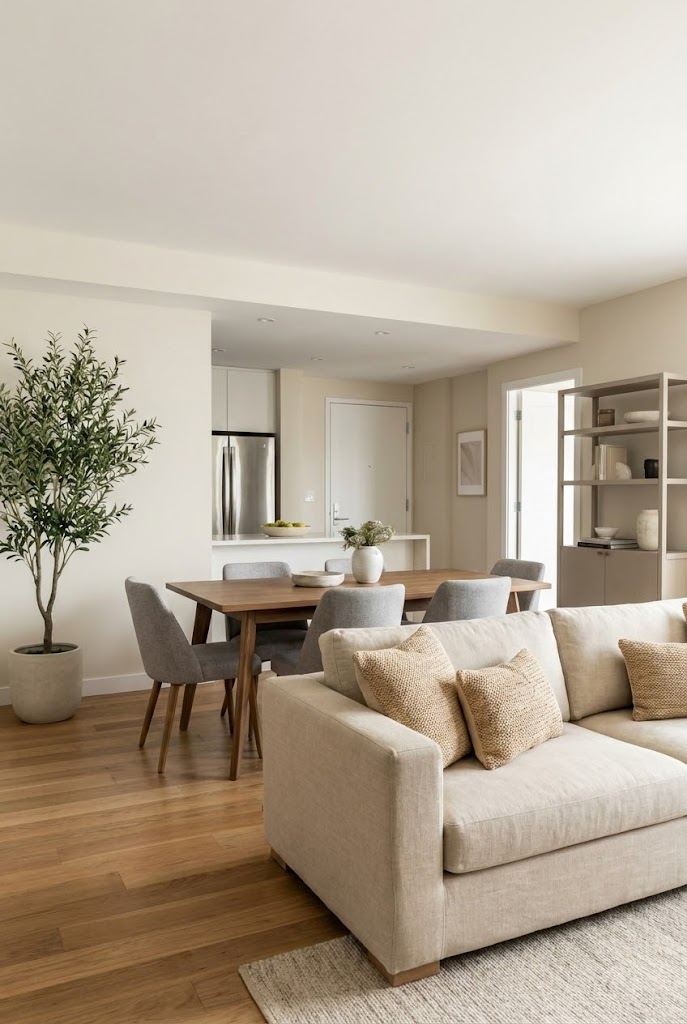
Furniture height plays a bigger role than most people realize. When one room is filled with low pieces and the other is packed with tall furniture, the flow feels uneven and slightly uncomfortable.
You don’t need everything to be the same height. You just need balance. If your dining room has a tall cabinet or hutch, echo that height with a floor lamp, tall plant, or shelf in the living room. If your living room furniture sits low, avoid towering pieces right next to it in the dining area.
A quick check that helps:
- Look across both rooms from one angle
- Notice where your eye jumps up or drops suddenly
- Soften those shifts with a medium-height piece
When furniture heights work together, the connection feels smooth without you even noticing why.
9. Carry One Texture Through Both Rooms
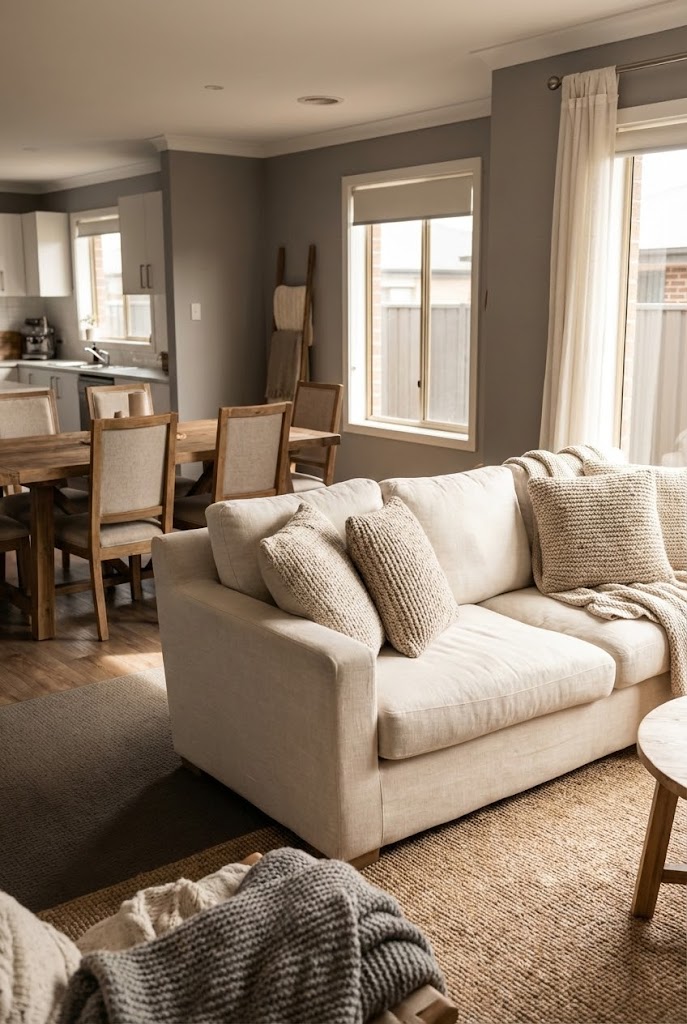
Texture adds comfort, but it also helps rooms feel related. When the same texture appears in both the living and dining areas, the connection feels quiet and natural.
This could be:
- The same fabric on dining chairs and sofa pillows
- A similar weave in curtains and table linens
- Matching wood grain or soft matte finishes
The trick is to keep it subtle. One shared texture is enough. Too many competing textures can make the space feel restless instead of calm.
When texture repeats gently, the rooms feel layered and lived-in, not styled in isolation.
10. Extend One Feature Across Both Spaces
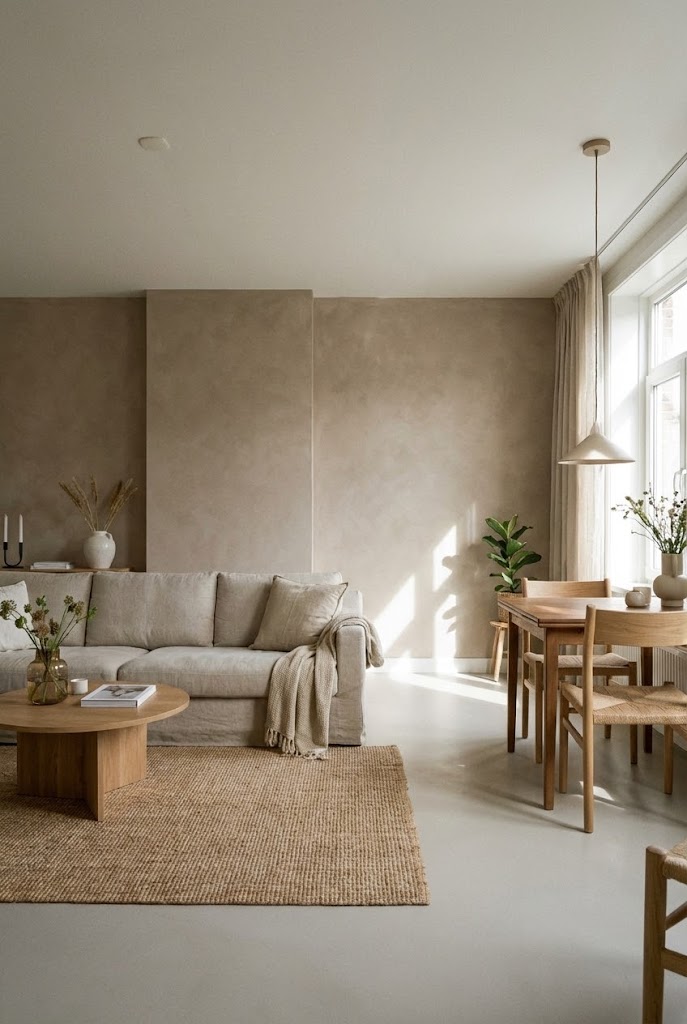
One strong feature, carried across both rooms, can instantly pull them together. This works best when the feature is simple and intentional.
Good options include:
- An accent wall that runs through both areas
- The same trim or molding style
- A ceiling detail that visually connects the space
This idea works especially well when furniture styles differ slightly. The shared feature acts like a quiet backbone that keeps everything feeling united.
If you live in a rental, stick to removable options like paint-safe wallpaper or consistent wall art placement.
11. Arrange Furniture to Encourage Easy Movement
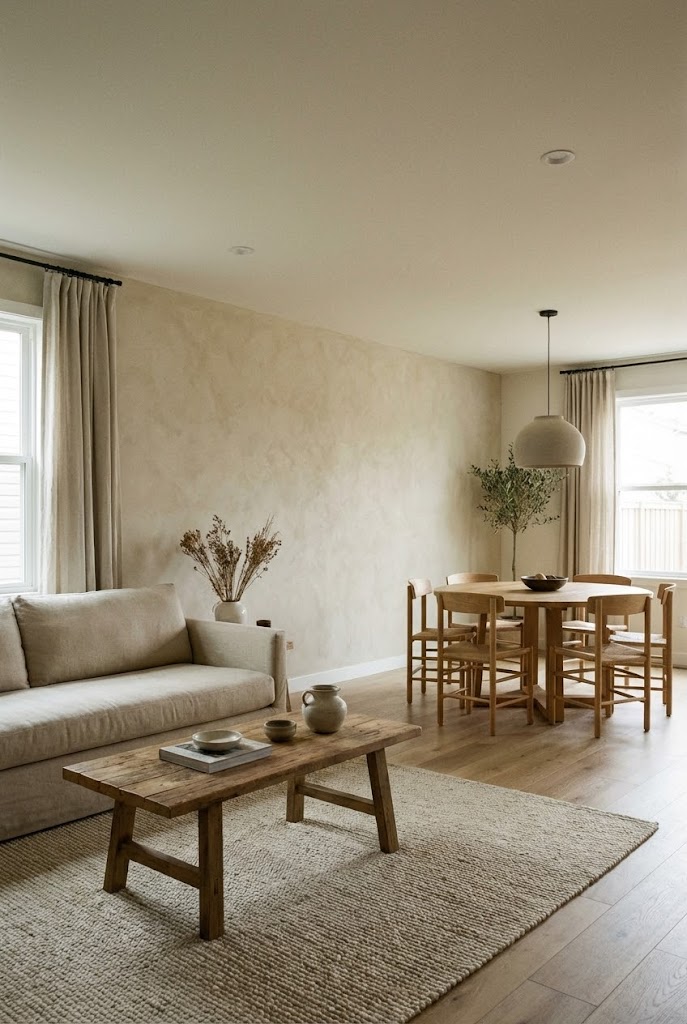
Flow is not just about looks. It’s about how people move. If walking from the living room to the dining room feels awkward, the connection will never feel right.
Aim for:
- Clear walking paths
- No sharp turns around furniture
- Enough space to move without thinking
A good test is simple: walk through the space while carrying a plate or a drink. If you have to stop, twist, or step sideways, something needs adjusting.
When movement feels easy, the rooms feel naturally connected, even without extra décor.
Common Mistakes That Break the Flow
Even with good furniture and nice décor, a few small mistakes can undo everything. These issues show up often in real homes, especially in open layouts.
One common problem is too many focal points. When both rooms fight for attention with bold colors, heavy furniture, or large statement pieces, the space feels noisy instead of connected. One main focus is enough. Let the rest support it.
Another mistake is blocking the transition area. Tall cabinets, bulky chairs, or wide tables placed in the middle zone interrupt movement and sightlines. This makes the layout feel cramped, even if the room is large.
Overdecorating one room and underdecorating the other is also a big one. When one space feels finished and the other feels empty, the imbalance is obvious. Both rooms don’t need equal décor, but they should feel equally cared for.
Lastly, mixing styles without a plan can quietly break the flow. A modern living room next to a very traditional dining room can work, but only if there’s at least one shared element tying them together.
Fixing these small issues often makes a bigger difference than buying anything new.
Quick Layout Checklist (Save This)
Before you change anything else, run through this quick checklist. It helps you spot problems fast and keeps the connection between your living room and dining room clear and intentional.
- One visual anchor is present and easy to notice
- Walking paths feel open and natural
- Furniture heights feel balanced across both spaces
- Rugs relate in color or texture
- The middle zone feels planned, not empty or cluttered
- One texture or material repeats in both rooms
- No tall or bulky pieces block light or views
If you can check most of these off, you’re already on the right track. If not, start with one item and adjust slowly. Small changes often fix more than big ones.
This checklist is especially helpful to save and come back to when you feel stuck or overwhelmed.
Conclusion
Connecting your living room and dining room doesn’t require big changes or a full redo. In most homes, the issue isn’t missing furniture or décor. It’s how things are placed, how the eye moves, and how people walk through the space.
Start small. Pick one idea from this guide and try it first. Shift a rug. Move a chair. Clear the middle zone. These little changes often bring instant relief and make the whole layout feel calmer and more put-together.
Once the flow feels right, styling becomes easier and more enjoyable. If this guide helped you see your space differently, save it for later and come back whenever things feel off again. A well-connected home always feels better to live in.